Terracotta vase in the shape of a cockerel
Artwork Details
- Title: Terracotta vase in the shape of a cockerel
- Period: Archaic
- Date: ca. 650–600 BCE
- Culture: Etruscan
- Medium: Terracotta; bucchero
- Dimensions: H. 4 1/16 in. (10.31 cm)
- Classification: Vases
- Credit Line: Fletcher Fund, 1924
- Object Number: 24.97.21a, b
- Curatorial Department: Greek and Roman Art
Audio
1215. Terracotta vase in the shape of a cockerel, Part 1
Gallery 170
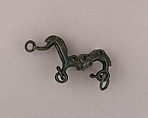
This small terracotta vase is made of a type of pottery called bucchero that was developed in Etruria, present-day Tuscany. Bucchero is immediately recognizable by its slightly glossy surface, and the clay that has blackened through and through during a slow firing process.
This particular piece of bucchero is in the shape of a cockerel. Notice its finely articulated comb and beak. There is another, absolutely spectacular, bucchero figure of a bird woman in the nearby display case. The bird before you, however, has human feet. Its tail, now missing, would have curved downward to form a third support.
Most likely, this vessel, made in the seventh century B.C., was a container for ink. The head, which comes off, acts as a stopper and could be attached to the bird’s body by a string, or some kind of cord. The letters inscribed across the surface are the twenty-six letters of the Etruscan alphabet. No doubt, this small, portable pot would have been a useful tool for an ancient Etruscan learning how to write.
If you’d like to hear an introduction to the Etruscans, and haven’t done so, press the PLAY button now.
Listen to more about this artwork
More Artwork
Press the down key to skip to the last item.
Related Content
Research Resources
The Met provides unparalleled resources for research and welcomes an international community of students and scholars. The Met's Open Access API is where creators and researchers can connect to the The Met collection. Open Access data and public domain images are available for unrestricted commercial and noncommercial use without permission or fee.
To request images under copyright and other restrictions, please use this Image Request form.
Feedback
We continue to research and examine historical and cultural context for objects in The Met collection. If you have comments or questions about this object record, please contact us using the form below. The Museum looks forward to receiving your comments.