Marble portrait of the emperor Antoninus Pius
Artwork Details
- Title: Marble portrait of the emperor Antoninus Pius
- Period: Antonine
- Date: ca. 138–161 CE
- Culture: Roman
- Medium: Marble
- Dimensions: H. 15 13/16 in. (40.2 cm)
- Classification: Stone Sculpture
- Credit Line: Fletcher Fund, 1933
- Object Number: 33.11.3
- Curatorial Department: Greek and Roman Art
Audio
1095. Marble portrait of the emperor Antoninus Pius
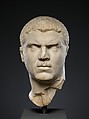
This marble portrait was once part of a statue of the Roman Emperor Antoninus Pius, who reigned between A.D. 138 and 161—a time of relative peace and prosperity in the Roman Empire. He’s portrayed here the way he thought of himself—a philosopher and calm, gentle man. Notice his upturned eyes and the deep shadows beneath his brow that add to his thoughtful pose.
Antoninus followed the style made fashionable by his predecessor and adoptive father, Hadrian—with a thick, curly beard and a frame of hair around the face. In this way, he constructed visually a familial connection. Hundreds of portraits of him, like this one, were distributed throughout the Empire.
If you stand back a bit from this marble head, you’ll be able to appreciate the dramatic interplay of light and shadow across the Emperor’s face. The smooth polished surface of his skin contrasts with the strong effects of light and dark in his thick locks of hair.
The emotive quality of this portrait of Antoninus foreshadows a stylistic trend that reached its fullest development during the reign of Caracalla in the early-third century A.D.
More Artwork
Related Content
Research Resources
The Met provides unparalleled resources for research and welcomes an international community of students and scholars. The Met's Open Access API is where creators and researchers can connect to the The Met collection. Open Access data and public domain images are available for unrestricted commercial and noncommercial use without permission or fee.
To request images under copyright and other restrictions, please use this Image Request form.
Feedback
We continue to research and examine historical and cultural context for objects in The Met collection. If you have comments or questions about this object record, please contact us using the form below. The Museum looks forward to receiving your comments.
Content Notice
The Metropolitan Museum of Art presents over 5,000 years of art from around the world, and our online collection reflects ongoing work conducted over the course of our more than 150-year history. You may encounter objects or images that may be inappropriate for some viewers or information that may be outdated.