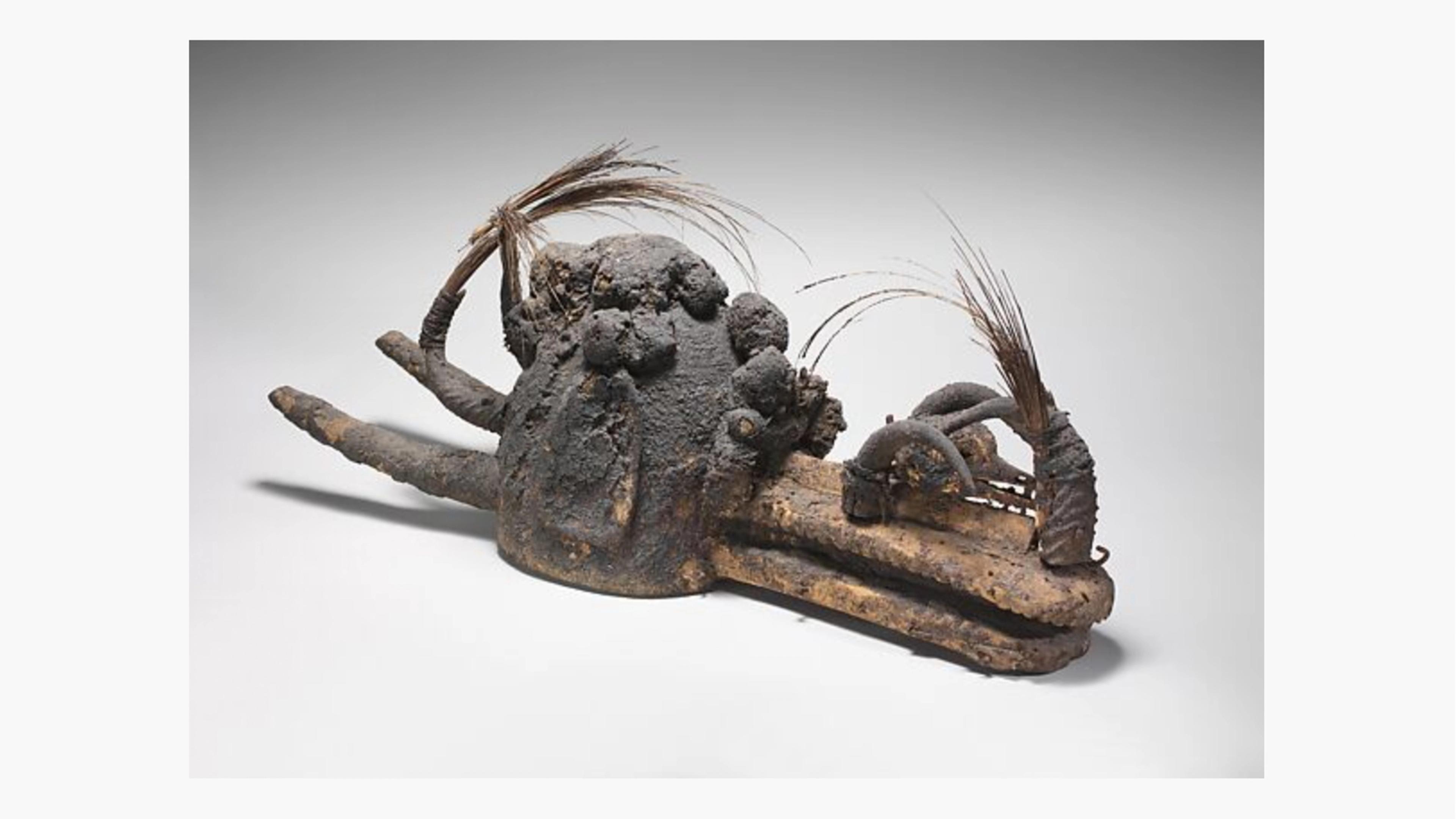
Kòmòkun or kònòkun (head of Kòmò or Kònò) helmet mask
Sculptors carve a domed head, gaping jaws, and either large ears or long horns projecting from the back into a single piece of wood to create a wooden armature. The most knowledgeable Kómó members add diverse materials to the base the sculptor provides. The forms artists create in wood do not represent any single animal. Rather, sculptors combine characteristics of several of the most fearsome creatures in the wilderness. Elements attached to helmet masks include animal horns, tusks, porcupine quills, bird skulls, feathers, textiles, and other less readily identifiable materials, each an indication of the specific knowledge and power of the person who adds it to the wooden base. A mixture of earth, sacrificial materials, and pulverized medicinal plants coat the assemblage and increase the power associated with the mask.
Kòmò associations sponsor dynamic performances distinguished by music and masquerade. Performers wear "heads of Kòmò," or kòmòkunw (sing.: kòmòkun), similar to the one shown here, and full-body outfits constructed from locally produced cotton and bird feathers. They position the helmets so that the long mouths extend outward from their foreheads. The masqueraders carefully balance the wooden masks as they move to prevent them from crashing to the ground. During nightlong performances, Kòmò experts reinforce their authority as they identify malevolent forces, track down criminals, and offer individuals solutions to their problems.
Blacksmiths are integral to the creation of kòmòkun. Esteemed for their abilities to turn iron ore into usable metal and trees into wooden sculptures, blacksmiths are distinguished from other members of the community. They often live in separate quarters and marry only among themselves. Their specialized knowledge and technical abilities earn them great respect. Blacksmiths contend with dangerous and powerful spiritual forces as they transform raw materials into tools and sculptures. Their knowledge and mastery of these forces are evident in the Kòmò helmet masks that combine terrifying forms in wood with potentially harmful materials to create objects that benefit individuals and the community.
Artwork Details
- Title: Kòmòkun or kònòkun (head of Kòmò or Kònò) helmet mask
- Artist: Bamana or Senufo blacksmith
- Date: 19th–mid-20th century
- Geography: Mali, Burkina Faso, or Côte d'Ivoire, West Africa
- Culture: Bamana or Senufo peoples
- Medium: Wood, bird skull, porcupine quills, horn, cotton, iron, plant fiber, applied organic materials
- Dimensions: H. 13 7/8 in. × W. 8 11/16 in. × D. 33 in. × L. 33 in. (35.2 × 22.1 × 83.8 × 83.8 cm)
- Classification: Wood-Sculpture
- Credit Line: The Michael C. Rockefeller Memorial Collection, Bequest of Nelson A. Rockefeller, 1979
- Object Number: 1979.206.150
- Curatorial Department: The Michael C. Rockefeller Wing
Audio
978. Kids: Kòmò Helmet Mask (Kòmòkun), Part 1
Listen to more about this artwork
More Artwork
Press the down key to skip to the last item.
Related Content
 Free to download
Research Resources
The Met provides unparalleled resources for research and welcomes an international community of students and scholars. The Met's Open Access API is where creators and researchers can connect to the The Met collection. Open Access data and public domain images are available for unrestricted commercial and noncommercial use without permission or fee.
To request images under copyright and other restrictions, please use this Image Request form.
Feedback
We continue to research and examine historical and cultural context for objects in The Met collection. If you have comments or questions about this object record, please contact us using the form below. The Museum looks forward to receiving your comments.
Content Notice
The Metropolitan Museum of Art presents over 5,000 years of art from around the world, and our online collection reflects ongoing work conducted over the course of our more than 150-year history. You may encounter objects or images that may be inappropriate for some viewers or information that may be outdated.