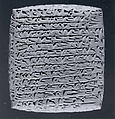
Cuneiform tablet: caravan account
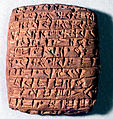
This tablet is of a type used by the Assyrian merchants to track the income and expenses generated by caravan shipments. The cuneiform text, read from left to right, records not only the amount of silver invested in tin and textiles, but also the less commonly traded precious stone lapis lazuli, which was sourced from Afghanistan. In addition to investments in trade items, these shipments required various expenditures like clothing and wages for guides, as well as donkeys and their equipment and fodder. Donkeys became important trade items themselves and were often sold upon the caravan’s arrival in Anatolia after the arduous 6-8 week journey from Ashur. The tablet also records other fees, payments, and purchases, before calculating the total money owed to the prominent merchant Imdi-ilum who was active in the caravan trade between 1888 and 1876 B.C. Interestingly, the final balance recorded in the tablet, 1 mina and 50 shekels of silver, is slightly more than the actual total calculated from the figures provided (1 mina, 48 5/6 shekels). Such minor discrepancies are common in the Old Assyrian texts and several erasures on the text indicate the care with which the account was made.
Artwork Details
- Title: Cuneiform tablet: caravan account
- Period: Middle Bronze Age–Old Assyrian Trading Colony
- Date: ca. 20th–19th century BCE
- Geography: Anatolia, probably from Kültepe (Karum Kanesh)
- Culture: Old Assyrian Trading Colony
- Medium: Clay
- Dimensions: 8.5 × 6.5 × 2.4 cm (3 3/8 × 2 9/16 × 15/16 in.)
- Credit Line: Gift of Mr. and Mrs. J. J. Klejman, 1966
- Object Number: 66.245.10
- Curatorial Department: Ancient West Asian Art
More Artwork
Press the down key to skip to the last item.
Related Content

 Free to download
Research Resources
The Met provides unparalleled resources for research and welcomes an international community of students and scholars. The Met's Open Access API is where creators and researchers can connect to the The Met collection. Open Access data and public domain images are available for unrestricted commercial and noncommercial use without permission or fee.
To request images under copyright and other restrictions, please use this Image Request form.
Feedback
We continue to research and examine historical and cultural context for objects in The Met collection. If you have comments or questions about this object record, please contact us using the form below. The Museum looks forward to receiving your comments.
Content Notice
The Metropolitan Museum of Art presents over 5,000 years of art from around the world, and our online collection reflects ongoing work conducted over the course of our more than 150-year history. You may encounter objects or images that may be inappropriate for some viewers or information that may be outdated.