Marble seated harp player
Artwork Details
- Title: Marble seated harp player
- Period: Late Early Cycladic I–Early Cycladic II
- Date: 2800–2700 BCE
- Culture: Cycladic
- Medium: Marble
- Dimensions: H. with harp 11 1/2 in. (29.21 cm)
- Classification: Stone Sculpture
- Credit Line: Rogers Fund, 1947
- Object Number: 47.100.1
- Curatorial Department: Greek and Roman Art
Audio
833. Kids: Marble seated harp player
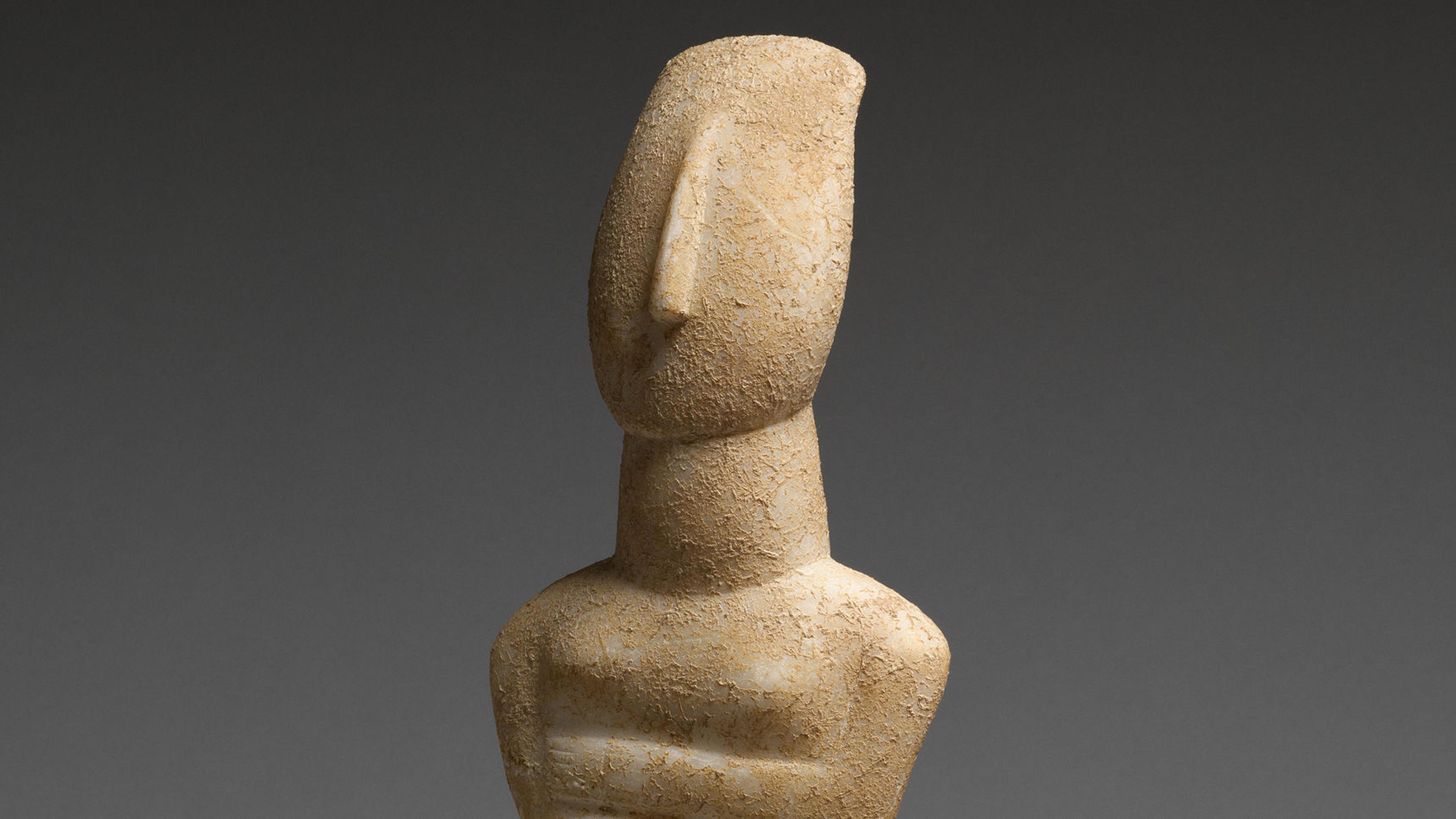
Look up at the top shelf of this case. Find the white marble statuette of the man in a chair, holding a musical instrument—there are two very similar to each other. We’re going to look at the one on the left.
Do you recognize that three-sided instrument that he’s holding? Imagine strings running from top to bottom. This man’s playing a harp. His head bends back, as if he’s lost in the music. You’re listening to music played on a modern harp. But we’re not sure what this ancient Greek instrument sounded like. Have you ever tried playing a harp? It takes strong fingers. This figure has big, muscular fingers and arms. He might be a poet as well a musician. The ancient Greek poets spoke their verses out loud, and often accompanied themselves on stringed instruments like the harp.
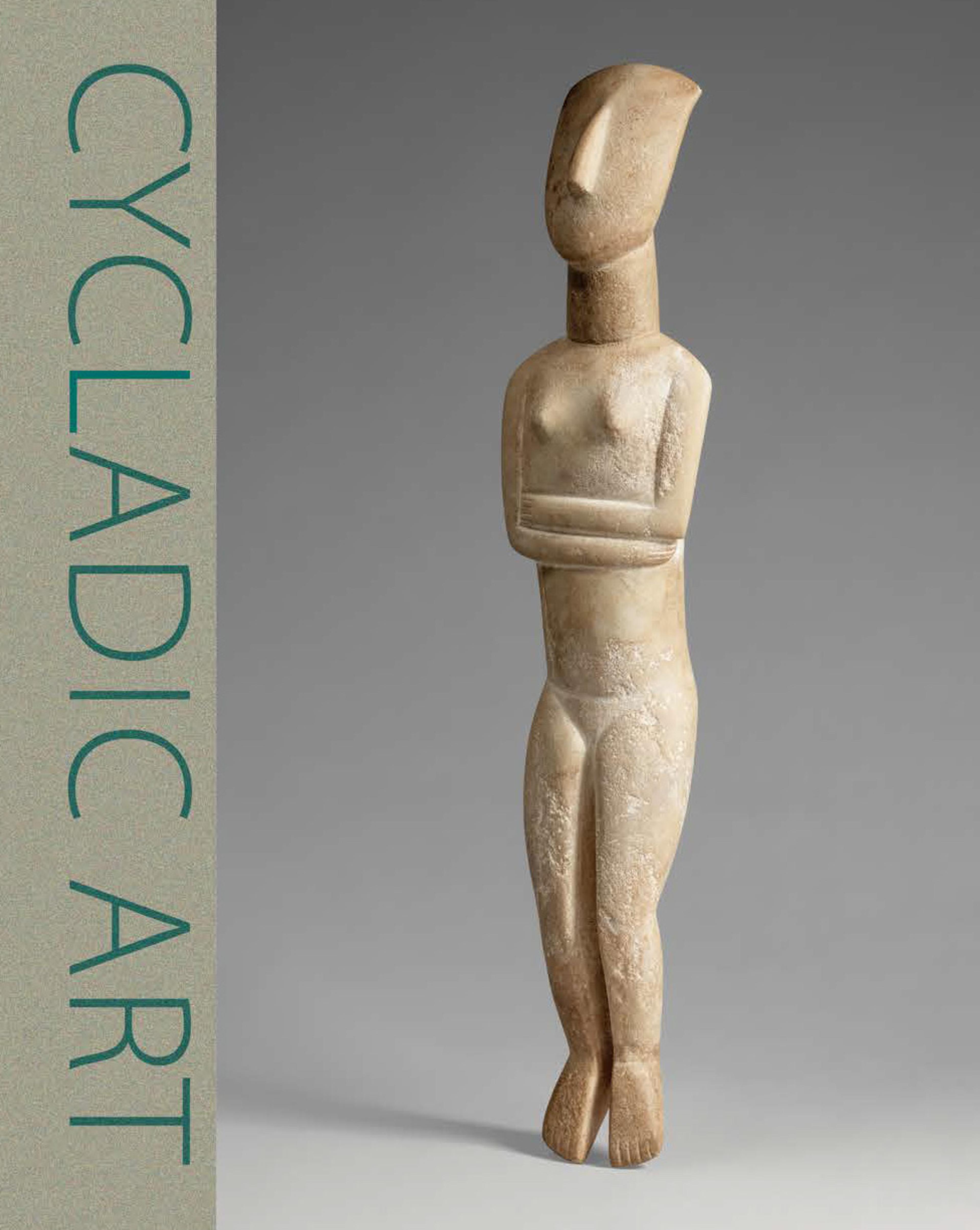
This sculpture is more than four thousand years old. Like the other sculptures in this room, it comes from a group of islands named the Cyclades. The marble figures from the Cyclades are called Cycladic sculptures. Cycladic sculptures mark the beginning of a long history of Greek and Roman sculptures in marble, as you’ll see in some of the other rooms nearby.
Listen to more about this artwork
More Artwork

Related Content

Research Resources
The Met provides unparalleled resources for research and welcomes an international community of students and scholars. The Met's Open Access API is where creators and researchers can connect to the The Met collection. Open Access data and public domain images are available for unrestricted commercial and noncommercial use without permission or fee.
To request images under copyright and other restrictions, please use this Image Request form.
Feedback
We continue to research and examine historical and cultural context for objects in The Met collection. If you have comments or questions about this object record, please contact us using the form below. The Museum looks forward to receiving your comments.
Content Notice
The Metropolitan Museum of Art presents over 5,000 years of art from around the world, and our online collection reflects ongoing work conducted over the course of our more than 150-year history. You may encounter objects or images that may be inappropriate for some viewers or information that may be outdated.