Mosque Lamp for the Mausoleum of Amir Aydakin al-'Ala'i al-Bunduqdar
Artwork Details
- Title: Mosque Lamp for the Mausoleum of Amir Aydakin al-'Ala'i al-Bunduqdar
- Date: shortly after 1285
- Geography: Made in Egypt, probably Cairo
- Medium: Glass; blown, folded foot, applied handles, enameled, and gilded
- Dimensions: H. 10 3/8 in. (26.4 cm)
Diam. of rim 8 1/4 in. (21 cm) - Classification: Glass
- Credit Line: Gift of J. Pierpont Morgan, 1917
- Object Number: 17.190.985
- Curatorial Department: Islamic Art
Audio
1164. Kids: Mosque Lamps
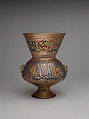
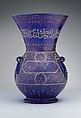
NAVINA HAIDAR: This is a lamp for lighting a mosque. It would be hung from a ceiling, along with other similar glass lamps. Each one would have a small, low flame inside floating in a little saucer which kept the oil. The overall effect in the mosque would be soft, flickering, colorful lights. This mosque lamp is more than six hundred years old. It’s made from delicate, thin glass, so it’s amazing that it’s survived this long. To make a mosque lamp, the overall shape is blown from liquid, molten glass. After it cools and turns solid, the colors are painted on. But it’s much trickier than it sounds, because each color paint has to be heated to a different temperature to make it stick to the glass! For example, the red might be painted on first. Then the whole lamp is put into an oven at a very specific temperature to make the red paint crystals stick to the glass. If the oven is even just a tiny bit too hot, the glass shape itself will melt! Then the whole process has to be repeated with the next color, and the next, and so on. Look up… Hanging from the ceiling are modern mosque lamps. You can see that the tradition of these kinds of mosques lamps continues today. The artist who created these mosque lamps included tiny bubbles in the glass, just like they did in the old days. These bubbles catch the light and make the lamps sparkle.
More Artwork
Related Content

 Free to download
Research Resources
The Met provides unparalleled resources for research and welcomes an international community of students and scholars. The Met's Open Access API is where creators and researchers can connect to the The Met collection. Open Access data and public domain images are available for unrestricted commercial and noncommercial use without permission or fee.
To request images under copyright and other restrictions, please use this Image Request form.
Feedback
We continue to research and examine historical and cultural context for objects in The Met collection. If you have comments or questions about this object record, please contact us using the form below. The Museum looks forward to receiving your comments.
Content Notice
The Metropolitan Museum of Art presents over 5,000 years of art from around the world, and our online collection reflects ongoing work conducted over the course of our more than 150-year history. You may encounter objects or images that may be inappropriate for some viewers or information that may be outdated.