The Temple of Dendur will be closed through Friday, May 8.

Plan your visit

Search for Art

1-42 of 2,804 results
Sort by:
Show only
1
Images
Date
For BCE dates, enter a negative number. E.g. For 2000 BCE, enter -2000.
Object type / material
Geographic location
Department
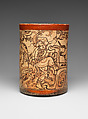
Vessel with mythological scene, Metropolitan Painter, Ceramic, slip, Maya
Metropolitan Painter
600–800 CE
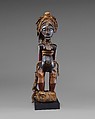
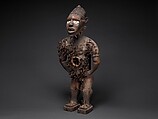
Nkishi (community power figure), Songye artist and nganga (ritual specialist), Wood, copper, brass, iron, fiber, snakeskin, leather, fur, feathers, mud, resin, Songye peoples
Songye artist and nganga (ritual specialist)
19th–first half of 20th century
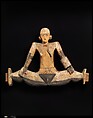
Dilukai (gable figure), Belauan artist, Wood, paint, Belauan peoples
Belauan artist
late 19th–early 20th century
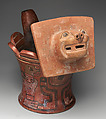
Incense burner with feline head, Tiwanaku artist(s), Ceramic, slip, Tiwanaku
Tiwanaku artist(s)
500–1000 CE
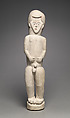
Funerary Figure (Kulap), Chalk, paint, Southern New Ireland
Southern New Ireland
late 19th century
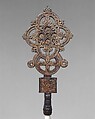
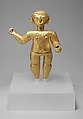
Standing figure, Tolita-Tumaco artist(s), Gold, Tolita-Tumaco
Tolita-Tumaco artist(s)
500 BCE–300 CE
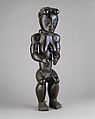
Eyema byeri (reliquary guardian figure), Okak-Fang artist, Wood, copper alloy, palm oil, Okak-Fang peoples
Okak-Fang artist
19th century
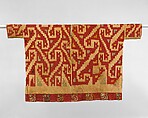
Shirt, Moche artist(s), Camelid hair, cotton, Moche
Moche artist(s)
500–850 CE
Hazomanga finial, Sakalava artist, Katrafay wood (Cedrelopsis grevei), pigment, Sakalava peoples
Sakalava artist
17th–late 18th century
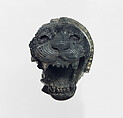
Bata (ram) mask for a beete performance, Kwele artist, Wood, pigment, kaolin, Kwele peoples
Kwele artist
19th–first half of 20th century
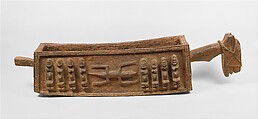
Karan-wemba (female figure mask), Mossi blacksmith, Ceiba(?) wood, metal, Mossi peoples
Mossi blacksmith
19th–first half 20th century
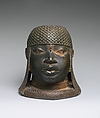
Ùhúnmwèlaò (head of an ọ́bà), Ìgùn Ẹ́rọ̀nwwọ̀n (brass-casting guild) artists, Brass, iron, Edo peoples
Ìgùn Ẹ́rọ̀nwwọ̀n (brass-casting guild) artists
Early 15th–mid-16th century
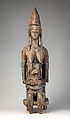
Gwandusu, Bamana numu (blacksmith), Wood (Cordyla africana or Lonchocarpus), applied organic materials, Bamana peoples
Bamana numu (blacksmith)
15th–17th century
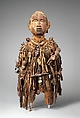
Nkisi (power figure), Kongo artist and nganga (ritual specialist), Wood, pigment, resin, iron, brass, tin, cloth, plant fiber cord, beads, cowrie shells, bone or ivory, arrows, leather, seeds, animal horn, Kongo peoples
Kongo artist and nganga (ritual specialist)
19th–first half of 20th century
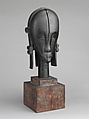
Nlô byeri (reliquary guardian head), Betsi-Fang artist, Wood, copper alloy, palm oil, Betsi-Fang peoples
Betsi-Fang artist
19th century
Dance crest, Ejagham artist, Wood, animal hide, cane, iron, pigment, bone or ivory, Ejagham peoples
Ejagham artist
19th–mid-20th century
Zemí cohoba stand, Taíno artist(s), Guaiacum wood, shell, Taíno
Taíno artist(s)
ca. 1000 CE
Feathered panel, Wari artist(s), Feathers, cotton, camelid fiber, Wari
Wari artist(s)
650–1000 CE
Double-eagle pendant, Initial Style artist(s), Gold, Initial Style
Initial Style artist(s)
1–500 CE
Standing figure, Teotihuacan artist(s), Green schist, Teotihuacan
Teotihuacan artist(s)
350–600 CE
Mangaaka Power Figure (Nkisi N’Kondi), Yombe-Kongo artist and nganga (ritual specialist), Wood, iron, resin, ceramic, plant fiber, textile, pigment, Kongo peoples
Yombe-Kongo artist and nganga (ritual specialist)
ca. 1880–1900
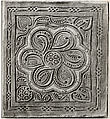
Dado Panel, Plaster; cast
20th century
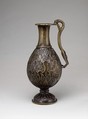
Animal-Spouted Pitcher, Earthenware; polychrome decoration under transparent glaze (buff ware)
9th–10th century
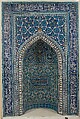
Mihrab (Prayer Niche), Mosaic of polychrome-glazed cut tiles on stonepaste body; set into mortar
dated 755 AH/1354–55 CE
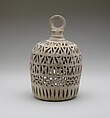
Lantern for a Lamp, Earthenware; carved decoration, unglazed
9th–10th century
Ceiling, Wood; carved, painted, and gilded
16th century
Armlet, Gold; filigree and granulation
first half 11th century
Carpet with Palm Trees, Ibexes, and Birds, Cotton (warp and weft), wool (pile); asymmetrically knotted pile
late 16th–early 17th century