Encompasses present-day Canada and the United States
Gardening technology progresses, leading to the development of agriculture and the drawn-out transition to settled village life from hunter-gatherer lifeways. Corn and techniques for its cultivation, undoubtedly introduced from Mexico, are present in the Southwest. Corn becomes the most significant food crop in native North America, and the presence of pottery leads to major changes in the storing and transportation of food. Plazas and large earthen mounds are constructed in the lower Mississippi River valley at Poverty Point in Louisiana. In the eastern and western Arctic, small, delicately made stone tools are produced.

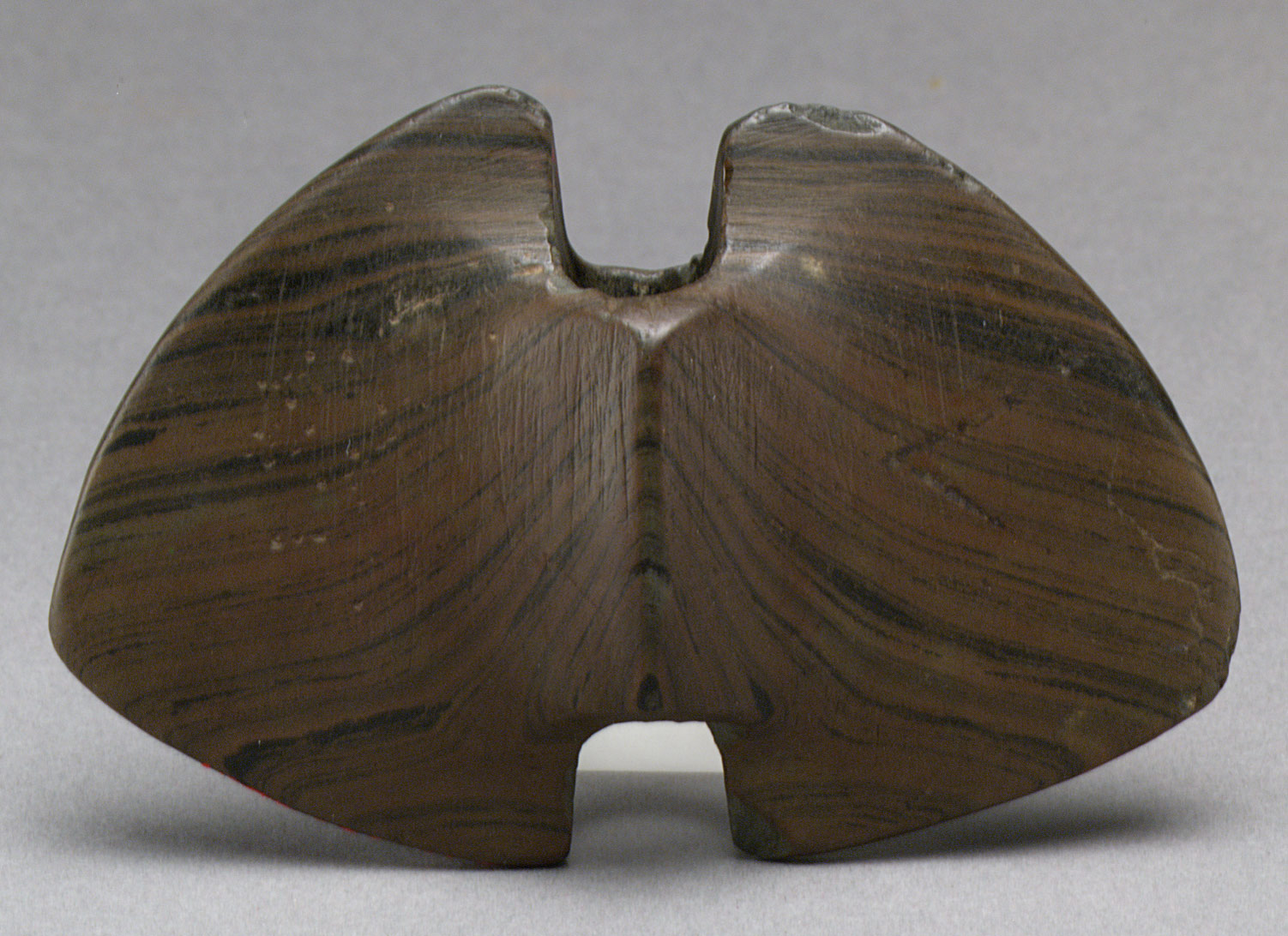
- ca. 2000 B.C. Spear-thrower weightsknown as bannerstonesare produced, many in the Illinois and Ohio valleys.
- ca. 2000 B.C.The Arctic Small Tool Tradition, characterized by a technological similarity of tools, emerges in the Bering Strait region, and is subsequently found throughout both the western and eastern Arctic.
- ca. 1500 B.C. Gardening technology exists in the Midwest.
- ca. 1500 B.C.Large earthworkshuman-made, above-ground constructions such as burial mounds, fortifications, and ridgesbegin to be erected at Poverty Point, Louisiana.
- ca. 1200 B.C.Corn and techniques for its cultivation are introduced to the Southwest from Mexico.
- ca. 1000 B.C.Poverty Point reaches its maximum size; pottery is made throughout the East.
Citation
"North America, 20001000 B.C.". In Heilbrunn Timeline of Art History. New York: The Metropolitan Museum of Art, 2000–. http://www.metmuseum.org/toah/ht/?period=03®ion=na (October 2000)