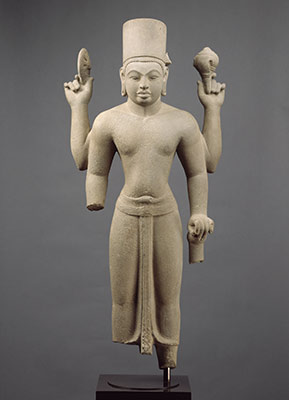

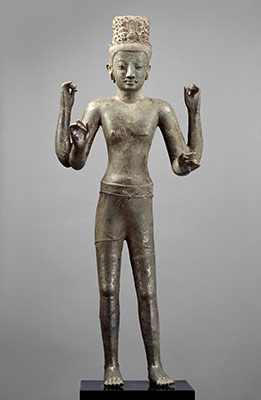
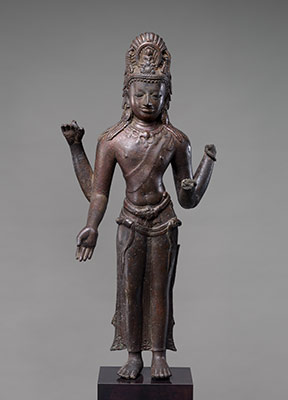
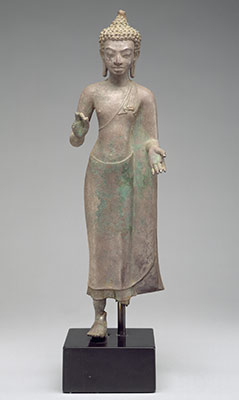
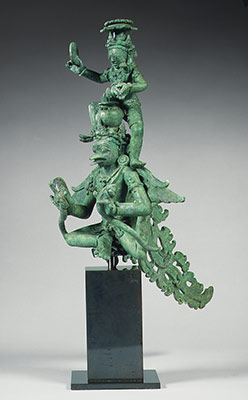
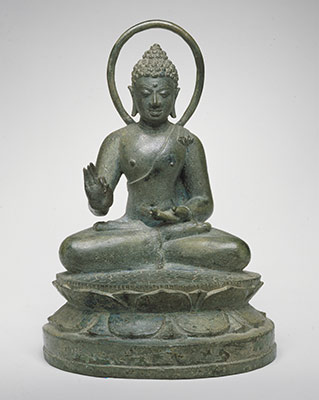
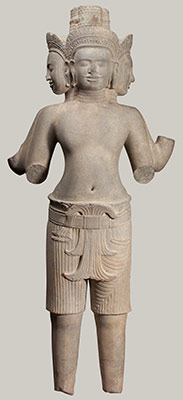
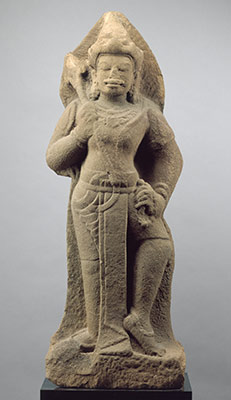

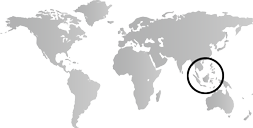
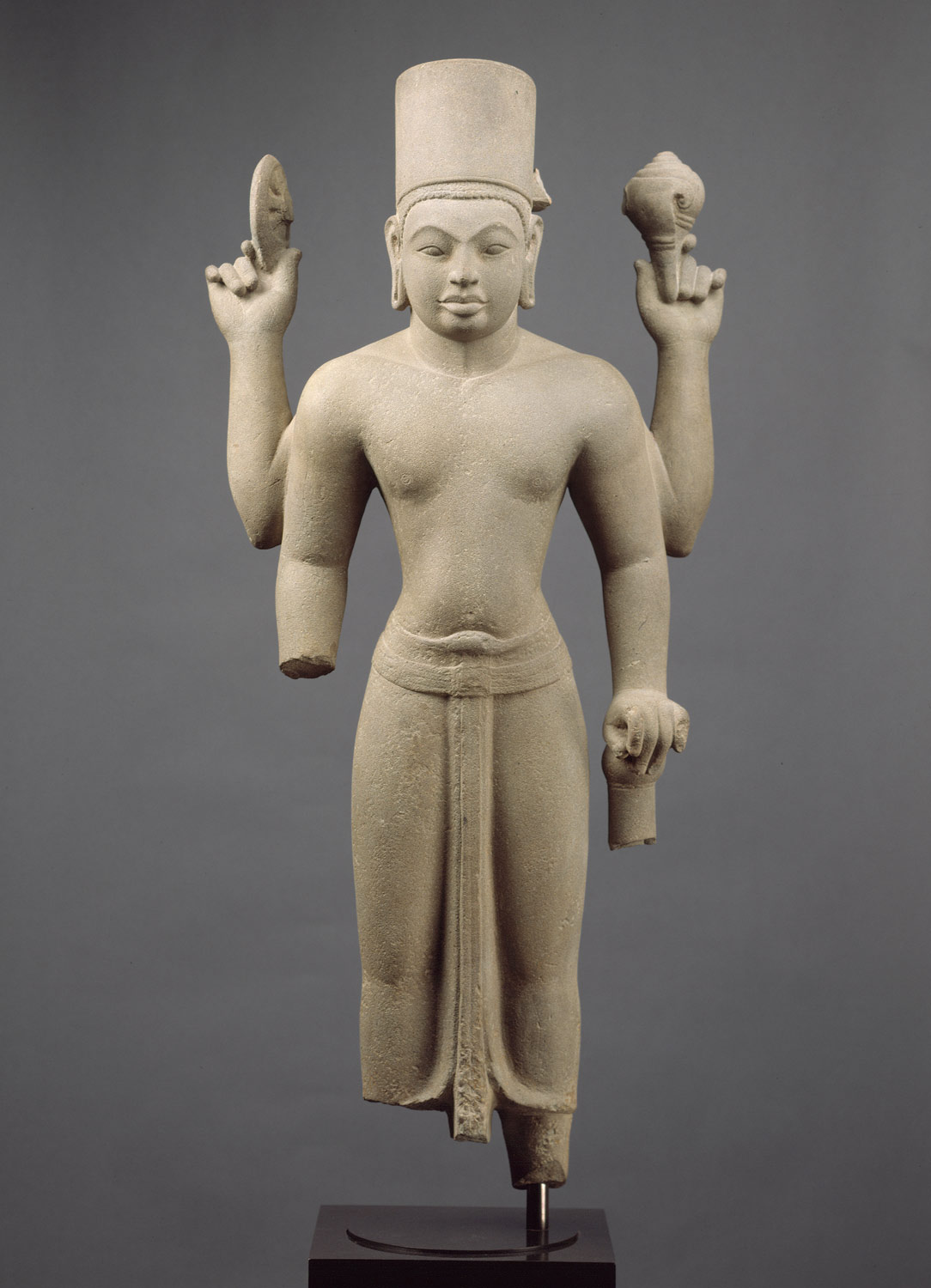
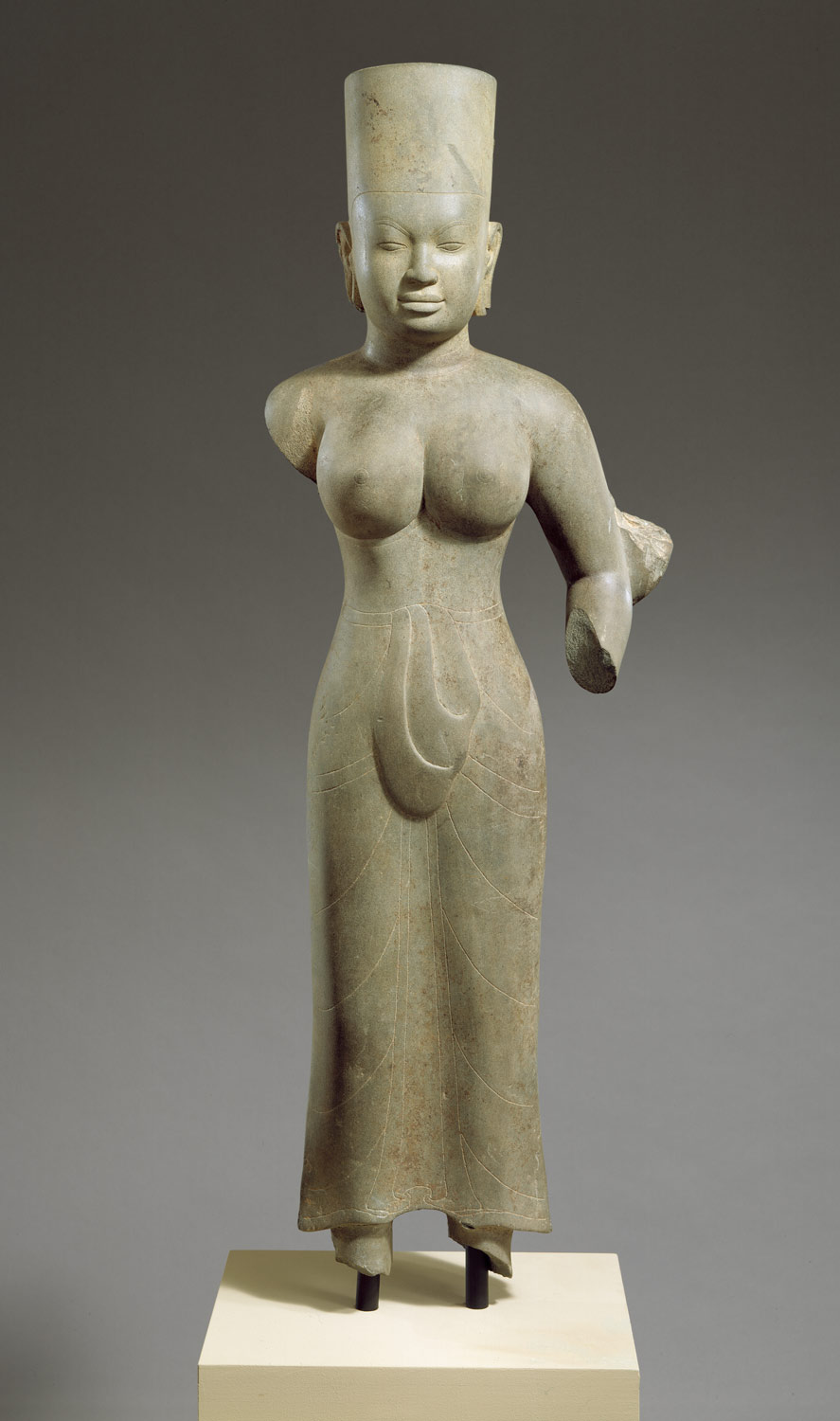
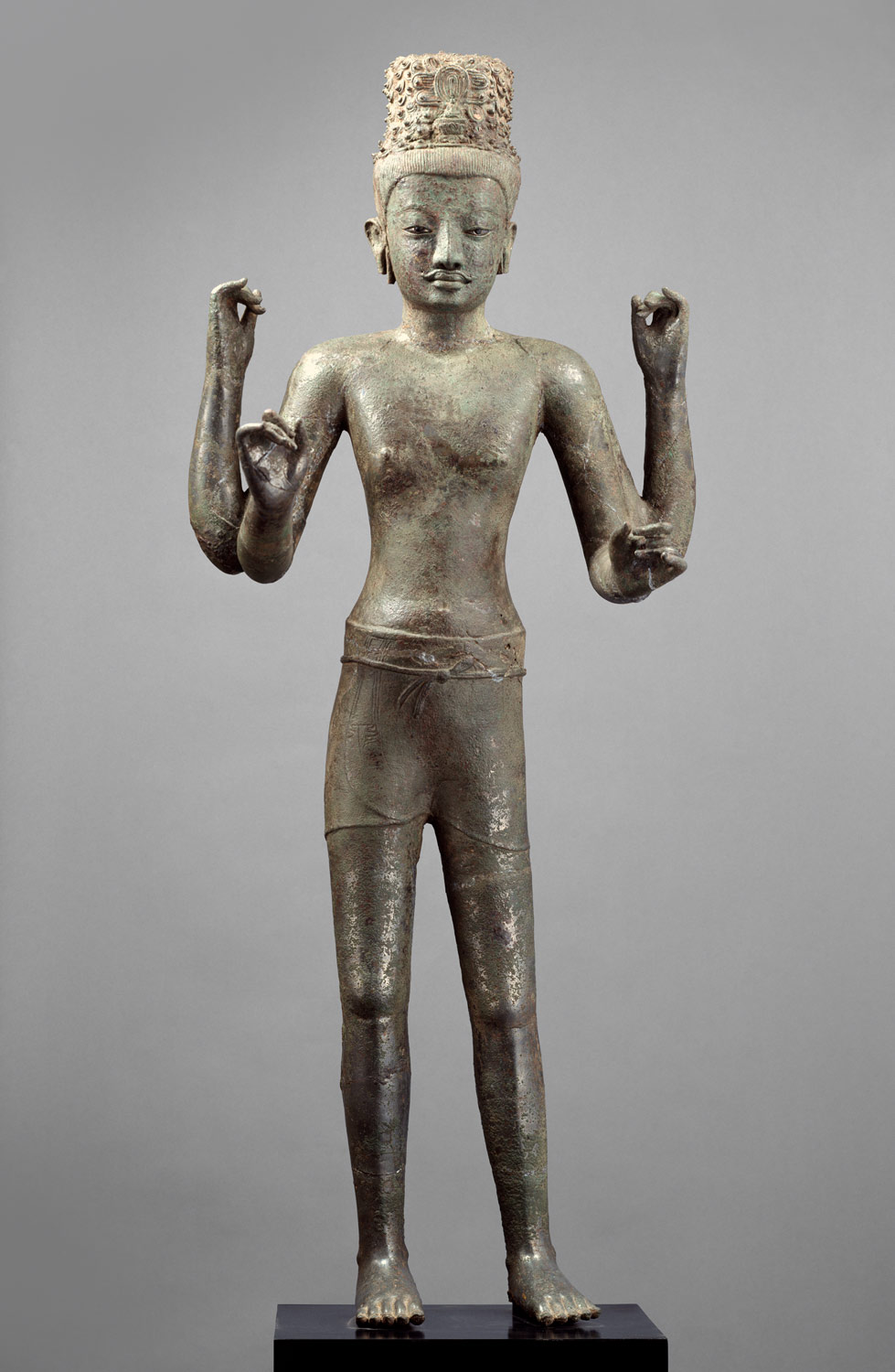
In both mainland and island Southeast Asia, smaller confederacies amalgamate into larger polities. The Dvaravati kingdom of the Mon speakers and the various pre-Angkorian sites associated with the Khmers are the best known on the mainland. The accession of Jayavarman II in the early ninth century marks the beginning of the powerful Angkor dynasty that will control much of the region from the tenth through the thirteenth century. The Shailendras, who control the maritime realm of Shrivijaya in the eighth and ninth centuries, and build the famed Borobudur, are prominent in Indonesia. Sculpture, generally images of Buddhist and Hindu deities, is the dominant art form in Southeast Asia during this period.
Southeast Asia, 500–1000 A.D.
-
 1992.53
 -
 2000.531
 -
 67.234
 -
 1982.64
 -
 1993.387.6
 -
 1992.135
 -
 1987.142.23
 -
 36.96.3
 -
 1987.478
 -
 1992.336
Timeline
500 A.D.
625 A.D.
Period of early kingdoms, Indonesia, ca. 500–1377
Dvaravati kingdom, Thailand and parts of Burma, ca. 500–900
Pre-Angkor period, Cambodia, ca. 550–802
625 A.D.
750 A.D.
Period of early kingdoms, Indonesia, ca. 500–1377
Dvaravati kingdom, Thailand and parts of Burma, ca. 500–900
Pre-Angkor period, Cambodia, ca. 550–802
750 A.D.
875 A.D.
Period of early kingdoms, Indonesia, ca. 500–1377
Dvaravati kingdom, Thailand and parts of Burma, ca. 500–900
Pre-Angkor period, Cambodia, ca. 550–802
Angkor period, Cambodia and, at times, part of Burma, Thailand, Laos, and Vietnam, 802–1431
875 A.D.
1000 A.D.
Period of early kingdoms, Indonesia, ca. 500–1377
Dvaravati kingdom, Thailand and parts of Burma, ca. 500–900
Angkor period, Cambodia and, at times, part of Burma, Thailand, Laos, and Vietnam, 802–1431
Overview
Key Events
-
ca. 500
The first identifiable Thai speakers emigrate from southeastern China into northeastern Laos. By the ninth century, members of this linguistic group are found in Thailand and Burma.
-
500–600
According to Chinese records, Funan, a prosperous trading polity centered in southern Cambodia, is overtaken by Zhenla. The relationship between “Zhenla” and early Khmer centers remains unresolved; however, it seems likely that the term refers to one or more polities in the region.
-
500–900
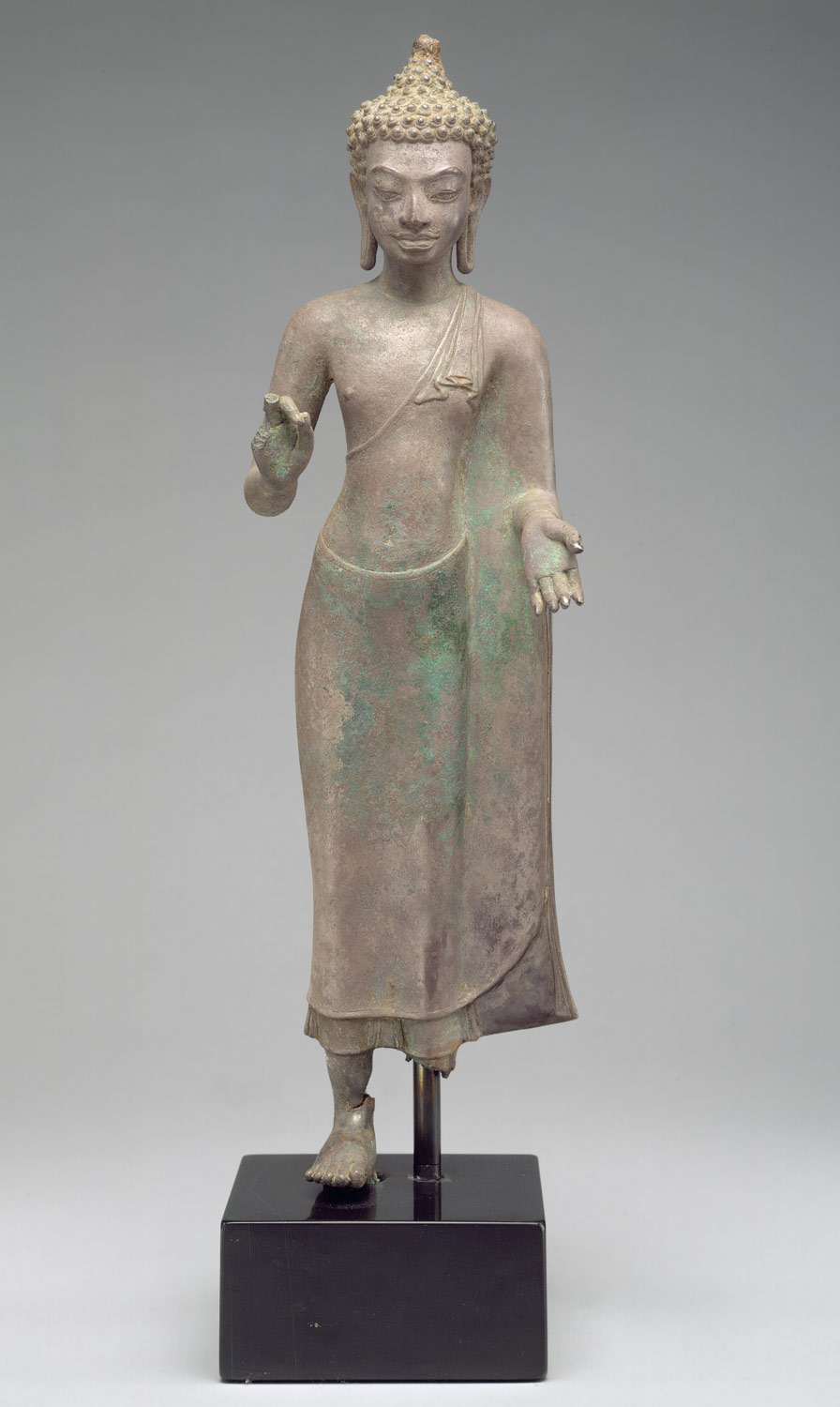
Settlements, some of large scale, flourish in Thailand, most likely as part of international trade routes linking South and Southeast Asia. The exact nature of these towns and their relationships remains unclear. Dvaravati, a term that derives from Chinese sources and Sanskrit inscriptions on coins, emerges as a major polity. Largely Mon speaking, Dvaravati is known for its standing images of Buddhas.
-
541–547
Ly Bi leads a short-lived revolt against longstanding Chinese rule in Vietnam.
-
600–700
The earliest buildings are constructed at My Son in Champa (central Vietnam). This site remains a major center for centuries.
-
612
The first inscription in the Khmer language is carved at Angkor Borei.
-
618–907
Chinese authority in northern Vietnam is fortified under the rule of the powerful Tang dynasty.
-
638
Embassies from Khmer polities as well as Dvaravati are recorded in China.
-
ca. 657
Jayavarman I, traditionally listed as the first ruler of the Angkor dynasty, rules from his capital in Purandarapura.
-
670
The traditional date for the founding of the Shrivijaya empire centered on Palembang in Sumatra. This maritime trading nation, with strong ties to the Malay Peninsula, flourishes from the eighth through the twelfth century. Shrivijaya supports a major center for the study of Buddhism that is visited by pilgrims from China, India, and other parts of Asia.
-
ca. 710
Prasat Ak Yom, the first of the characteristic Khmer temple-mountains, is constructed in the early eighth century.
-
732–760
The rule of Sanjaya in Java. His kingdom, known as Mataram, is devoted to the Hindu god Shiva.
-
ca. 770–ca. 834
Jayavarman II returns to Cambodia (presumably from Java) and establishes the Angkor kingdom. In 802, he is consecrated as a devaraja, or “god-king,” establishing this tradition of kingship for his successors.
-
late 8th–late 9th century
The Shailendra dynasty rules in Central Java after gaining control of Mataram and parts of the Shrivijaya lands. The Borobudur, a massive Buddhist monument, is constructed around 825.
-
ca. 800–900
The Nanzhao kingdom of southeastern China controls parts of northern Laos.
-
ca. 850–875
A major Hindu temple group dedicated to Shiva, Vishnu, and Brahma is constructed at Prambanan in Central Java.
-
889–ca. 910/12
Yashovarman I establishes a capital at Yashodharapura at present-day Angkor in Cambodia. Phnom Bakheng, one of the most famous temple-mountains in the city, consists of a square five-storied pyramid with forty-four large brick towers at the base.
-
ca. 900–1000
The Khmer kingdom of Cambodia expands to incorporate large areas of present-day Burma, Laos, and Thailand.
-
ca. 963–979
Dinh Bo Linh establishes a kingdom in northern Vietnam that is independent of Chinese rule.
Citation
“Southeast Asia, 500–1000 A.D.” In Heilbrunn Timeline of Art History. New York: The Metropolitan Museum of Art, 2000–. http://www.metmuseum.org/toah/ht/?period=06®ion=sse (October 2001)
Related
Map
Primary Chronology
Secondary Chronology
See also
CLOSE

CLOSE
Standing four-armed Vishnu
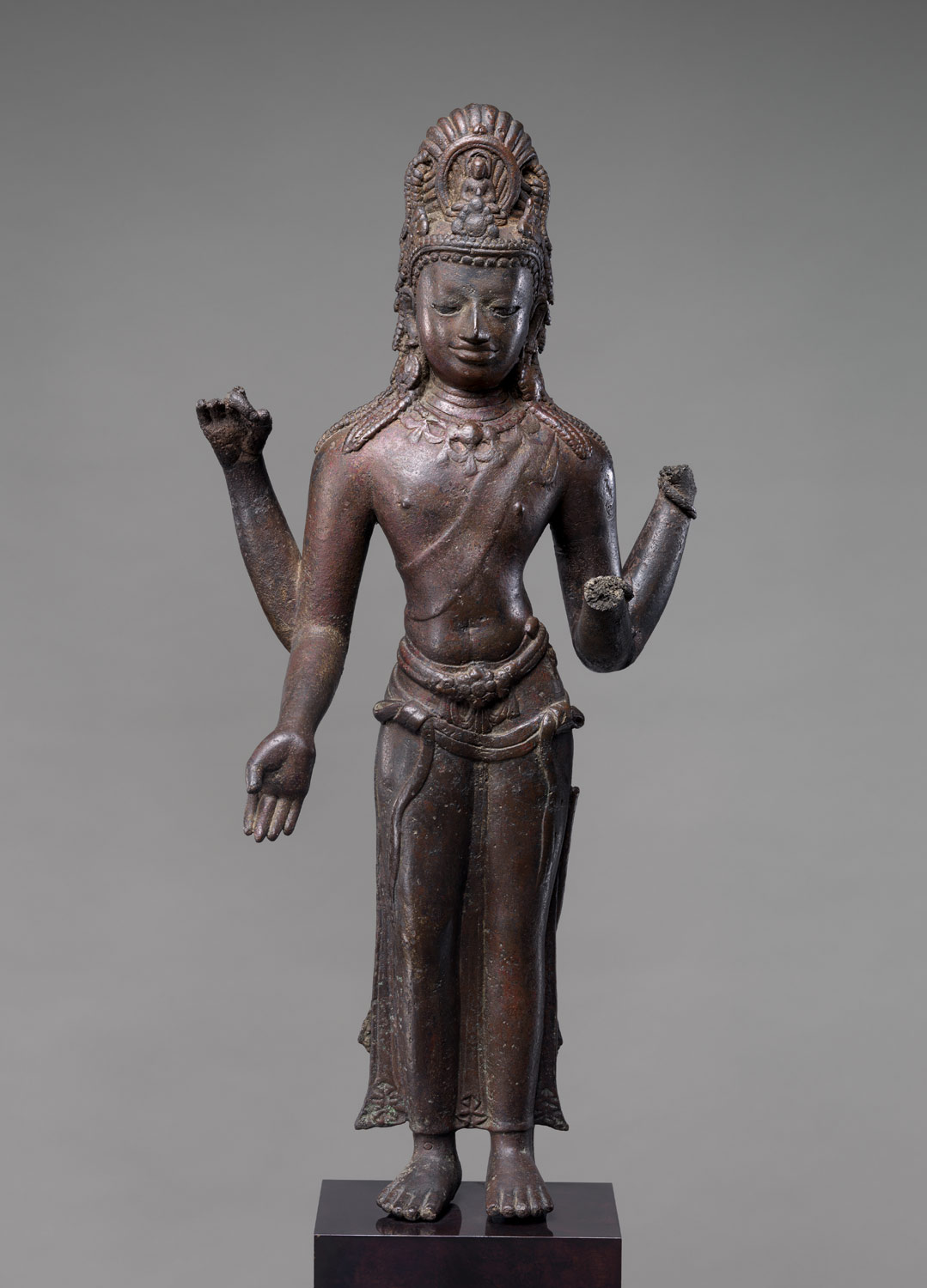
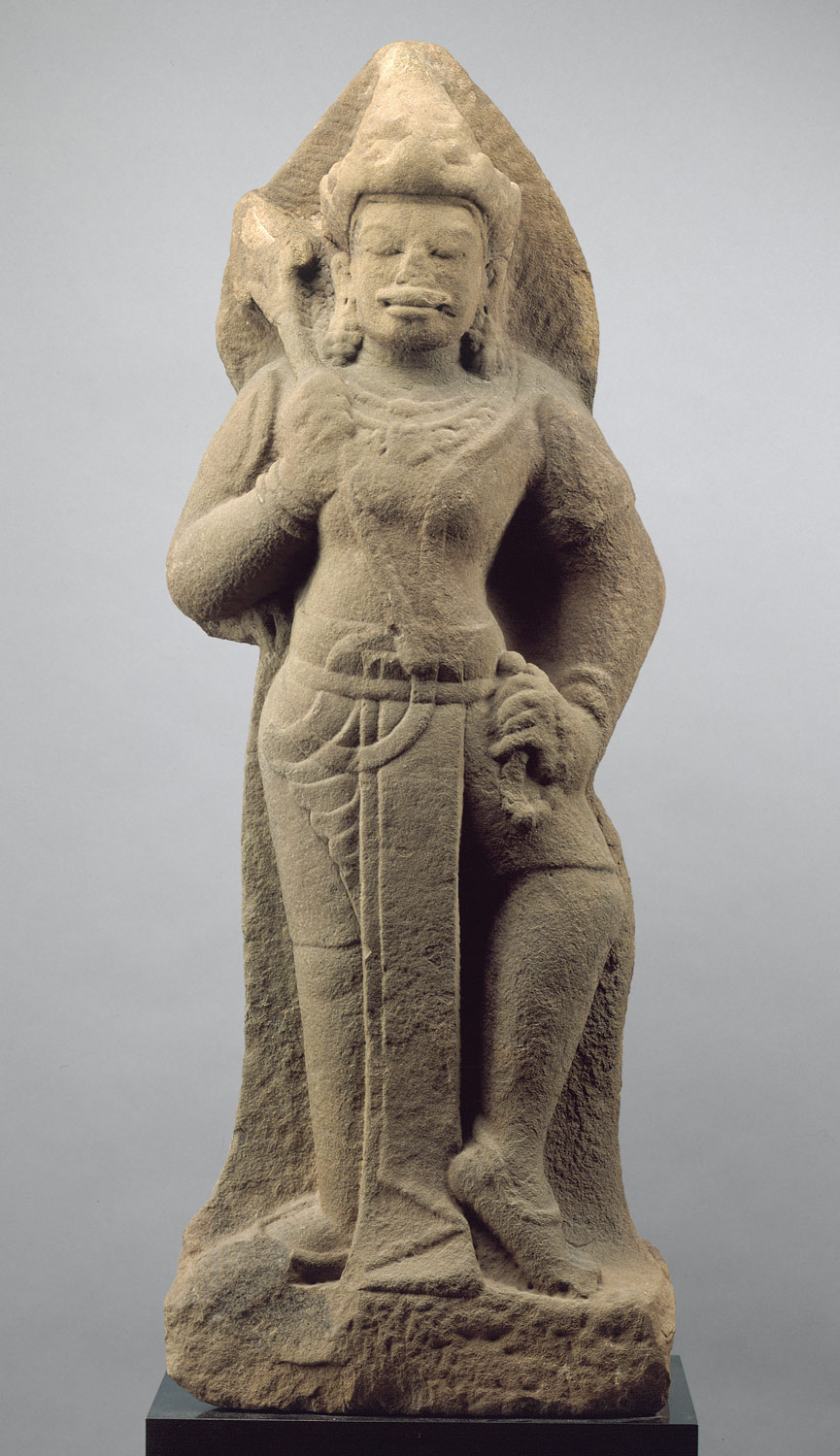
Standing female deity, probably Durga
Bodhisattva Avalokiteshvara
Bodhisattva Avalokiteshvara
Buddha Preaching
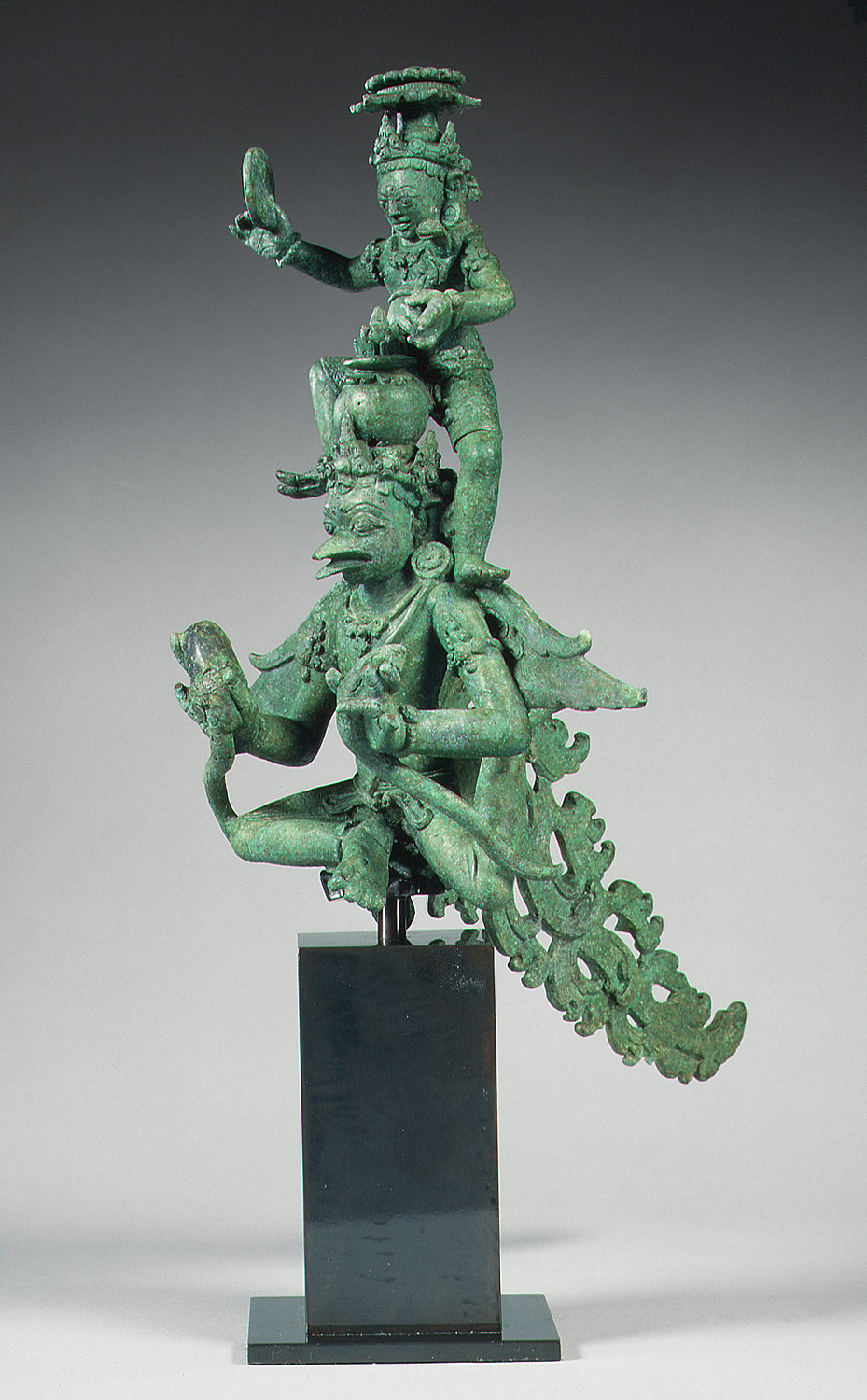
Krishna on Garuda
Seated Transcendent Buddha Vairochana
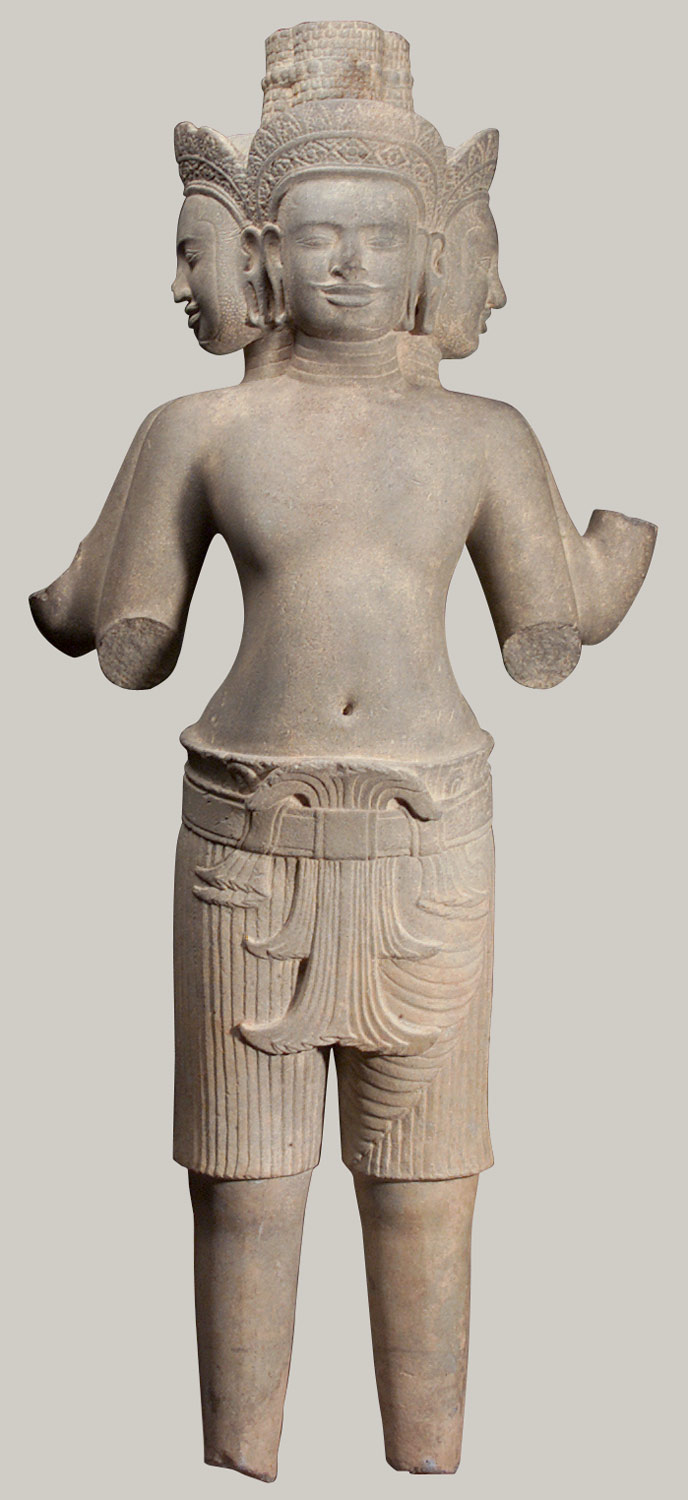
Brahma
Standing Shiva or temple guardian (dvarapala)
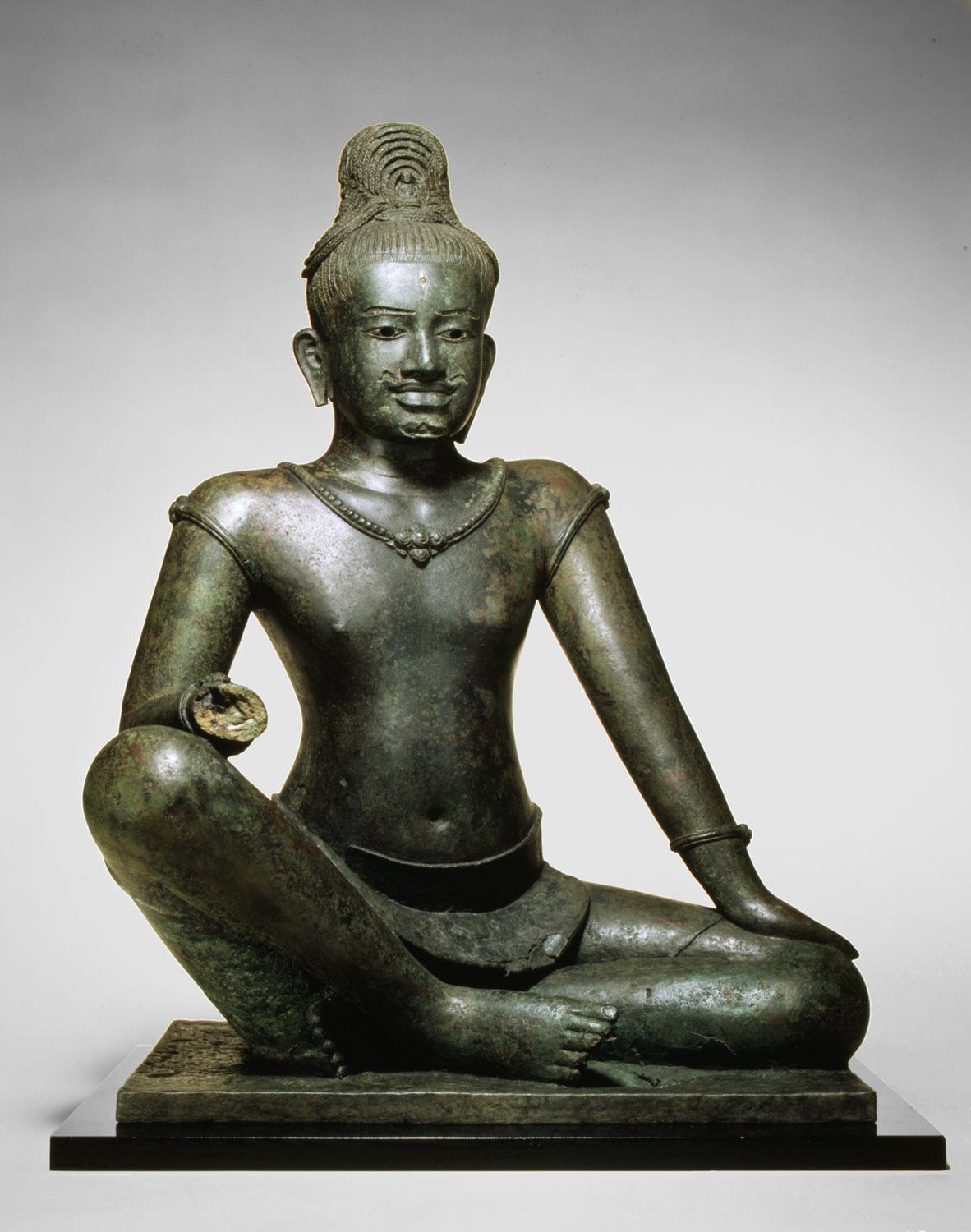
The Bodhisattva Avalokiteshvara Seated in Royal Ease
Heilbrunn Timeline of Art History