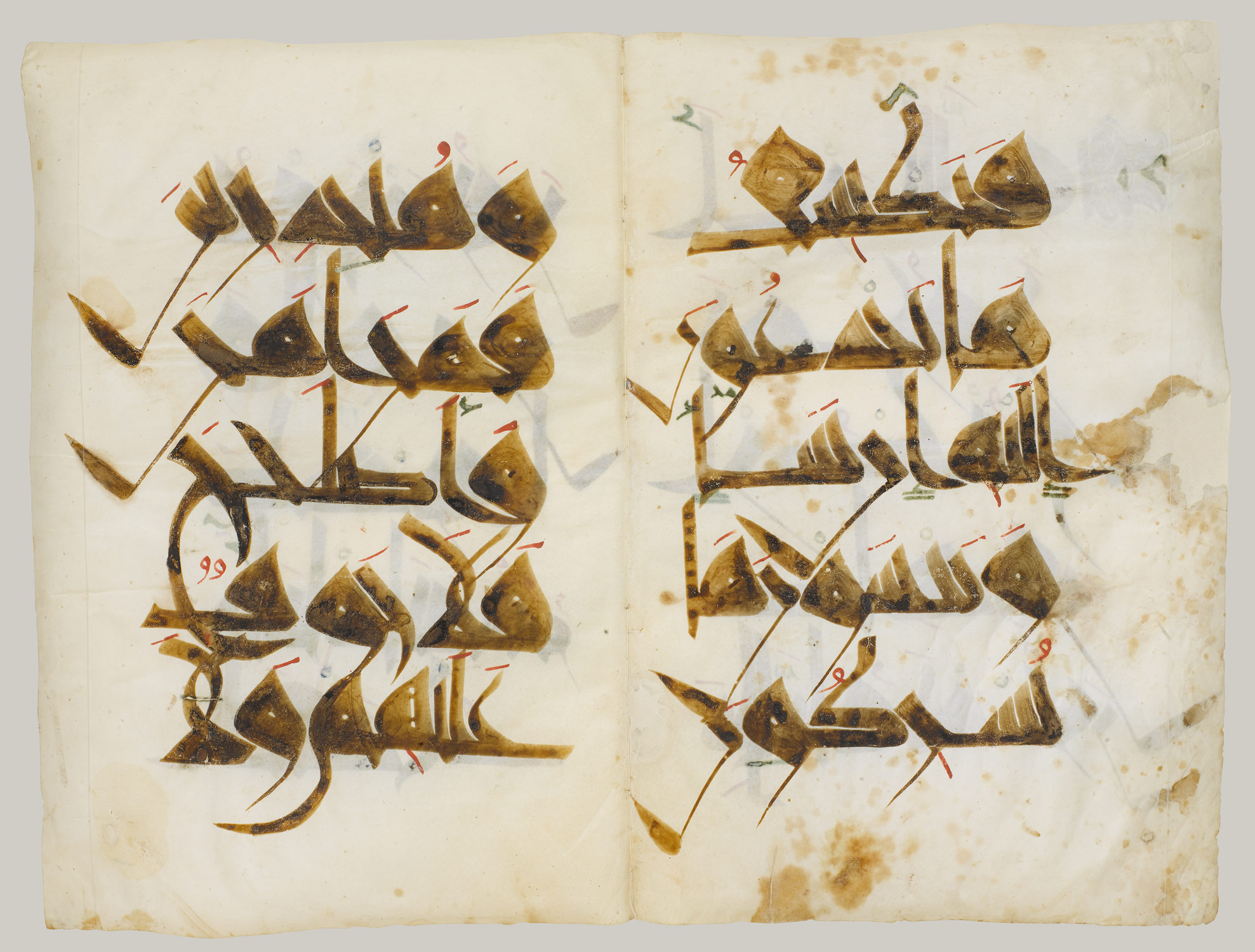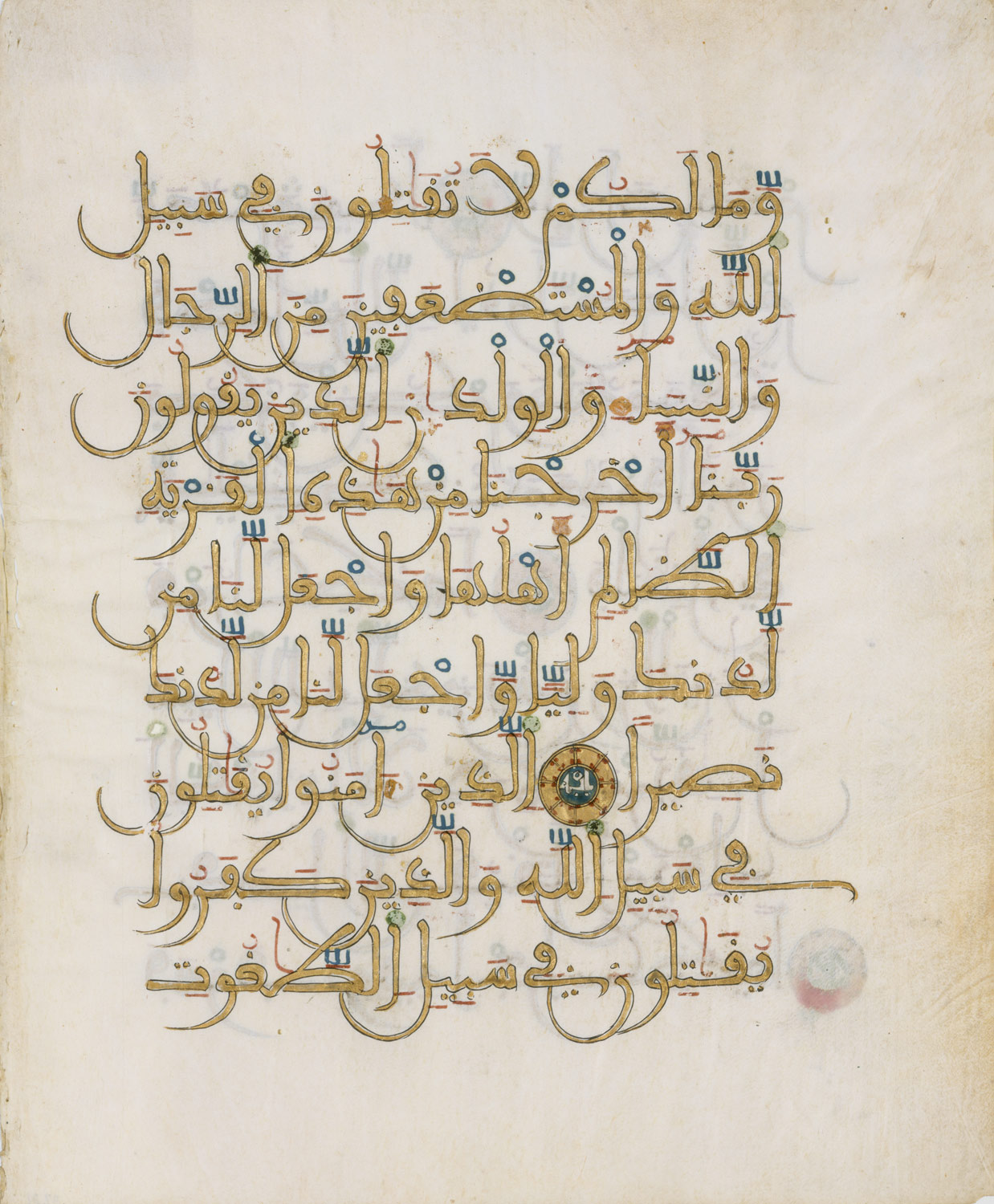

Autonomous Muslim Berber powers define the late medieval period (1000–1400 A.D.) in western North Africa. Despite periods of struggle among different dynasties, the entire region is united under Almohad rule. Later, under the Hafsids in the east and Marinids in the west, the Maghrib enjoys stability. Patronage and the creation of metropolitan centers such as Fez, Marrakesh, and Tunis stimulate developments in philosophy and the arts.
Western North Africa (The Maghrib), 1000–1400 A.D.
-
 2007.191
 -
 37.21
37.21 -
 1985.241
Timeline
1000 A.D.
1100 A.D.
EAST (LIBYA, TUNISIA)
Zirid and Hammadid dynasties, 972–1152
WEST (ALGERIA, MOROCCO)
Berber tribes, 990–1061
Almoravid dynasty, ca. 1062–1147
1100 A.D.
1200 A.D.
EAST (LIBYA, TUNISIA)
Zirid and Hammadid dynasties, 972–1152
Almohad dynasty, 1152–1229
WEST (ALGERIA, MOROCCO)
Almoravid dynasty, ca. 1062–1147
Almohad dynasty, 1147–1269
1200 A.D.
1300 A.D.
EAST (LIBYA, TUNISIA)
Almohad dynasty, 1152–1229
Hafsid dynasty, 1229–1574
WEST (ALGERIA, MOROCCO)
Almohad dynasty, 1147–1269
Marinid dynasty, 1269–1465
Zayyanid dynasty, 1236–1555
1300 A.D.
1400 A.D.
EAST (LIBYA, TUNISIA)
Hafsid dynasty, 1229–1574
WEST (ALGERIA, MOROCCO)
Marinid dynasty, 1269–1465
Zayyanid dynasty, 1236–1555
Overview
Key Events
-
972–1152
Two Berber dynasties, the Zirids and Hammadids, control Tunisia and eastern Algeria, as Fatimid vassals. A Zirid rebellion against the Fatimids in 1050 and subsequent retaliation by the Hilali Bedouin under Fatimid orders bring devastation, including the destruction of Qairawan.
-
1007
The Hammadids found a fortified citadel (Arabic: qal‘a) in the Maadid Mountains of Algeria that is rapidly populated and develops into the first capital (destroyed 1152). The site, known today as the Qal‘a Bani Hammad, is an important example of a medieval Muslim city, and its congregational mosque is among the largest in North Africa.
-
ca. 1062–1147
The Almoravids (al-Murabitun), another dynasty of Berber origin, conquer Morocco and found Marrakesh as their capital. They rule parts of the Sahara, Morocco, Algeria, and Spain and control important North African ports as well as trans-Saharan trade. Due to their interest in reviving Islam and strengthening orthodoxy, the arts and architecture in the early period are simple, in contrast to developments in later periods. The mosques of Algiers (ca. 1097), Tlemcen (1136), and Qarawiyyin in Fez (1135) are important architectural examples from the Maghrib during this period.
-
1147–1269
Following their conquest of Almoravid Morocco and Spain, the Almohads (al-Muwahhidun), another Berber dynasty, add Hammadid and Zirid territories (in present-day Algeria and Tunisia) to their realm. Religious reformation is integral to Almohad establishment, and their courts in Marrakesh and Seville become centers of Islamic learning. The integration of all of the Maghrib as well as Islamic Spain under one rule creates a unified artistic sphere. Developments in architecture include the walls of Fez, Rabat, and Marrakesh and the mosques of Taza (Marrakesh, 1142), the Kutubiyya (Marrakesh, 1147–58), Tinmal (1153–54), the Qasba (Marrakesh, 1195), and Hasan (Rabat, 1199; unfinished).
-
1229–1574
The Hafsids gain control in the eastern Maghrib with the decline of Almohad power. They repair damage done to the land by the Hilali Bedouin and rebuild the Great Mosque of Qairawan. The establishment of Tunis as their new capital reflects the significance of Mediterranean trade. Contacts with Egypt and Andalusia, but especially the influx of Muslim craftsmen and intellectuals fleeing the Christian reconquest of Spain, enrich artistic production.
-
1269–1465
The Marinid dynasty ends Almohad rule and conquers all of the Maghrib, though it can only briefly sustain power in Hafsid territories. Early on, under Abu Yusuf Ya‘qub (r. 1258–86), the city of New Fez is founded. The patronage of such early sovereigns leads to a flourishing of literature and the arts. Architectural activity involves urban fortification, palaces, mosques, and madrasas. Important examples include the mosques of Taza (1291–94) and al-Mansura near Tlemcen (begun 1303), the Bu ‘Inaniyya Madrasa in Fez (1350–55), and the necropolis at Chella (Rabat, 1351).
Citation
“Western North Africa (The Maghrib), 1000–1400 A.D.” In Heilbrunn Timeline of Art History. New York: The Metropolitan Museum of Art, 2000–. http://www.metmuseum.org/toah/ht/?period=07®ion=afw (October 2001)
Related
Map
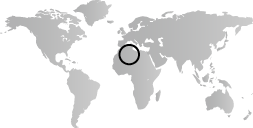
Encompasses present-day Algeria, Libya, Morocco, and Tunisia