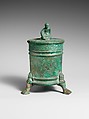
Bronze cista (toiletries box)
Artwork Details
- Title: Bronze cista (toiletries box)
- Period: Late Classical
- Date: ca. 350–325 BCE
- Culture: Praenestine
- Medium: Bronze
- Dimensions: H. 23 in. (58.4 cm)
- Classification: Bronzes
- Credit Line: Gift of Courtland Field Bishop, 1922
- Object Number: 22.84.1a, b
- Curatorial Department: Greek and Roman Art
Audio
1218. Bronze cista (toiletries box)
This bronze cylindrical box, known as a cista, once held toiletries—mirrors, combs, brushes, various pins, cosmetic applicators, and the cosmetics themselves. Containers, like this, may have been given as wedding presents to young women about to be married.
Notice how this cista is engraved with elaborate battle scenes and chariot races—episodes from the Trojan War, as described in Homer’s Iliad. Mostly they pertain to the Greek hero, Achilles, who was one of the most popular figures in Greek and Etruscan art. He features prominently on the Etruscan chariot in this gallery.
On the cista there are also sea nymphs riding dolphins, and griffins attacking a horse. Imagine the dexterity of the artist—being able to engrave such complex scenes on a cylindrical surface!
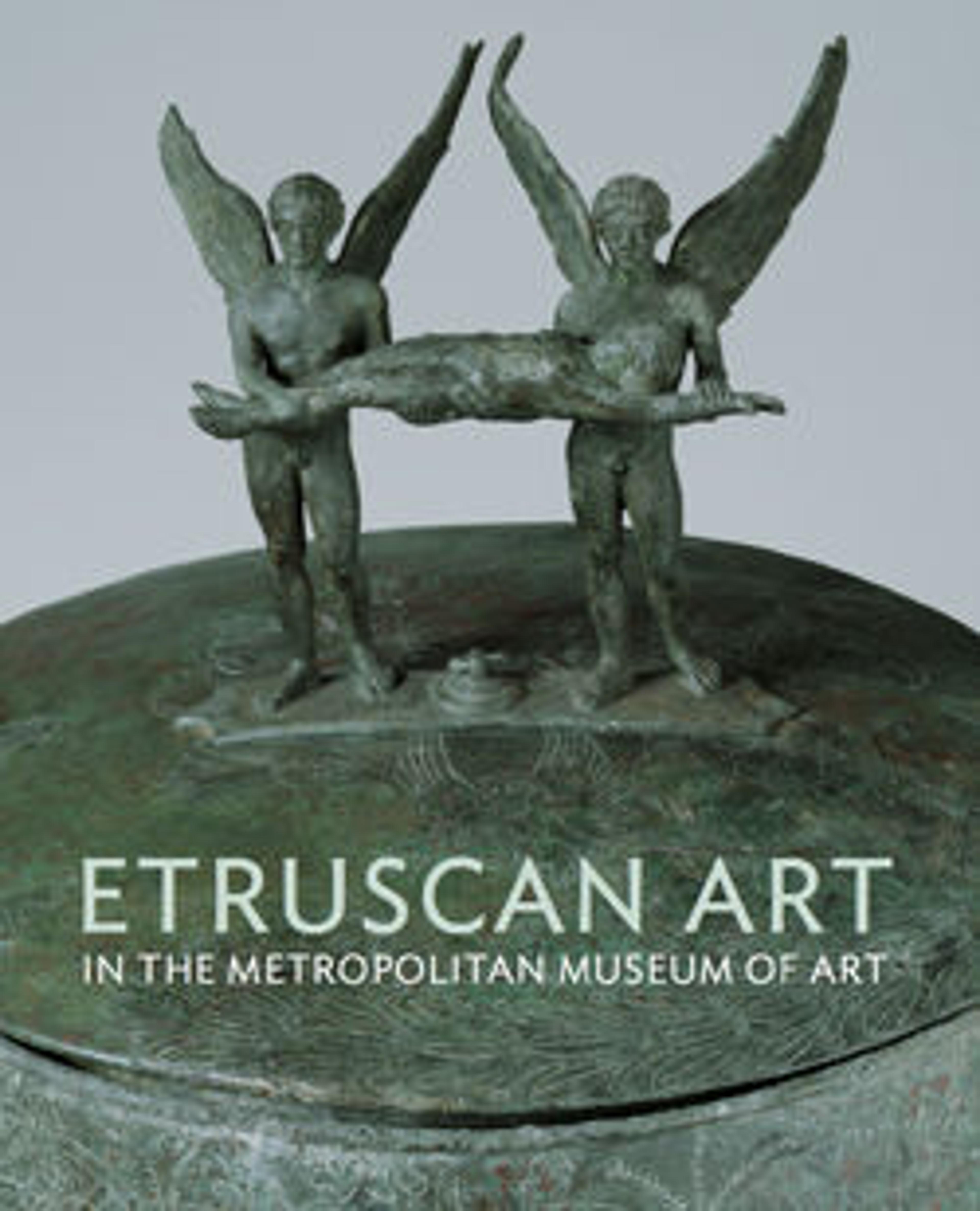
This cista also has a remarkable handle constructed of two nude winged figures carrying the body of a dead soldier. Notice how delicately the artist rendered the feathers, and even the strands of hair.
We might think it unusual to find such decoration on a container that is typically associated with women. However, in Etruscan art, it is not uncommon to find battles and contests —scenes that we might connect with men—on mirrors and other toiletries boxes.
This bronze cista is the largest and finest in the Metropolitan Museum’s collection. It is also the same kind of toiletries box illustrated on the bronze mirror, in the nearby display case.
More Artwork
Related Content

 Free to download
Research Resources
The Met provides unparalleled resources for research and welcomes an international community of students and scholars. The Met's Open Access API is where creators and researchers can connect to the The Met collection. Open Access data and public domain images are available for unrestricted commercial and noncommercial use without permission or fee.
To request images under copyright and other restrictions, please use this Image Request form.
Feedback
We continue to research and examine historical and cultural context for objects in The Met collection. If you have comments or questions about this object record, please contact us using the form below. The Museum looks forward to receiving your comments.
Content Notice
The Metropolitan Museum of Art presents over 5,000 years of art from around the world, and our online collection reflects ongoing work conducted over the course of our more than 150-year history. You may encounter objects or images that may be inappropriate for some viewers or information that may be outdated.