Português
DoarAssinaturaBilhetes
Estamos a trabalhar para traduzir esta página o mais rapidamente possível. Obrigado pela vossa compreensão.

Search for Art

Search Tips
1-42 of 230 results for Andean
Sort by:
Show only
Images
Date
For BCE dates, enter a negative number. E.g. For 2000 BCE, enter -2000.
–
Artist / culture
Object type / material
Match
 
Show results matching
selected filters.
Geographic location
Match
 
Show results matching
selected filters.
Department
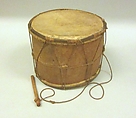
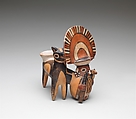
Tamporo, Wood, hide, fiber, Peru? (Andean)
Peru? (Andean)
early 20th century
Nemesio Antúnez
1954
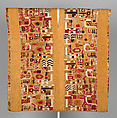
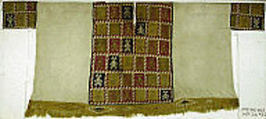
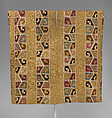
Tunic, Wari artist, Cotton, camelid hair, Wari
Wari artist
650–1000 CE
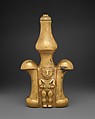
Poporo (lime container) with female figures, Quimbaya artist(s), Gold, Quimbaya
Quimbaya artist(s)
1–600 CE
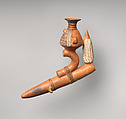
Paccha (ritual vessel), Inca artist(s), Ceramic, slip, Inca
Inca artist(s)
1400–1535 CE
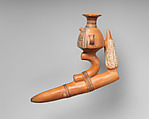
Paccha (ritual vessel), Inca artist(s), Ceramic, slip, Inca
Inca artist(s)
1400–1535 CE
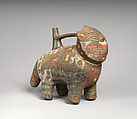
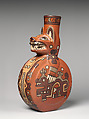
Feline-shaped spout-and-bridge bottle, Paracas artist(s), Ceramic, post-fire paint, Paracas
Paracas artist(s)
800–400 BCE
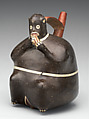
Bottle in the shape of a monkey, Nasca artist(s), Ceramic, slip, Nasca
Nasca artist(s)
1–600 CE
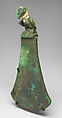
Tumi (knife) with condor, Moche artist(s), Copper, shell, turquoise, Moche
Moche artist(s)
200–800 CE
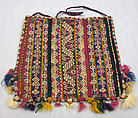
Coca Bag (Ch'uspa), Camelid hair, Aymara
Aymara
20th century
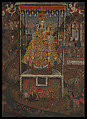
Our Lady of Cocharcas, Unknown artist, Peru (Cuzco), mid-18th century, Oil and gold on canvas, Peru (Cuzco)
Unknown
1759
Earflare with Condor, Silver, gold, gilded copper, shell, Moche
Moche
6th–7th century
Earflare with condor, Silver, gold, gilded copper, shell, Moche
Moche
6th–7th century
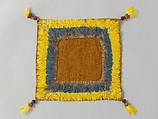
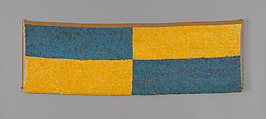
Square Cloth with Feathered Border, Feathers, camelid hair, cotton, wool, Chimú
Chimú
1200 – 1400 CE
Feathered Crown, Feathers (Paradise Tanager, Macaw), cotton, skin, cane, copper, Chimú
Chimú
1200 – 1400 CE
Scepter wand with feathers, Silver, feathers, Chimú or Chancay
Chimú or Chancay
1200 – 1500 CE
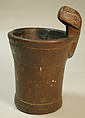
Kero (beaker), Inca artist(s), Wood, Inca
Inca artist(s)
1400–1535 CE
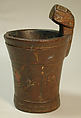
Kero (beaker), Inca artist(s), Wood, Inca
Inca artist(s)
1400–1535 CE
Herder with llama, Recuay artist(s), Ceramic, slip, Recuay
Recuay artist(s)
200–700 CE
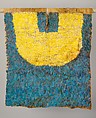
Feathered panel, Wari artist(s), Feathers, cotton, camelid fiber, Wari
Wari artist(s)
650–1000 CE
Bottle in the shape of a feline, Wari artist(s), Ceramic, slip, Wari
Wari artist(s)
600–900 CE
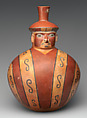
Effigy bottle, Wari artist(s), Ceramic, slip, Wari
Wari artist(s)
650–1000 CE
Kero, Wood, pigmented resin inlay, Quechua
Quechua
16th–17th century
Kero, Wood, pigmented resin inlay, Quechua
Quechua
16th–17th century
Pair of Keros, Wood, pigmented resin inlay, Quechua
Quechua
16th–17th century
Man's Mantle, Camelid hair, Aymara
Aymara
17th–18th century (?)
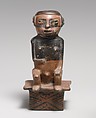
Coca chewer on bench, Capulí artist(s), Ceramic, slip, Capulí
Capulí artist(s)
800–1500 CE
Tunic, Camelid hair, cotton, Ica (?)
Ica (?)
13th–15th century
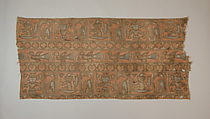
Panel, Cotton, paint, Chancay
Chancay
1100–1400
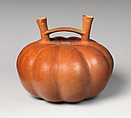
Gourd-shaped bottle, Topará artist(s), Ceramic, slip, Topará
Topará artist(s)
200 BCE–100 CE
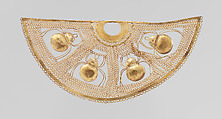
Nose Ornament with Spiders, Gold, Salinar
Salinar
100 BCE–200 CE
Tapestry Tunic, Camelid wool, Wari
Wari
7th–9th century
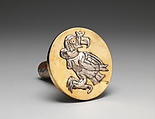
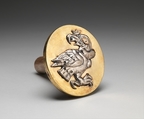
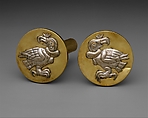
Bird Pin or Spatula, Gold, Tiwanaku
Tiwanaku
5th–9th century
Pair of earflares with condors, Silver, gold, gilded copper, shell, Moche
Moche
6th–7th century
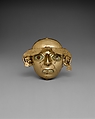
Ornamental Mask, Gilded copper, shell, Moche
Moche
6th–7th century
Kero, Wood, tin studs, and pigmented resin inlays, Quechua
Quechua
17th–18th century
Kero, Wood, metal stud and pigmented resin inlays, Quechua
Quechua
17th–18th century
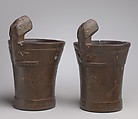
Pair of Keros with Carved Feline Handles, Wood, pigmented resin inlays, Quechua
Quechua
17th–18th century
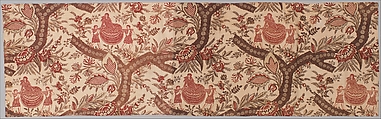
Triumfa España en las Americas (The Triumph of Spain in the Americas), Cotton, block printed, Spanish
Spanish
late 18th century
Feathered Tunic, Chimú artist(s), Cotton, feathers, Chimú
Chimú artist(s)
1200 – 1400 CE
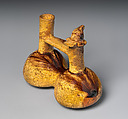
Double-chambered bottle, Peruvian artist(s), Ceramic, glaze, Viceregal Era
Peruvian artist(s)
early 17th century
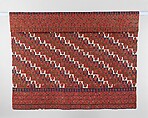
Woman's Dress, Camelid hair, Chuquibamba
Chuquibamba
14th–early 16th century

Content Notice

The Metropolitan Museum of Art presents over 5,000 years of art from around the world, and our online collection reflects ongoing work conducted over the course of our more than 150-year history. You may encounter objects or images that may be inappropriate for some viewers or information that may be outdated.