The Met Fifth Avenue and The Met Cloisters are closed January 1 for New Year’s Day.

Search the collection

Filter By

Object Type / Material
Geographic Location
Department
Date
Show Only:
  • As part of the Met's Open Access policy, you can freely copy, modify and distribute this image, even for commercial purposes.
    APIPublic domain data for this object can also be accessed using the Met's Open Access API
  • Objects with changed or unknown ownership in continental Europe between 1933-1945. Learn more
More than 10,000 results for Ram Rahman
Sort by:
Raghubir Singh, Delhi, Ram Rahman  Indian, Gelatin silver print
Ram Rahman
Raghubir Singh
1982
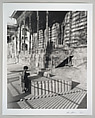
Shah Hamadan Dargah, Srinagar, Kashmir 1990, Ram Rahman  Indian, Gelatin silver selenium toned print
Ram Rahman
1990, printed 2022
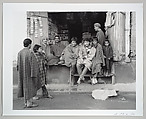
Street Shop, Srinagar, Kashmir 1990, Ram Rahman  Indian, Silver gelatin selenium toned print
Ram Rahman
1990, printed 2022
Kitab suwar al-kawakib al-thabita (Book of the Images of the Fixed Stars) of al-Sufi, `Abd al-Rahman al-Sufi  Iranian, Ink and gold on paper; leather binding
`Abd al-Rahman al-Sufi
late 15th century
Bata (ram) mask for a beete performance, Kwele artist, Wood, pigment, kaolin, Kwele peoples
Kwele artist
19th–first half of 20th century
Bronze statuette of a ram, Bronze, Etruscan
Etruscan
6th century BCE
Statuette of a ram, Brown stone (meta-arenite, that is, quartz-rich indurated sandstone)<br/>"quartzwacke"
570–300 B.C.
Ram amulet, Faience
664–332 B.C.
Ram amulet, Faience
664–332 B.C.
Ram amulet, Faience
664–332 B.C.
Ram amulet, Pale blue faience
664–30 B.C.
Bronze statuette of a ram, Bronze, Cypriot
Cypriot
ca. 200 BCE–200 CE
View of a Mosque and Gateway at Motijhil, Sita Ram  Indian, Opaque watercolor on paper
Sita Ram
ca. 1814–23
Aquamanile in the Form of a Ram, Earthenware, green glaze, British
British
ca. 1250–1350
Amulet depicting a ram-headed god, Faience
664–332 B.C.
Scarab, ram head, Faience
ca. 713–698 B.C.
Head of a ram, Ceramic
ca. 3500–3100 BCE
God with four ram heads facing in four directions, probably Khnum, Faience
664–30 B.C.
Faience amulet in the form of a recumbent ram, Faience, Egyptian
Egyptian
664–30 BCE
Head of Krishna: cartoon for a mural of the Raslila 

, Sahib Ram, Ink and opaque watercolor on paper, India (Rajasthan, Jaipur)
Sahib Ram
ca. 1800
Faience amulet of a ram-headed Amun-re or Khnum, Faience, Egyptian
Egyptian
664–334 BCE
Bronze statuette of a ram, Bronze, Roman
Roman
1st–2nd century CE
Orufanran Costume Attachment: Ram Head, Ivory, wood or coconut shell inlay, Yoruba peoples, Owo group
Yoruba peoples, Owo group
17th–19th century
Amulet of a walking ram, Glass
400–30 BC
Amulet of a walking ram, Glass
525–30 BC
Textile fragment: walking ram with a neckband and fluttering ribbons, Wool, cotton, Sasanian
Sasanian
ca. 7th century CE
Ram, Ralph Wood the Younger  British, Lead-glazed earthenware, British, Burslem, Staffordshire
Ralph Wood the Younger
ca. 1770–80
Ram (?), Blown glass, French, Nevers or Nivernais
French, Nevers or Nivernais
17th–18th century
Greek
3rd quarter of the 6th century BCE
Greek
3rd quarter of the 6th century BCE
664–30 B.C.
664–30 B.C.
664–332 B.C.
ca. 1070–664 B.C.
ca. 1295–1070 B.C.
Relief plaque with the head of a ram deity, Limestone
400–30 BCE
Rama Dasa (Ram Das), Lithograph with varnish, India
India
ca. 1910–20
Ram-headed Scaraboid Inscribed with a Blessing Related to Amun (Amun-Re), Glazed steatite
ca. 733–664 B.C.
Ram, Jade (nephrite), China
China
late 18th–early 19th century
Canaanite-Type Dish with Ram Protomes, Wood
ca. 1981–1640 B.C.