Deutsch
SpendenMitgliedschaftTickets
Wir arbeiten daran, diese Seite so schnell wie möglich zu übersetzen. Vielen Dank für Ihr Verständnis.

Search for Art

Search Tips
1-42 of 770 results for flail
Sort by:
Show only
Images
Date
For BCE dates, enter a negative number. E.g. For 2000 BCE, enter -2000.
–
Artist / culture
Object type / material
Match
 
Show results matching
selected filters.
Geographic location
Match
 
Show results matching
selected filters.
Department
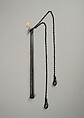
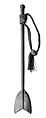
Flail, Iron, brass, Indian
Indian
18th century
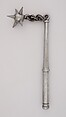
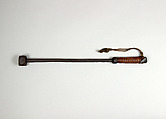
Military Flail, Steel, possibly German
possibly German
probably mid to late 19th century in style of 16th century
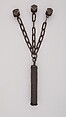
Military Flail, Iron, Possibly German
Possibly German
possibly 16th to 19th century
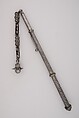
Military Flail, Steel, iron, possibly German
possibly German
possibly 16th century
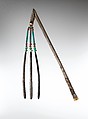
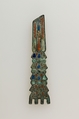
Flail of Hapiankhtifi, Wood, gold leaf, carnelian, faience
ca. 1981–1802 B.C.
Flail attachment, Cupreous metal, glass
305 BCE–364 CE
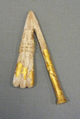
Model Flail from the Foundation Deposit for Hatshepsut's Tomb, Wood, gold foil
ca. 1473–1458 BCE
Part of a flail for a statue, Cupreous metal, glass
664–30 BCE
Flail scepter from the tomb of Senebtisi, Faience, wood, carnelian, gold, wood, paint
ca. 1850–1775 B.C.
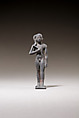
Child god standing and holding a flail, Bronze or cupreous alloy
664–30 BCE
ca. 1850–1640 B.C.
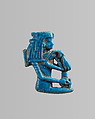
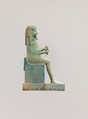
Amulet of seated goddess / queen with ankh and flail, Blue faience
ca. 1386–1300 BCE
Indian
18th–19th century
Japanese
ca. 1615–1868
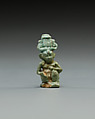
Squatting Harpokrates with hemhem and flail, Faience
664–30 BCE
Fitting for the flail of a large statue (?), Bronze or cupreous alloy, vitreous inlay
332–30 BCE
Walter Tyndale
original ca. 1473–1458 BCE
Publisher Underwood & Underwood
1902
Scarab, Black stone
664–525 BCE
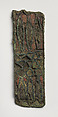
Relief, tomb of Khety: sacred objects to be used in Khety’s funeral rituals, Limestone, paint
ca. 2051–2000 B.C.
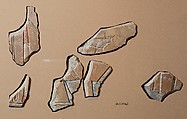
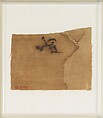
Mummy bandage inscribed with a falcon, Linen
ca. 1000–945 BCE
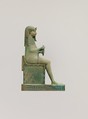
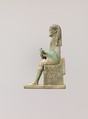
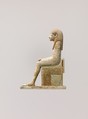
Inlay depicting the god Shepsi, Faience
4th century BCE
Inlay depicting enthroned god Shepsi, Faience
4th century BCE
Inlay depicting enthroned god, Faience
4th century BCE
Inlay depicting enthroned god, Faience
4th century BCE
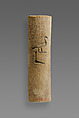
Cylinder, perhaps from a ceremonial whip, Wood, traces of blue paste
ca. 1981–1802 B.C.
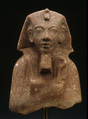
Funerary Figure of Akhenaten, Quartzite (red)
ca. 1347–1330 BCE
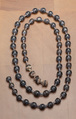
Necklace of Hapiankhtifi, Black obsidian ball beads; silver caps<br/>Silver
ca. 1981–1802 B.C.
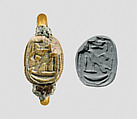
Gold ring with scarab, Silver,gold, copper alloy, glazed steatite, Cypriot
Cypriot
8th–6th century BCE
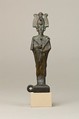
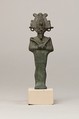
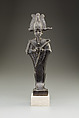
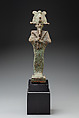
Osiris, Cupreous metal
664–30 BCE
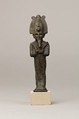
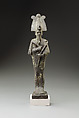
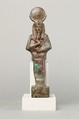
Osiris, Cupreous metal
664–30 BCE
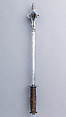
Mace, Steel, wood, fiber (cord), possibly French
possibly French
late 15th century
Osiris, Cupreous metal
664–30 BCE
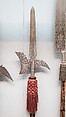
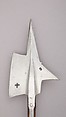
Halberd of Prince Karl I of Liechtenstein (1569–1627), Steel, wood, textile, German
German
ca. 1620–23
Club, Wood, fiber, Vanuatu
Vanuatu
19th–early 20th century
Mace, Iron, cane, Chinese
Chinese
18th–19th century
Statuette of Osiris, Bronze or copper alloy
664–332 BCE
Statuette, Osiris, Bronze or copper alloy
664–332 BCE
Statuette of Osiris, Bronze or copper alloy
664–332 BCE
Spear, Steel, wood, pigment, Chinese
Chinese
18th century
Osiris-Iah, Cupreous metal, precious metal leaf
664–332 BCE
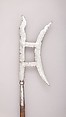
Halberd, Steel, wood, Swiss
Swiss
late 15th century

Content Notice

The Metropolitan Museum of Art presents over 5,000 years of art from around the world, and our online collection reflects ongoing work conducted over the course of our more than 150-year history. You may encounter objects or images that may be inappropriate for some viewers or information that may be outdated.