Français
Faire un donDevenir membreBillets
Nous travaillons à la traduction de cette page dès que possible. Merci de votre compréhension.

Search for Art

Search Tips
1-42 of 103 results for kilim
Sort by:
Show only
Images
Date
For BCE dates, enter a negative number. E.g. For 2000 BCE, enter -2000.
Artist / culture
Object type / material
Match
 
Show results matching
selected filters.
Geographic location
Match
 
Show results matching
selected filters.
Department
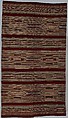
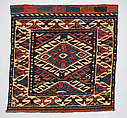
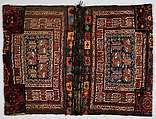
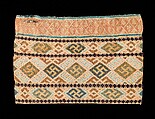
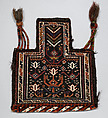
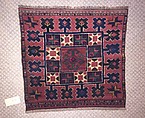
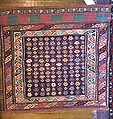
Kilim, Cotton, wool, and silk; slit-tapestry weave, brocaded
late 19th–early 20th century
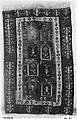
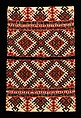
Rug, Wool (Kilim weave. Nine ribs to inch.), Romanian
Romanian
late 18th century
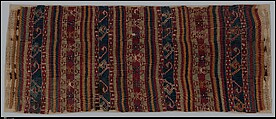
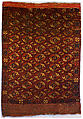
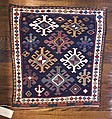
Ushak Kilim, Wool
18th–19th century
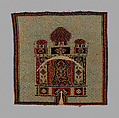
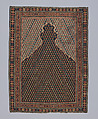
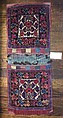
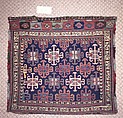
Kilim Saddle Cover with Mashhad Design, Cotton (warp); tapestry-woven
late 19th century
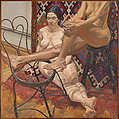
Two Models with Bent Wire Chair and Kilim Rug, Philip Pearlstein  American, Oil on canvas
Philip Pearlstein
1984
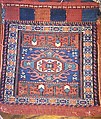
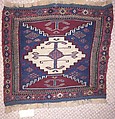
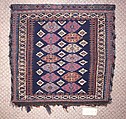
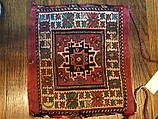
Face of Half a Double Saddle Bag (Khorjin), Wool (warp, sumak weft, and tapestry weft); sumak simple weft wrapping (no ground weft) and tapestry (kilim) with slits for closure
mid-19th century
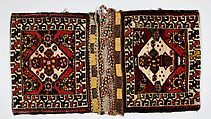
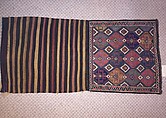
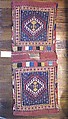
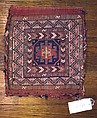
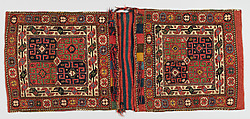
Double Saddle Bag (Khorjin), Wool (warp, weft, and pile); symmetrically knotted pile and slit tapestry (kilim) closure (front); weft-faced plain weave with twined and braided loop closures (back)
ca. 1900
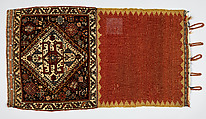
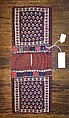
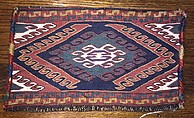
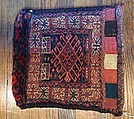
Half a Double Saddle Bag (Khorjin), Wool (warp, ground weft, and pile); asymmetrically knotted pile and closure border in complementary weft weave (front); slit tapestry (kilim) with border pattern in complementary weft weave, and twined and braided loop closures (back)
ca. 1875
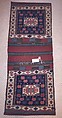
Double Saddle Bag (Khorjin), Wool (warp, weft, and sumak weft) and goat(?) hair (sumak weft); sumak extra-weft wrapping, weft-faced plain weave, and slit tapestry (kilim) closure (front); weft-faced plain weave and braided loop closures (back)
ca. 1875
Double Saddlebag (Khorjin), Wool (warp and sumak weft), cotton (ground weft), and goat(?) hair (sumak weft); sumak extra-weft wrapping and slit tapestry (kilim) closure (front); weft-faced plain weave with pattern in supplementary brocaded weft (back)
ca. 1900
Double Saddle Bag (Khorjin), Wool (warp, ground weft, and sumak weft) and goat(?) hair (black braided loop); sumak extra-weft wrapping and slit tapestry (kilim) weave (front); weft-faced plain weave with pattern in supplementary continuous weft and braided loop closures (back)
ca. 1800–25
Double Saddle Bag (Heybe), Wool (warp and weft); copper coated with brass metal strip wrapped around cotton core (weft); slit tapestry (kilim), weft-faced plain weave, diagonal ridge sumak outline, closure in oblique plaiting, and plaited warp fringe (front); weft-faced plain weave (back)
ca. 1880
Double Flour Bag, Wool (warp, ground weft, sumak weft, and pile) and goat(?) hair (braided loops); sumak extra-weft wrapping, tapestry (kilim) with dovetailing, and border pattern in complementary weft weave (front); symmetrically knotted pile (top and bottom edges); weft-faced plain weave with two areas of pattern in sumak extra-weft wrapping with twined and braided loop closures (back)
ca. 1900
Carpet, Wool and cotton; tapestry-woven
first half 19th century
Carpet, Wool, cotton, and silver mtal wrapped thread
ca. 1800
Bed curtain border, Silk, metal, Russian
Russian
late 19th century
Towel border, Silk, Russian
Russian
1840–70
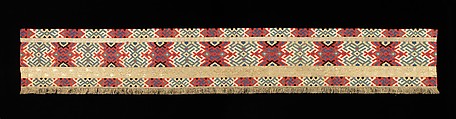
Towel border, Linen, Russian
Russian
1840–70
Tekke Main Carpet, Wool; asymmetrically knotted pile
probably early–mid-19th century
"Senneh" Prayer Rug, Cotton (warp), wool (weft); tapestry-woven
late 18th–early 19th century
Salt Bag, Wool (warp, ground weft, sumak weft, and pile), cotton (white sumak weft and white pile), and goat(?) hair (side finishes); sumak extra-weft wrapping (front); symmetrically knotted pile (bottom edge); weft-faced plain weave with pattern in sumak extra-weft wrapping (back); wrapped warp tassels
ca. 1920
Cushion Cover (Yastik), Wool (warp, weft and pile); symmetrically knotted pile
19th century
Shahsevan Saddle Bag Face, Wool and cotton; sumak technique
ca. 1870
Neriz Double Saddle Bag, Wool and cotton
late 19th century
Kirghiz Bag Face, Wool and cotton
late 19th century
Shahsevan Double Saddle Bag (Pair), Wool and cotton; sumak brocaded
ca. 1870
Shahsevan Double Saddle Bag, Wool and cotton
ca. 1880
Shahsevan Double Saddle Bag, Wool and cotton; sumak technique
ca. 1860
Shahsevan Saddle Bag Face, Wool and cotton; sumak technique
ca. 1850
Shahsevan Double Saddle Bag, Wool and cotton; sumak technique
ca. 1860
Qarabagh Small Bag, Wool and cotton; sumak technique
ca. 1880
Shahsevan Double Saddle Bag, Wool and cotton
ca. 1850
Shahsevan Saddle Bag Face, Wool and cotton; sumak technique
ca. 1870
Shahsevan Saddle Bag, Wool and cotton; sumak technique
ca. 1860
Shahsevan Saddle Bag, Wool and cotton; sumak technique
ca. 1850
Shahsevan Small Bag, Wool and cotton; sumak technique
ca. 1870
Shahsevan Small Bag, Wool and cotton; sumak technique
ca. 1870
Luri Bag, Wool and cotton; sumak brocaded
ca. 1900
Shahsevan Double Saddle Bag, Wool; sumak technique
ca. 1860
Ensemble, a, c) wool<br/>b) cotton, Indigenous American (Hopi peoples)
Indigenous American (Hopi peoples)
20th century
Half of Double Saddle Bag (Khorjin), Wool (pile, warp, and weft); asymmetrically knotted pile, tapestry weave, brocaded with wool and cotton
last quarter 19th century
Batik with Talismanic Calligraphic Motifs, Cotton; tulis batik
19th–early 20th century

Content Notice

The Metropolitan Museum of Art presents over 5,000 years of art from around the world, and our online collection reflects ongoing work conducted over the course of our more than 150-year history. You may encounter objects or images that may be inappropriate for some viewers or information that may be outdated.