
Futurist Syndicates and Fantastic Taverns
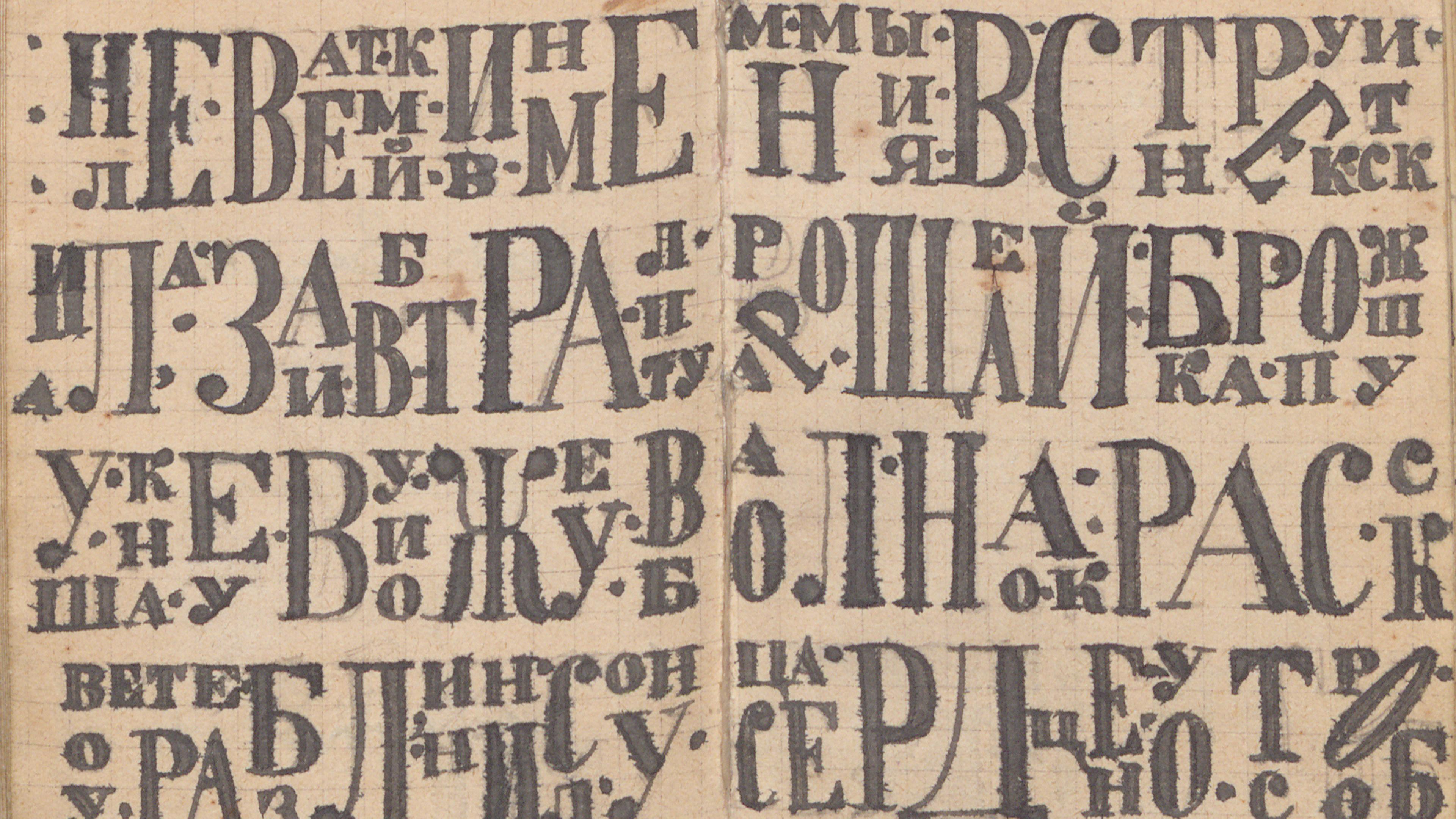
Aleksei Kruchenykh and Il’ia Zdanevich were central figures in avant-garde art circles in Russia in the early to mid-1910s. A poet, artist, and publisher, Kruchenykh sparked an explosion of innovation and creativity in Russian art and poetry, with artists’ books at the core. Both figures shared passions for revitalizing poetic language, exploring the expressive potential of letterforms and typography, and endowing words with new meanings based on their sound.
In 1917, both artists re-centered their activity in the city of Tiflis. Together with Igor Terent’ev and Kirill Zdanevich (Il’ia’s brother), they established the Syndicate of Futurists and then another group, 41 Degrees. They organized publications, lectures, exhibitions, readings, and performances in cultural spaces around Tiflis, most notably an art café and cabaret named the Fantastic Tavern.
Selected Artworks
Igor Terent’ev and Kirill Zdanevich

Il’ia Zdanevich mixed typefaces, type sizes, and type matter to make printed poetry more expressive and dynamic: a practice also embraced by fellow 41 Degrees member Igor Terent’ev. Both artists liberated text from fixed, straight lines, and indulged in playful uses of glyphs and other symbols found in print shop drawers. The works by Terent’ev shown here include theoretical and critical works on transrational poetry, and a collection of his own poems, which embrace nonsense, chance, word creation, and the rejection of logic and meaning. Several of Terent’ev’s publications included designs and illustrations by Kirill Zdanevich. In his art, Kirill advanced a style he called “orchestral painting,” which brought together elements of Expressionism, Cubo-Futurism, and Symbolism. Kirill worked extensively as a graphic artist, illustrating books and book covers for prominent Russian and Georgian avant-garde writers.
Selected Artworks
Dada and Constructivism
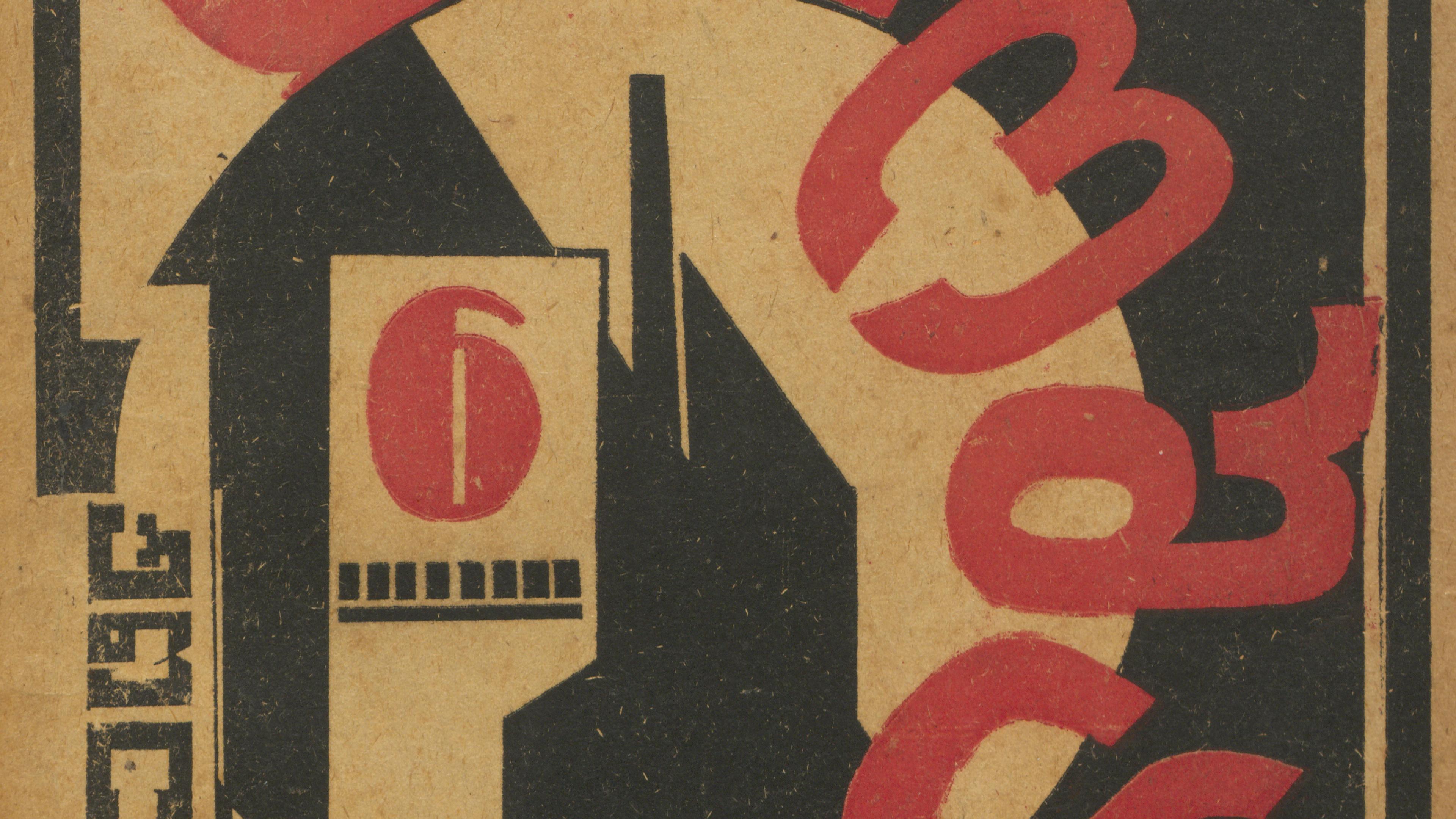
In 1922, a group of Georgian poets and artists established H2SO4, an association that promoted modernization and modernism in Georgia. The group drew inspiration from Russian Futurism, Italian Futurism, Dada, and Symbolism, as well as Georgian folk culture, paganism, and mythology. The name H2SO4 refers to the corrosive compound sulfuric acid and represented the group’s goal of destroying art in its current, conventional state. The group adapted aesthetic, theoretical, and performative aspects of Futurism and Dada, including acts of disruption and provocation. H2SO4 members interrupted readings by prominent Symbolist writers and derided them in print.
In 1921, the Red Army invaded Georgia and ended the country’s independence. Under Soviet rule, modernist art was increasingly denounced as deviant and antithetical to party goals and ideology. Constructivism provided a temporary refuge, but by 1930, artistic innovation and free expression were buried beneath the Stalinist regime’s demand that all artists adopt Socialist Realism.