
Introduction
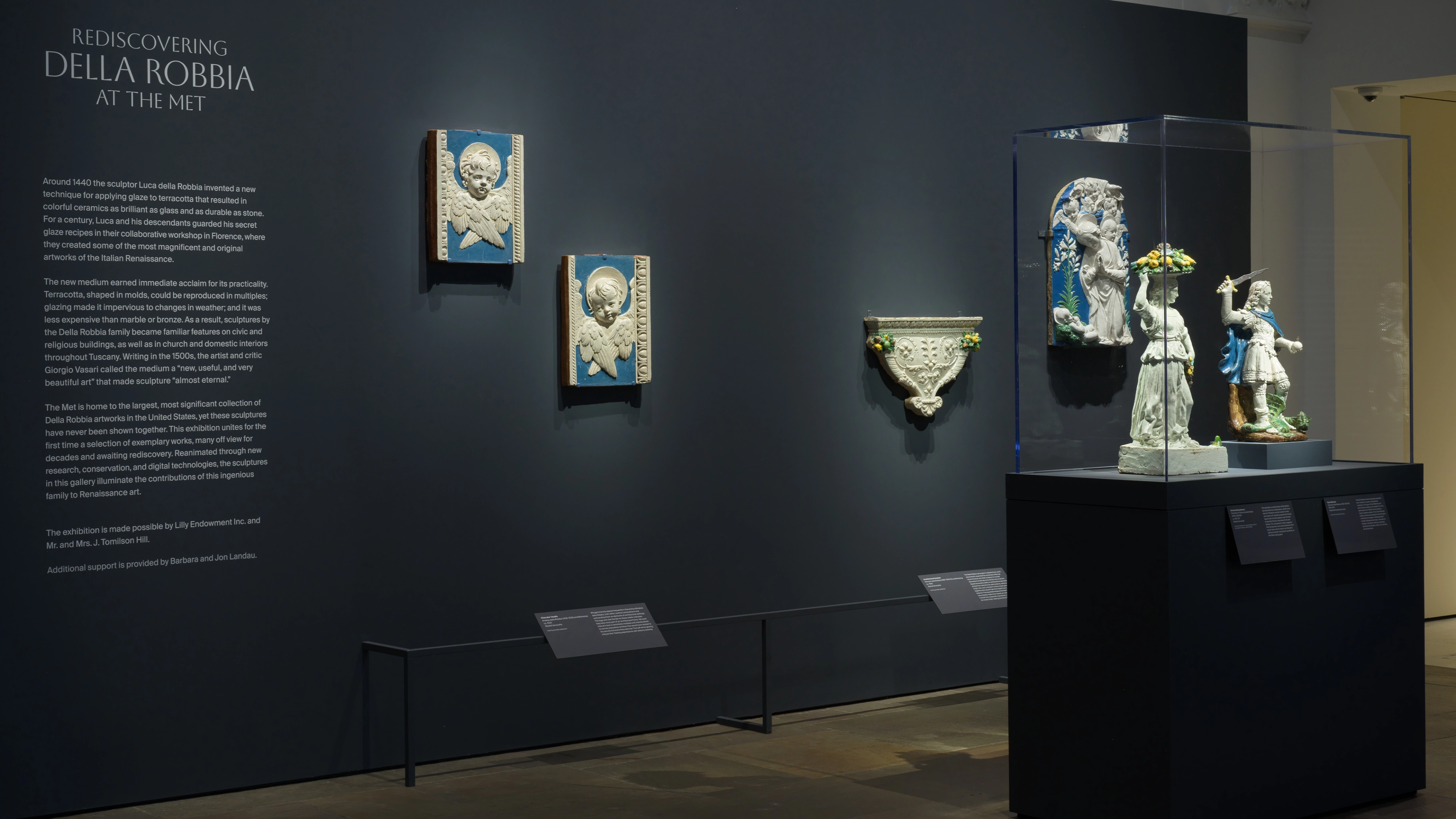
Around 1440 the sculptor Luca della Robbia invented a new technique for applying glaze to terracotta that resulted in colorful ceramics as brilliant as glass and as durable as stone. For a century, Luca and his descendants guarded his secret glaze recipes in their collaborative workshop in Florence, where they created some of the most magnificent and original artworks of the Italian Renaissance.
The new medium earned immediate acclaim for its practicality. Terracotta, shaped in molds, could be reproduced in multiples; glazing made it impervious to changes in weather; and it was less expensive than marble or bronze. As a result, sculptures by the Della Robbia family became familiar features on civic and religious buildings, as well as in church and domestic interiors throughout Tuscany. Writing in the 1500s, the artist and critic Giorgio Vasari called the medium a “new, useful, and very beautiful art” that made sculpture “almost eternal.”
The Met is home to the largest, most significant collection of Della Robbia artworks in the United States, yet these sculptures have never been shown together. This exhibition unites for the first time a selection of exemplary works, many off view for decades and awaiting rediscovery. Reanimated through new research, conservation, and digital technologies, the sculptures in this gallery illuminate the contributions of this ingenious family to Renaissance art.
Selected Artworks
Mother and Child
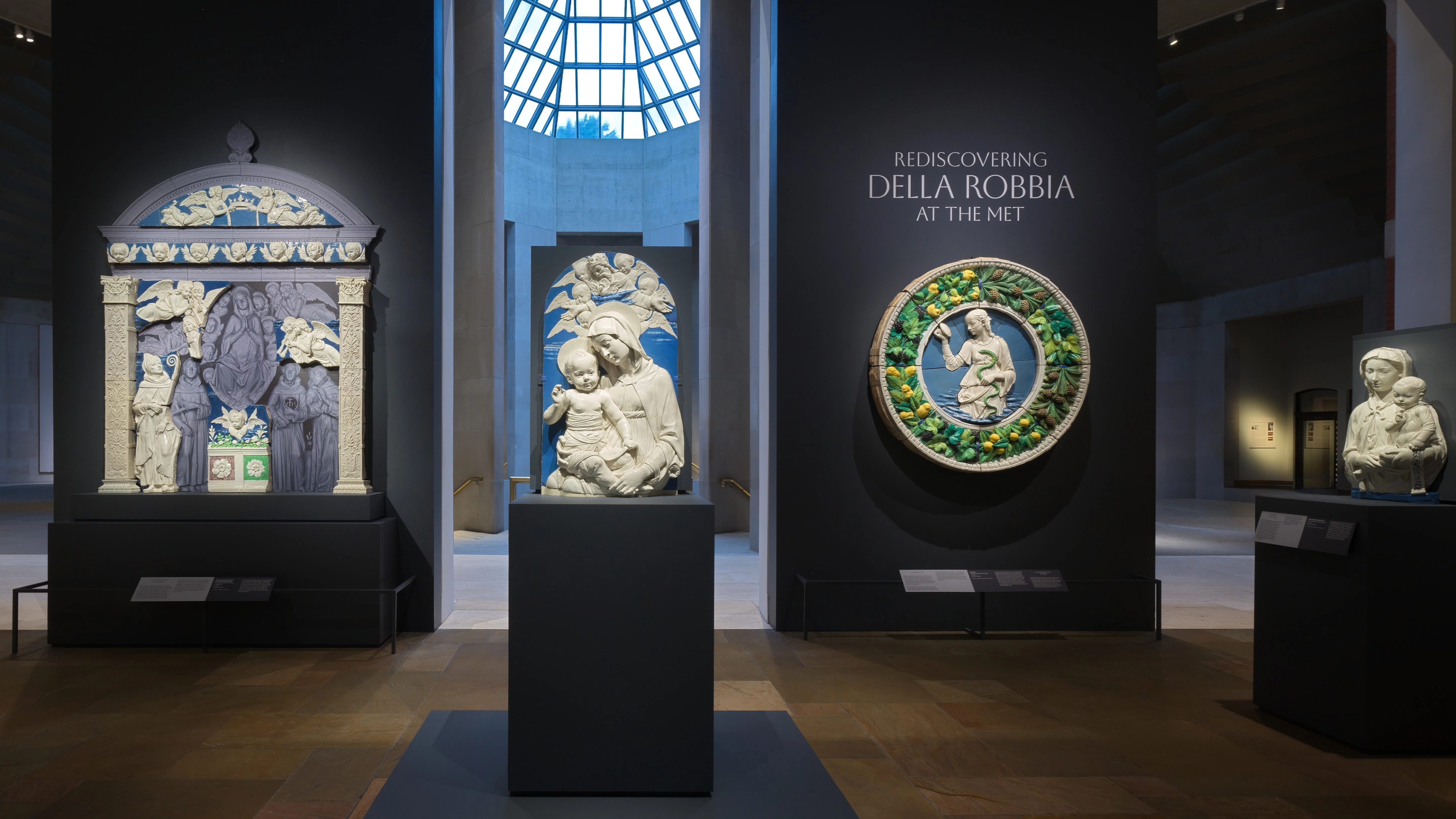
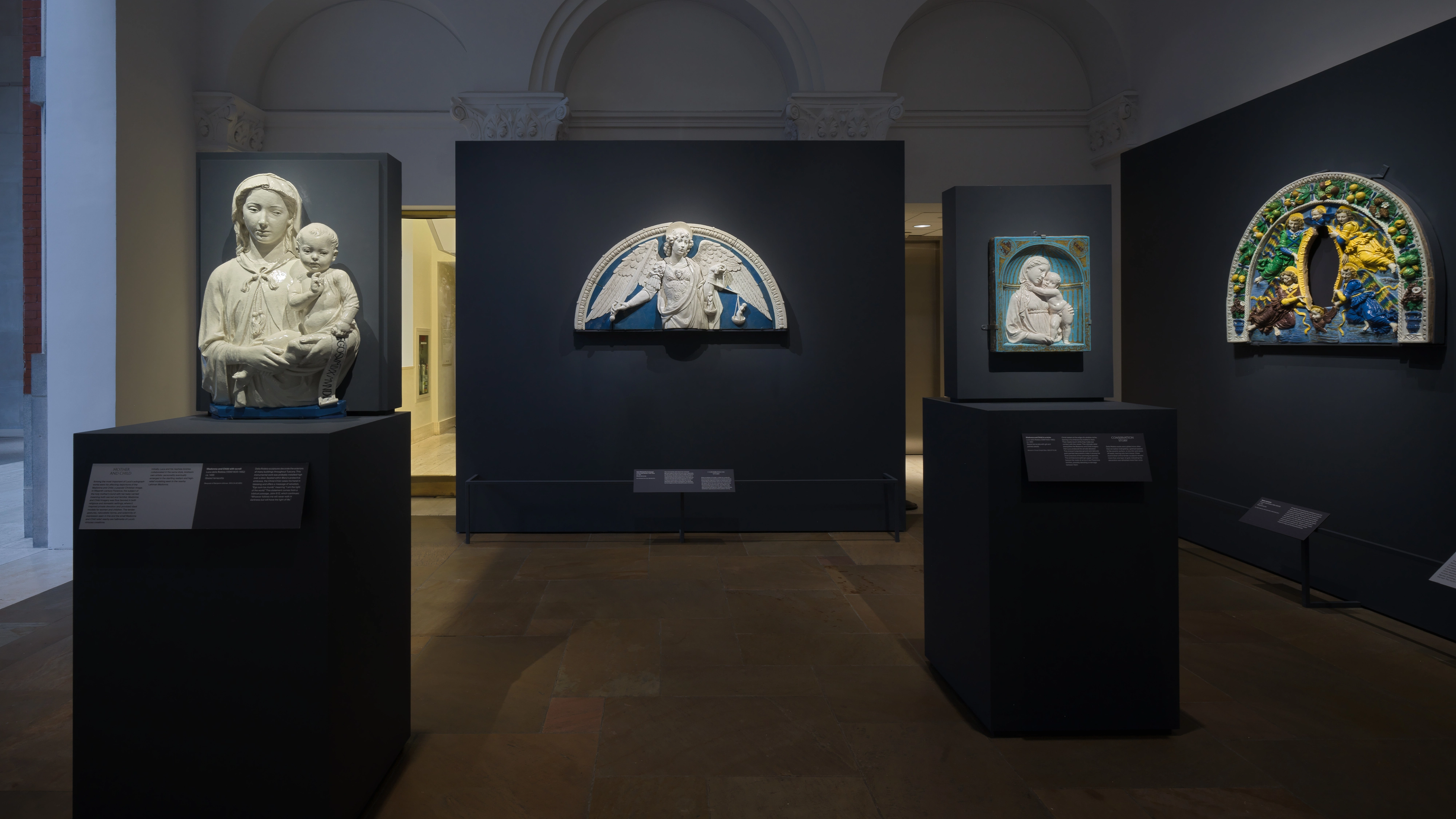
Among the most important of Luca’s autograph works were his affecting depictions of the Madonna and Child, a popular Christian image. In fifteenth-century Florence, the subject of the holy mother’s bond with her baby carried meaning both sacred and familial. Madonna and Child imagery was thus favored in both religious and domestic settings, where it inspired private devotion and provided ideal models for women and children. The tender gestures, naturalistic forms, and solemnity of expression seen in this and the small Madonna and Child relief nearby are hallmarks of Luca’s virtuoso creations.
Initially, Luca and his nephew Andrea collaborated in the same style. Andrea’s own artistic personality eventually emerged in the startling realism and high-relief modeling seen in the nearby Lehman Madonna.
Selected Artworks
Scaling Up
Before Luca’s glazed terracotta artworks became a common sight in Florence, fifteenth-century viewers were accustomed to large-scale sculpture in the monochromatic mediums of marble and bronze. The bright colors and glossy sheen of Della Robbia sculpture must have astonished them, even more so when the scale was monumental.
Because large ceramic forms are especially difficult to fire in the kiln, the workshop’s biggest productions were made in smaller sections. The nearby tondo and lunettes, as well as the altarpiece on the other side of the gallery, are assembled from many sections, their seams often hidden along the contours of the compositions. This method of assembly makes Della Robbia sculpture easy to disassemble and inexpensive to transport, from the workshop to hilltop churches, or more recently, from Italy to America.
Selected Artworks
The Marquand Altarpiece
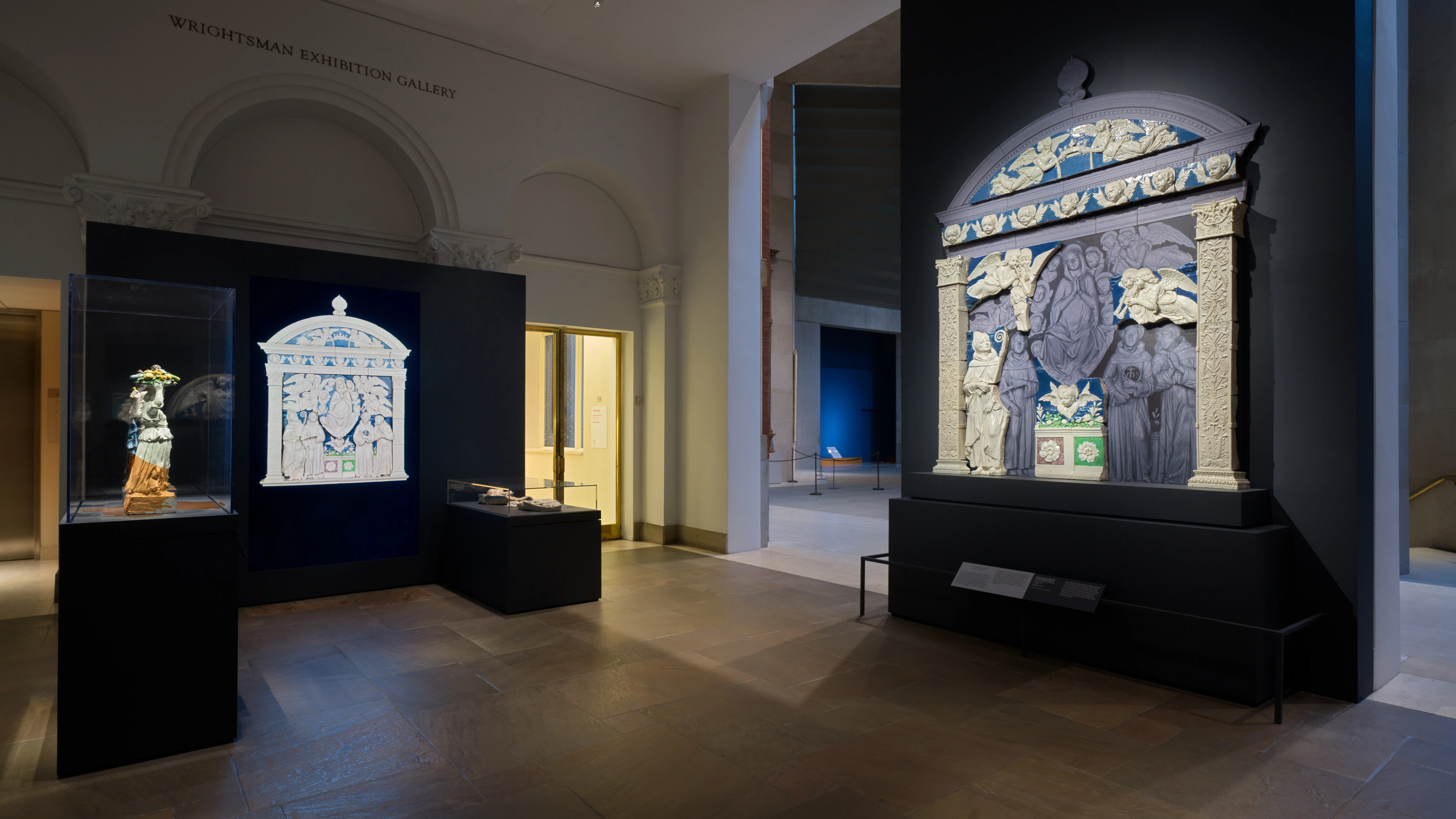
This monumental altarpiece was given to The Met by Henry G. Marquand (1819–1902), a New York businessman and art collector. His son Allan embarked on a study of the work that would identify the altarpiece’s nineteenth-century restorations and change its attribution from Luca to Andrea. Allan went on to establish the field of Della Robbia studies with a remarkable—and still unsurpassed—eight-volume comprehensive catalogue on the family’s works. He became a professor of art history at Princeton and the first-ever director of the university’s art museum.
The altarpiece was on view from the time it entered the collection until the 1950s. Today it is partially conserved. Exhibiting it in this state allows us to rediscover an astonishing artwork that shaped the legacy of the Della Robbia family in America and gain critical insights from its ongoing restoration. A nearby video visualizes the fully assembled altarpiece and suggests a sequence for its construction.
Selected Artworks
Portraits and Likeness
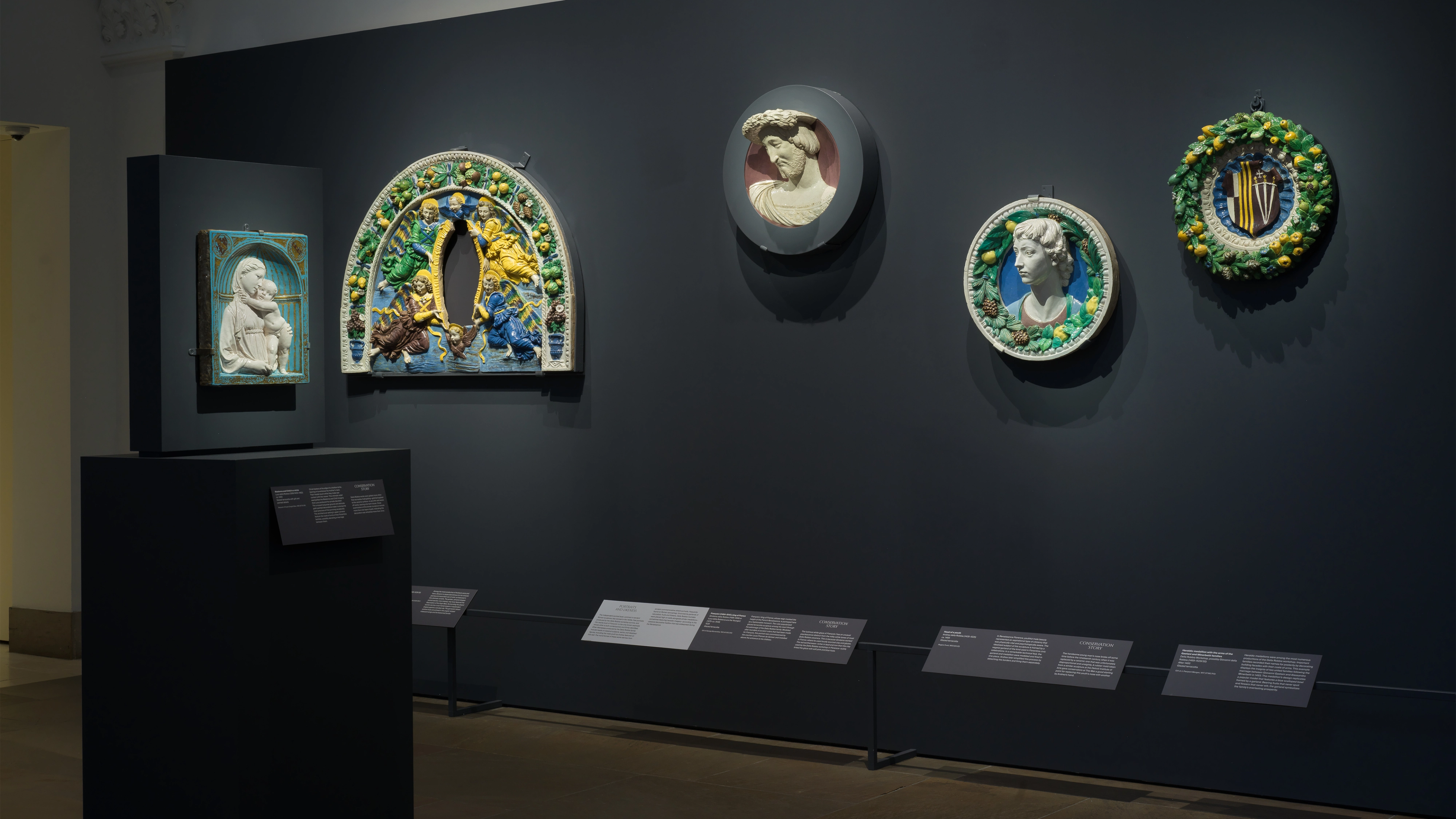
The independent portrait bust, common in ancient Roman sculpture, was revived in the 1400s. Few portraits produced by the Della Robbia workshop survive, and the nearby bust of François I is the only known example whose sitter is both contemporary and firmly identified. Other likenesses produced by the Della Robbia family include heads of classical subjects, saints, and idealized figures, including the male youth by Andrea featured on this wall. The round format of these works derives from ancient commemorative shield portraits, frequently found on Roman sarcophagi. Encircled by garlands of naturalistic fruits and flowers, Della Robbia roundels were placed high on walls alongside similar medallions—sometimes featuring heraldic imagery—according to the classical decorative tradition that was widespread during the Renaissance.
Selected Artworks
Statuettes
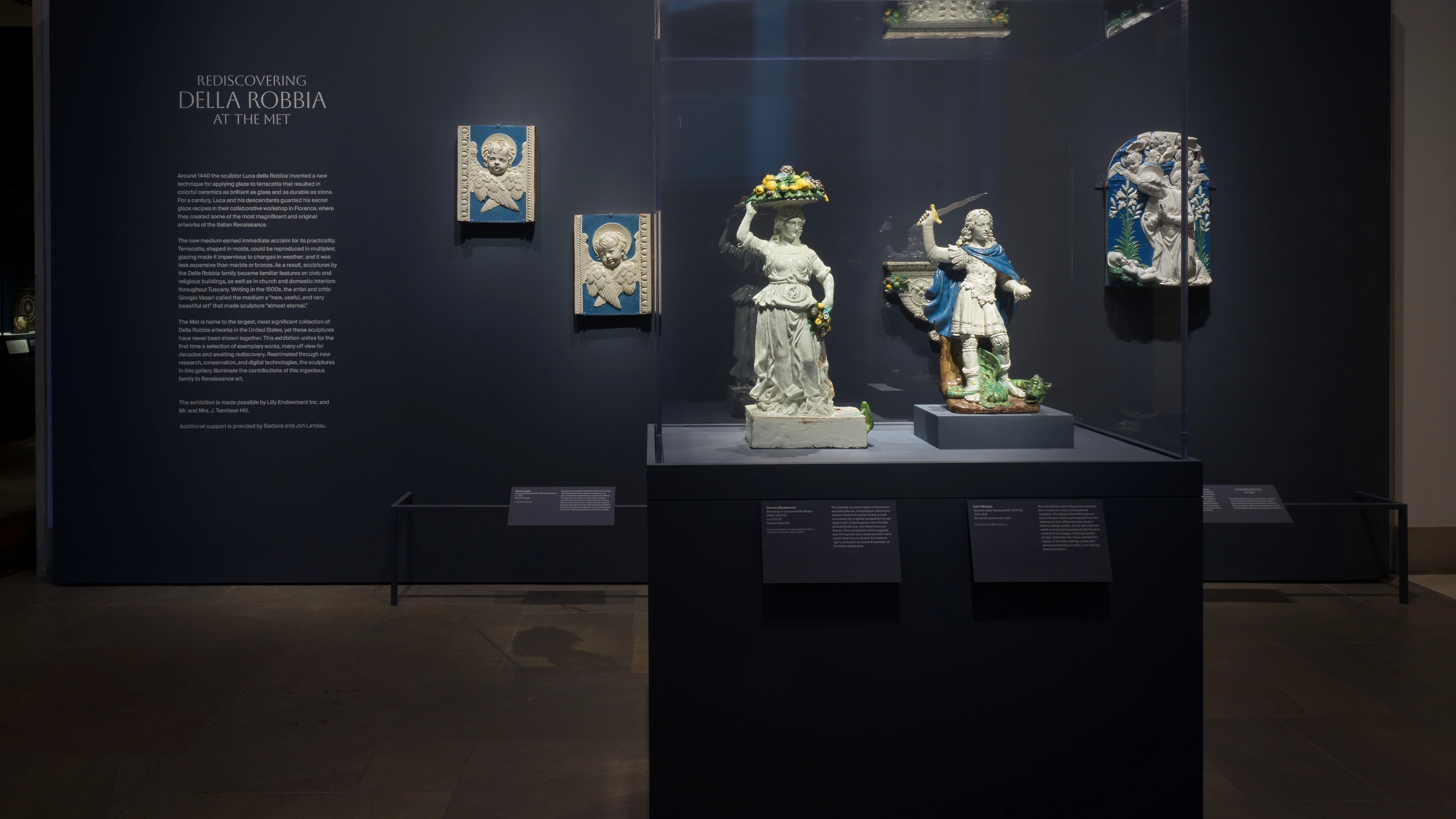
The Della Robbia family frequently reworked their models to create compositional variations. The figures of Saint Michael and Dovizia were adapted from the same basic form. Where Dovizia raises a hand to steady a platter of fruit, Saint Michael wields a sword as he prepares to slay the devil, in the form of a dragon, writhing beneath his feet. Statuettes like these, intended for display in domestic settings, expressed personal and religious values, civic identity, and social status.