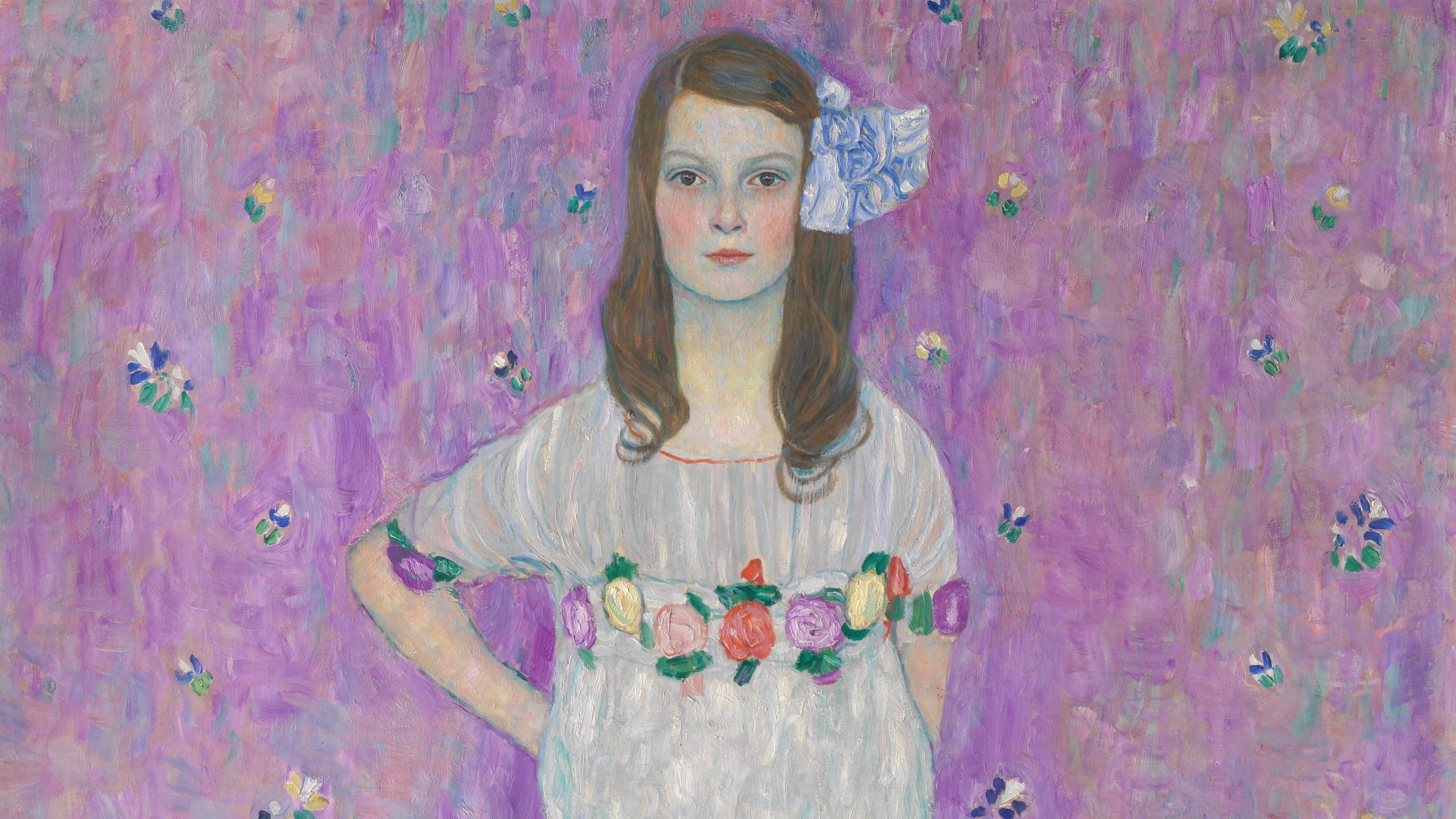
“PRIMA” by Deborah Landau is a response to Gustav Klimt’s painting, Mäda Primavesi (1903–2000) (1912–13). Mäda Primavesi was the nine-year-old daughter of two of Klimt’s patrons, Otto Primavesi and his wife Eugenia. She later described herself as willful and a tomboy, and remembered trying many poses and outfits before they arrived at the final version.
The painting was seized by the Nazis from Jenny Pulitzer Steiner in 1938 in Vienna and restituted to her in 1951.
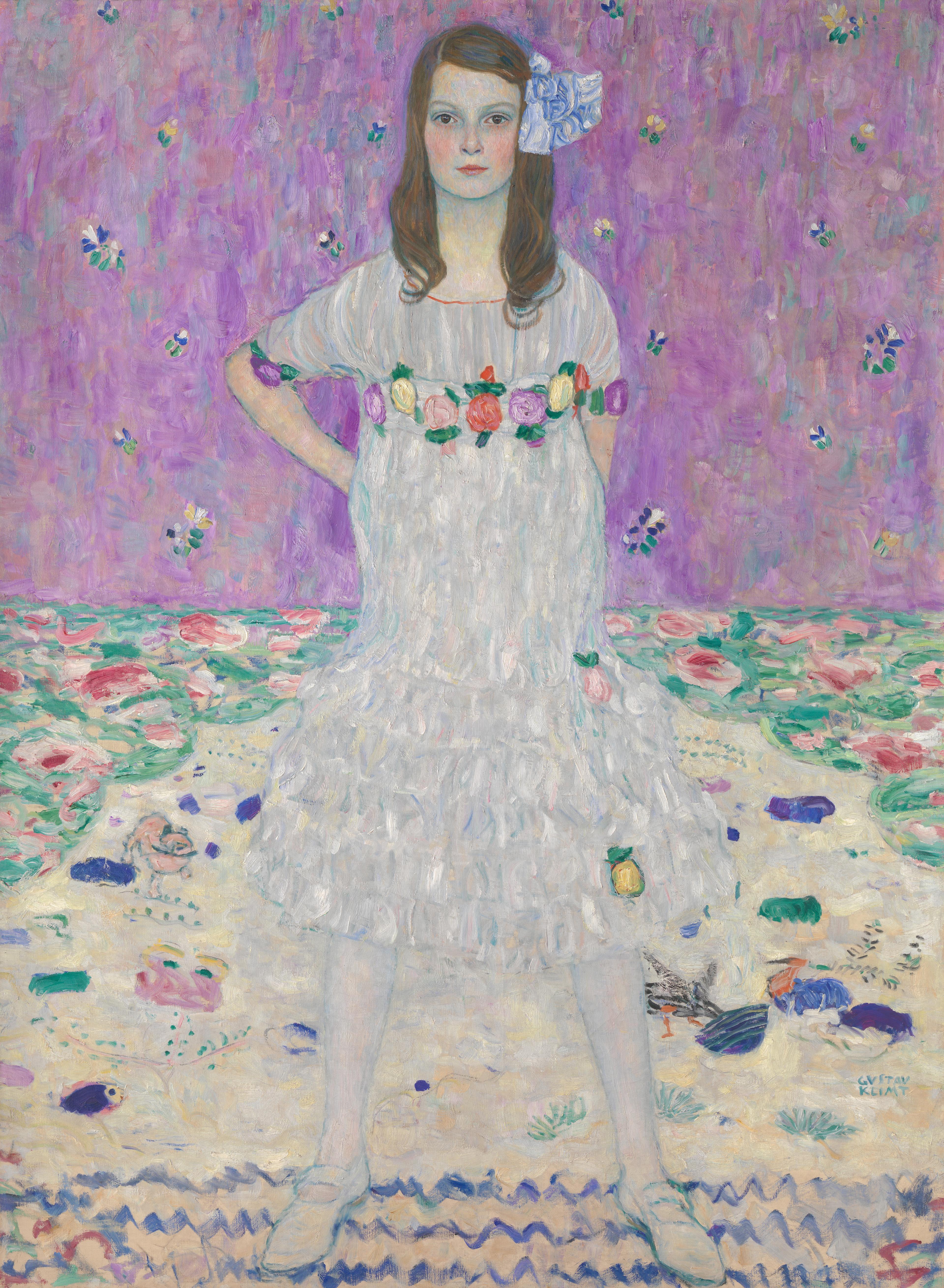
Gustav Klimt (Austrian, 1862–1918). Mäda Primavesi (1903–2000), 1912–13. Oil on canvas, 59 x 43 1/2 in. (149.9 x 110.5 cm). The Metropolitan Museum of Art, New York, Gift of André and Clara Mertens, in memory of her mother, Jenny Pulitzer Steiner, 1964 (64.148)
PRIMA
I will seed my field with you, she says, I will proliferate.
She says it the way the moon keeps telling you what you want to hear
again and again, each and every night, and the clock, how it tricks us
with its spiny hands into complying, while meanwhile what is rising,
a kind of violence finessed into the goodness of girl, luxurious, an absolution.
Something inside will not sit. See.
Look at her, a bright new fire swiveling to life.
You want a girl to sit down, do you?
Always. Sublimation at the ceremony.
Submission in the last violet drops of light.
She’s been idling in the garden, biding her time
but now—goodbye to all that.
The days come and they are blooming.
The days come and she is caught in the act.
These times call for more effort.
For getting back to the stance. Back to the brash of it.
The dusk gathering, the last violent drops of light, the fading
Jacaranda leaving again and again its sticky regrets at her feet.
Now go on, make a complicated song of it, listen,
a lilac sass, yes, that’s it, isn’t she delicious, delinquent.


