Star of Bethlehem Quilt
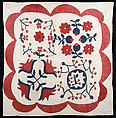
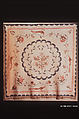
More than ten feet (three meters) square, this quilt is the largest in the Museum’s collection. During the 1830s and 1840s, it was not unusual for quilts to be made this size and even larger. What was the purpose of such enormous quilts? This one was most likely a show quilt, meant to be displayed on special occasions to prove the skills of its maker; it looks almost unused and was never washed. However, very large quilts that clearly show wear exist from this period. In all likelihood, they were made to cover beds heaped high with piles of feather mattresses or straw ticks. Changes in the construction of mattresses, such as the introduction of the innerspring mattress, which provided a comfortable sleeping surface in a compact form, may explain why quilts grew smaller as the nineteenth century progressed, and after about 1850, quilts of nine and ten feet square were a rarity.
Artwork Details
- Title: Star of Bethlehem Quilt
- Date: ca. 1835
- Geography: Possibly made in Maryland, United States
- Culture: American
- Medium: Cotton
- Dimensions: 122 x 122 in. (309.9 x 309.9 cm)
- Credit Line: Sansbury-Mills Fund, 1973
- Object Number: 1973.204
- Curatorial Department: The American Wing
More Artwork
Related Content
 Free to download
Research Resources
The Met provides unparalleled resources for research and welcomes an international community of students and scholars. The Met's Open Access API is where creators and researchers can connect to the The Met collection. Open Access data and public domain images are available for unrestricted commercial and noncommercial use without permission or fee.
To request images under copyright and other restrictions, please use this Image Request form.
Feedback
We continue to research and examine historical and cultural context for objects in The Met collection. If you have comments or questions about this object record, please contact us using the form below. The Museum looks forward to receiving your comments.
Content Notice
The Metropolitan Museum of Art presents over 5,000 years of art from around the world, and our online collection reflects ongoing work conducted over the course of our more than 150-year history. You may encounter objects or images that may be inappropriate for some viewers or information that may be outdated.