Photography: Processes, Preservation, and Conservation
January 30–May 20, 2001
Celebrating the opening of the new Sherman Fairchild Center for Works on Paper and Photograph Conservation, this exhibition explains various photographic processes and explores issues of connoisseurship, condition, preservation, and treatment. The selection of photographic prints and negatives displayed—from throughout the medium's history and running the gamut from superbly preserved to unfortunately timeworn—is accompanied by revealing examples of before- and after-treatment documentation, microscopic views, and explanatory texts.
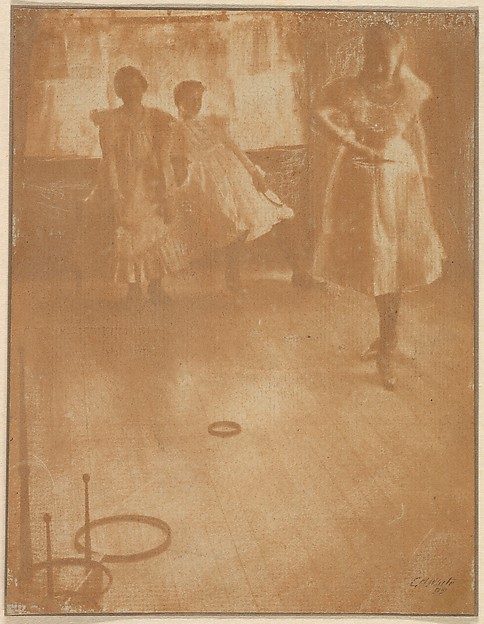
The exhibition is arranged chronologically, beginning with the first publicly displayed photographic process—the daguerreotype—and concluding with a variety of processes employed in color photography. Works by William Henry Fox Talbot, Carleton Watkins, Thomas Eakins, Edward Steichen, Eugène Atget, and Berenice Abbott, among others, are on view.
The extraordinary precision of daguerreotypes—one-of-a-kind images on silver-plated copper sheets—is demonstrated in a view of Paris made in 1849 by Choiselat and Ratel, in which even the buttons on the uniform of a distant soldier are visible through a microscope. Preservation of daguerreotypes in period and modern housings are shown, and the risks of chemical cleaning are pointed out on a Southworth and Hawes portrait that a well-intentioned owner tried to clean in 1934.
A two-part panorama of the first photographic printing firm, Reading Establishment (Talbot and Henneman, 1846), details the steps involved in the paper print process, which was invented by Talbot and which gradually supplanted daguerreotypes in the 1850s. In its early days, photography was handcrafted, and each photographer's work had a particular texture, tone, and color, the result of individual chemical recipes and procedures. Five splendid salted paper prints from the 1840s and 1850s by Louis Robert, David Octavius Hill and Robert Adamson, Gustave Le Gray, Frank Chauvassaigne, and Louis-Désiré Blanquart-Evrard featured in the exhibition demonstrate this process.
Two 1860s albumen silver prints by Carleton Watkins reveal how conditions of storage and display affect photographs. One print, richly printed and toned, never mounted, and apparently stored in ideal conditions, is clear, intense, and luminous; the other print, which was framed and long exhibited before joining the Metropolitan's collection, is discolored and stained from light and the poor materials of its mount and wood frame.
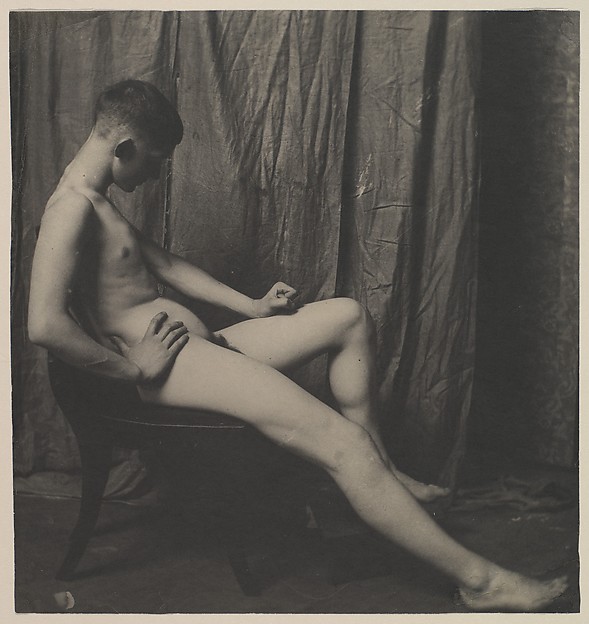
Highlighting the critical role of the conservator, a platinum print of a male nude by Thomas Eakins (ca. 1890) is displayed alongside a full-scale photograph of the print prior to treatment. An explanation of how the conservator restored the photograph to structural stability and aesthetic integrity describes aspects of deterioration and conservation. The state-of-the-art analytical tools of the conservator are explored through a turn-of-the-century photograph by Edward Steichen, an artist who experimented with a variety of painterly photographic techniques that rendered the works difficult to analyze. The precise elemental makeup of such pictures can now be discovered through non-destructive X-ray fluorescence, which enables the conservator to track an artist's technical development and to make more appropriate recommendations for treatment, storage, and exhibition.
Technical methods to help determine authenticity, a major concern of collectors, curators, and other connoisseurs, are also displayed. Analysis of microscopic fibers from photographic paper can help to date a work, as can the presence of optical brighteners that were added to many photographic papers after World War II and are visible under ultraviolet light. The issue of "vintage prints" (prints made close to the time of the original negative) is presented through two dramatically different black-and-white prints of Berenice Abbott's 1925 portrait of writer Djuna Barnes, one made in the 1920s, the other in the 1980s.
Artificially aged samples of five-color processes—four-color pigment, chromogenic (the most common), silver dye bleach, dye diffusion transfer (Polaroid), and ink jet—illustrate the degree to which each of these processes is susceptible to deterioration, underscoring the fact that museums must take special steps to preserve even the most contemporary photographs.
The exhibition and accompanying brochure are made possible by the Henry Nias Foundation, Inc.

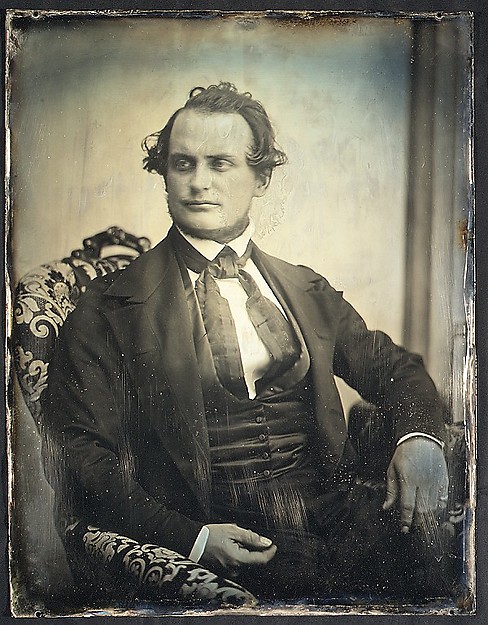
Daguerreotype. One-of-a-kind photograph on a highly polished, silver-plated sheet of copper, developed over mercury fumes. Characterized by a mirrorlike surface and astonishing detail. The first photographic process revealed to the public, in 1839; enjoyed widespread popularity in Europe, especially France, in the 1840s and in America through the 1850s.
Paper negative. The earliest type of negative, made of fine writing paper sensitized with silver salts, exposed in a camera, developed, and fixed; often waxed or treated for added transparency. Paper negatives generally impart a slightly fibrous texture to the print and exaggerate contrasts of light and dark. Invented by Henry Talbot in 1840 and modified by many photographers. Popular in Britain in the 1840s and in Europe from the late 1840s through the mid-1850s; rarely used in America. (Also called "calotype negative" or "Talbotype negative.")
Glass negative (wet plate). Glass plate coated with a layer of collodion (cellulose nitrate dissolved in ether) and sensitized in a solution of silver salts. Recorded far greater detail than paper negatives but required the photographer to coat the plate immediately before use and to develop the exposed negative before the collodion dried. Published in 1851; gained popularity throughout the 1850s, almost entirely replacing the paper negative by 1860. Remained in use until about 1880, when "dry plates" were introduced. (Also called "wet collodion" process.)
Salted paper print. Photograph on paper sensitized with silver salts, printed in sunlight in direct contact with a paper or (less frequently) glass negative and fixed. Characterized by a velvety matte surface; variations in chemistry yielded prints of varying hues. Used in Europe through the mid-1850s; used less frequently in America.
Albumen silver print. Photograph on paper coated with egg white and sensitized with silver salts; most often used to print glass negatives. Characterized by a moderately shiny surface and fine detail. Commercially prepared albumen paper was available beginning in the mid-1850s and remained popular through the 1890s. The most common photographic printing process of the nineteenth century.
Glass negative (dry plate). Commercially prepared glass plate coated with a gelatin binder and sensitized with silver salts. Far more convenient than the wet plate, which it rapidly replaced in the 1880s. Panchromatic dry plates, sensitive to all colors of the spectrum, introduced in 1906. Commonly used into the 1920s; available today but used only for specialized applications.
Platinum print. Photograph on paper sensitized with a solution of iron and platinum salts; processed to yield a platinum image. Usually printed in direct contact with a negative. Characterized by permanency, wide tonal range with subtle gradations, and matte surface. Invented in 1873; gained popularity in the late 1880s. Scarcity of platinum during World War I led to the substitution of silver-platinum and palladium papers. Undergoing revival since the 1970s among artists using commercial and hand-coated platinum papers.
Photogravure. Photographic image printed in ink from an etched copper plate. Characterized by rich inky blacks; the "whites" are the bare paper. One of the finest means for reproducing a photograph in large numbers. Popular with artists at the turn of the twentieth century.
Gum dichromate print. Photograph on paper coated with a sensitized gum solution containing pigment; printed in sunlight in direct contact with a negative and developed in water. Characterized by broad tones, high contrast, and lack of detail, gum prints often resemble paintings, pastels, or charcoal drawings. Popular among Pictorialist photographers of the 1890s and 1900s; rarely used today. (Also called "gum bichromate print.")
Carbon transfer print. Photograph made by contact printing a carbon tissue (photosensitized, pigmented gelatin on thin paper), transferring it to paper, and developing it in water. Characterized by extreme permanence, fine grain, and continuous tone. Carbon tissues were commercially available beginning in 1864, with fifteen colors available by 1893, mostly shades of reddish brown, eggplant, and black; used widely for art reproduction and commercial applications.
Film negative. Similar to the glass negative, captures an image with light-sensitive silver salts in a gelatin binder. Uses a plastic support that, unlike glass, is lightweight, nonbreakable, flexible, and can be rolled, so that many images can be made on one length of film. Flexible negative supports were introduced by Eastman Kodak Company in the late 1880s. The early support, cellulose nitrate, was generally replaced by varieties of cellulose acetate and polyester beginning in the 1930s. If not stored properly, nitrates and cellulose acetates have inherent stability problems.
Gelatin silver print. Photograph on paper or plasticized paper coated with an emulsion of light-sensitive silver salts suspended in gelatin, printed out or developed out, and fixed. Came into general use in the 1880s; the developed variety remains the standard black-and-white photographic process.
Carbro print. Exceptionally permanent full-color photographic image made by transferring yellow, cyan, and magenta layers of pigment to a final receiving sheet. Used primarily for portraiture and in advertising from the 1920s to the 1950s.
Chromogenic print. The most common type of color photograph, printed from a chromogenic color negative; consists of dyes within gelatin layers on a plastic-coated paper base. Subject to fading and color shifts in dark storage and on exhibition. Developed in the 1940s as an outgrowth of chromogenic color transparencies (Kodachrome, invented in 1935). Used by amateurs and artists alike. (Also called "C-print" or referred to by various brand names.)
Dye transfer print. Color photograph made by transferring to paper yellow, cyan, and magenta dyes from color separations of an image. Process permits precise control of image color. Used for fine art or advertising prints from the late 1940s to the early 1990s.
Dye diffusion transfer print (Polaroid). Self-developing color photograph. The complex process, first described by Edwin Land in 1947, has been popular among amateurs and artists since the early 1960s. (Also called "instant color print" or referred to by the product names "Polacolor" or "SX-70.")
Silver dye bleach print. Dye image in gelatin on a plastic or plastic-coated paper base, created from a positive transparency rather than a negative. Until recently, available only with a highly glossy surface. More stable than chromogenic prints. Introduced in 1963. (Also referred to by the old brand name "Cibachrome.")
Ink jet print. Photograph produced by a computer printer from a digital file using water-based dyes or pigments on paper or other support. (Also referred to by the brand names "Iris print" or "Giclée print.)
Other Terms
Contact print. Print made by placing photographic paper in direct contact with the negative in a glass frame and exposing it to light without the aid of an enlarger; negative and print are thus the same size. Nearly all photographs made prior to the 1880s were contact printed.
Printed-out print. Photographic print (whether salted paper, albumen silver, gelatin silver, or other) that darkens gradually during long exposure to light through a negative; the silver salts are transformed into metallic silver particles by the action of light alone without chemical developers. Most nineteenth-century and some early-twentieth-century photographs were "printed out" in sunlight. Generally warm in color unless toned.
Developed-out print. Photographic print made by brief exposure to light through a negative to create a latent image that is then transformed into metallic silver and made visible by chemical development. Briefly used in the 1850s for commercial photographic publishing; reintroduced in the late nineteenth century and dominant in the twentieth. Generally cool or neutral in color unless toned. All black-and-white negatives are similarly developed.
Toning. Chemical treatment of a photographic print during or after fixing. Generally used to alter the color of the print for aesthetic reasons or to increase the permanence of the image. Includes gold or platinum toning of printed-out images and sulfur or selenium toning of developed-out images.
Vintage print. Print made close to the time of the negative, which most often represents the artist's original intention. There is no hard-and-fast rule regarding how soon after the negative a print must be made in order to be considered vintage; what is more important is that the materials, technique, and ideas remain consistent with the artist's original conception.
Store photographs in a cool, dry, clean, and stable environment where there are no dramatic shifts in temperature or humidity. The area should have good air filtration and be removed from sources of dust, dirt, and air pollutants (sulfur from car exhaust; ozone from photocopiers; oxidizing gases from paints, adhesives, and construction materials). Avoid hanging photographs over heating vents or fireplaces, near windows, and in other unstable environments.
Exhibit or store photographs in 100% rag window mats or folders or in polyester or polyethylene plastic sleeves. Avoid using any adhesive (tape, rubber cement, white glue) in direct contact with the photograph. Good quality photo-corners may be used to hold a photograph in place on an album page or within a mat. Materials listed as having passed the Photographic Activity Test (PAT) are recommended.
All types of light are damaging to photographs, no matter what precautions are taken, and light damage to organic materials is irreversible. Therefore, framed photographs should be hung in areas of low light and away from direct sunlight. Use glass or acrylic with a built-in ultraviolet filter for added protection. When possible, rotate pictures on view to reduce the length of exposure to light.
Color photographs are susceptible to fading in both the light and the dark. Many institutions use cold-storage vaults to preserve color photographs.
Take good care of negatives as well as positives; if well maintained, negatives can be used to make new prints.
Do not try to clean or repair a photograph on your own; seek the advice of a professional conservator.
Photographs, which have for over a hundred years so magically recorded our world, are delicate objects, subject to handling damage, environmental degradation, and flaws in their own chemistry. Anyone who has pulled a family photo album or box of snapshots from a dusty attic or a damp basement is likely to have found faded images, washed-out color prints, or pictures frayed, bent, scratched, torn, stained from tape or glue, or even mildewed. Because fine art photographs are also subject to these ills, The Metropolitan Museum of Art has established a state-of-the-art facility devoted to the examination, analysis, preservation, and treatment of its photographic collection, one of the finest in the world. The new eight thousand-square-foot Sherman Fairchild Center for Works on Paper and Photograph Conservation includes a darkroom, chemistry laboratory, photographic documentation and infrared-camera room, microscopy laboratory, vacuum tables, treatment sinks, and technical instrumentation for shared use by paper and photograph conservators as well as a library, seminar room, and matting and framing studio. Here, photograph conservators care for the Museum's photographic holdings, undertake research, disseminate information, train future conservators, and advance the field of photograph conservation. Specialists in conservation, science, art history, and related fields collaborate to achieve a fuller understanding of the complexity and beauty of the works of art in their care and to preserve them for future generations.
Photograph conservators not only treat damaged and deteriorated works but also examine, document, and analyze them, recommend proper storage and housing, and monitor environmental conditions, such as light, temperature, relative humidity, and air quality, that affect the health of the collection.
The most common treatments for photographs are physical—mending a tear, relaxing a crease, or surface cleaning. Chemical treatments to revive faded or stained images are generally avoided, since they are experimental, unpredictable, and irreversible. Written, photographic, and analytical documentation are always an essential part of the treatment process, and professional conservators follow the Code of Ethics and Guidelines for Practice established by the American Institute for Conservation.
A complete technical understanding of photographic processes, from the early daguerreotype to the contemporary ink-jet print, enables the conservator to consider a photograph's place within the history or aesthetics of its time as well as within an individual artist's career. The Sherman Fairchild Center includes a darkroom equipped to re-create the full range of historic processes, enabling conservators and students to gain a detailed technical understanding of older works in the collection. Experimental samples produced here are also used in analytical studies and in accelerated aging tests to investigate the makeup and long-term stability of specific processes.
The seminar room for classes, meetings, and workshops houses a library of technical literature on photography and conservation and a study collection of photographic samples. The center maintains an ongoing program of internships, fellowships, and special projects for students and novice conservators from around the world. It also hosts conferences, workshops, and training sessions in which professionals in related fields can exchange information, present research, and further the understanding of the many issues involved in preservation.
Baldwin, Gordon. Looking at Photographs: A Guide to Technical Terms. Malibu: J. Paul Getty Museum, 1991.
Crawford, William. The Keepers of Light: A History and Working Guide to Early Photographic Processes. Dobbs Ferry, N.Y.: Morgan and Morgan, 1979.
Hendriks, Klaus B., et al. Fundamentals of Photograph Conservation: A Study Guide. Ottawa: Lugus Publications and the National Archives of Canada, 1991.
Museums and Galleries Commission. Standards in the Museum Care of Photographic Collections. London, 1996.
Mustardo, Peter, and Nora Kennedy. Photograph Preservation: Basic Methods of Safeguarding Your Collections. Technical Leaflet Series 9. Mid-Atlantic Regional Archives Conference, 1994.
Nadeau, Luis. Encyclopedia of Printing, Photographic, and Photomechanical Processes. 2 vols. New Brunswick, Canada: Atelier Luis Nadeau, 1997.
Reilly, James M. Care and Identification of Nineteenth-Century Photographic Prints. Rochester, N.Y.: Eastman Kodak Company, 1986.
Ritzenthaler, Mary Lynn, et al. Archives and Manuscripts: Administration of Photographic Collections. Basic Manual Series. Chicago: Society of American Archivists, 1984.
Wilhelm, Henry, with Carol Brower. The Permanence and Care of Color Photographs: Traditional and Digital Color Prints, Color Negatives, Slides, and Motion Pictures. Grinnell, Iowa: Preservation Publishing Company, 1993.