Nan Kempner: American Chic
December 12, 2006–March 4, 2007
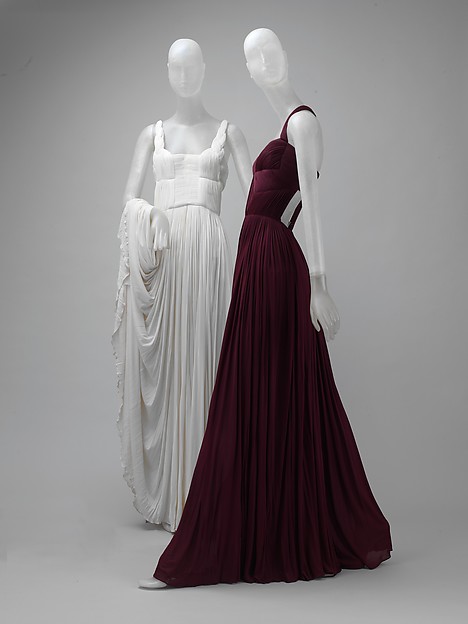
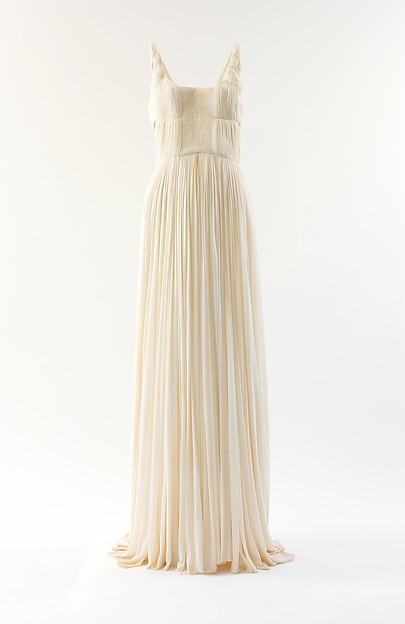
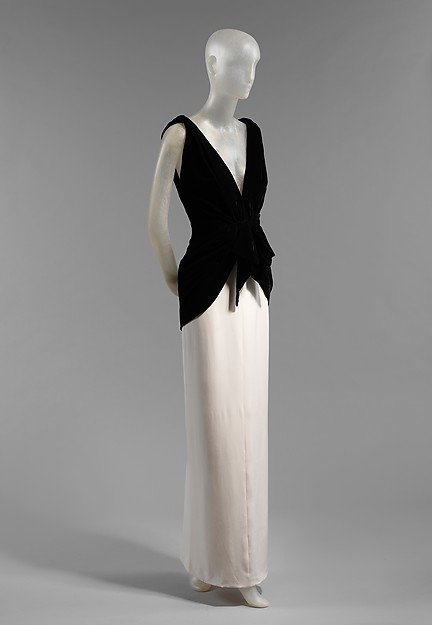
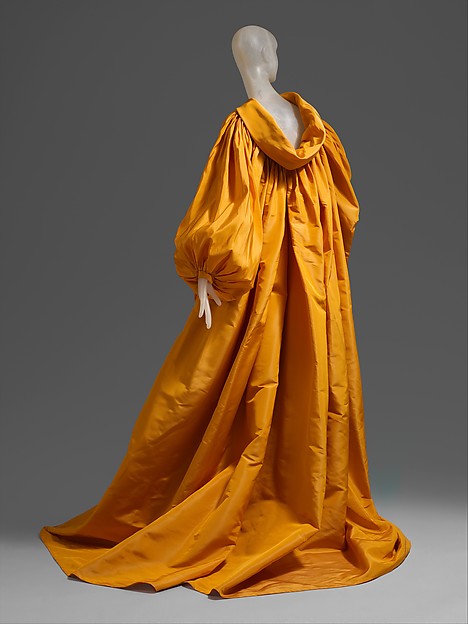
Nan Kempner (1930–2005) was once called "la plus chic du monde" by Yves Saint Laurent and "the world's most famous clotheshorse" by Vanity Fair. From the time her mother began to initiate her into the world of the haute couture, Mrs. Kempner appreciated the aesthetic value of high fashion. After making her first acquisition of a Dior sheath in Paris in the 1950s, she continued to attend the couture shows in the French capital for nearly forty years.
Together with Thomas L. Kempner—her husband of more than five decades—and their three children, Mrs. Kempner divided most of her time between a Manhattan apartment and a home in Purchase, New York. But she was also a member of the international set, known for always carrying her passport in her handbag because "You never know where you might have to be." Included in a social circle that Women’s Wear Daily called "the Cat Pack" in the 1970s, Mrs. Kempner entertained and traveled extensively, particularly to such favorite destinations as London, Paris, Gstaad, Venice, and the Caribbean. Whether crossing a time zone or the equator, she always kept suitable ensembles at hand. She did not rotate her wardrobe seasonally, preferring instead to have everything available in her Park Avenue apartment. In the closets that accommodated her multi-season array of clothing, bikinis were stored next to sweaters, and linen shifts and T-shirts near coats and skiwear.
Though most frequently documented by photographers in the glamorous gowns she wore to formal evening events, Mrs. Kempner had a large number of tailored ensembles. In fact, when arranged by type, tailored suits comprise the largest category of ensembles in the Kempner collection. For daytime, Mrs. Kempner favored examples from Yves Saint Laurent, Chanel, Valentino, and Oscar de la Renta for Balmain Haute Couture. Though she was not averse to wearing a full tailleur with its original components, by the 1970s Mrs. Kempner had begun mixing and matching blouses, jackets, and skirts or pants from different periods and designers. Her leisure wardrobe was noticeably differentiated from the rest of her collection by a more exuberant sensibility, injecting a high-spirited expressiveness into her signature style of sleek sophistication. Clothes intended for a shooting weekend in Normandy, Christmas in Santo Domingo, or poolside relaxation in Venice in the early fall reveal a sense of playful dress-up and an impulse to astonish. The impeccable fit and finish of her haute couture suits, therefore, were subject to her distinctly iconoclastic impulse to infuse a designer's intended concept with her own individuality. This imposition of an American sportswear sensibility to European sophistication resulted in the relaxed elegance for which Mrs. Kempner was so well known. As Diana Vreeland once remarked: "There’s no such thing as a chic American woman. The one exception is Nan Kempner."
Over the years, Mrs. Kempner served as a fashion features editor for Harper's Bazaar, as a correspondent for the French edition of Vogue, and, most recently, as an international representative for Christie’s. She was also a member of The Costume Institute's Visiting Committee and supported Lighthouse International and The Society for Memorial Sloan-Kettering for Cancer Research. In 2000, she published a book about the art of entertaining called R.S.V.P.: Menus for Entertaining from People Who Really Know How (New York: Clarkson Potter). An elegant blonde with a raspy voice and self-deprecating humor, Mrs. Kempner once said of herself: "I'm a drunk when it comes to clothes." Five-foot-nine-inches tall and always slender, she was said to be the inspiration for the term "social X-ray" in the Tom Wolfe novel Bonfire of the Vanities. Valentino once remarked: "Nan always looks so wonderful in my clothes, because she has a body like a hanger." But it was her sense of style that captivated the designers whose work she loved, wore, and collected.
Mrs. Kempner's first donation to The Costume Institute was her Jean Dessès coming-out dress. She often said that she intended her collection to go to The Metropolitan Museum of Art—her "neighborhood" museum—and to the Fine Arts Museums of San Francisco. Unlike others in her circle, she did not continuously parcel out outmoded elements in her wardrobe, but rather retained the pieces that conformed to her rigorous criteria for masterful tailoring and dressmaking that might withstand the judgment of time. Her closets, therefore, merged ephemeral fashion interests with a growing body of carefully preserved ensembles of museological importance, reflecting a personal, diaristic narrative. While Mrs. Kempner's "masterworks" are not restricted to haute couture, they are without exception by designers acknowledged for their impeccable technique and sophisticated finesse. "My husband, Tommy, thinks it's hysterical, because he used to think it was an extravagance, and it now turns out that I was an art collector," she once marveled. "Can you imagine?"