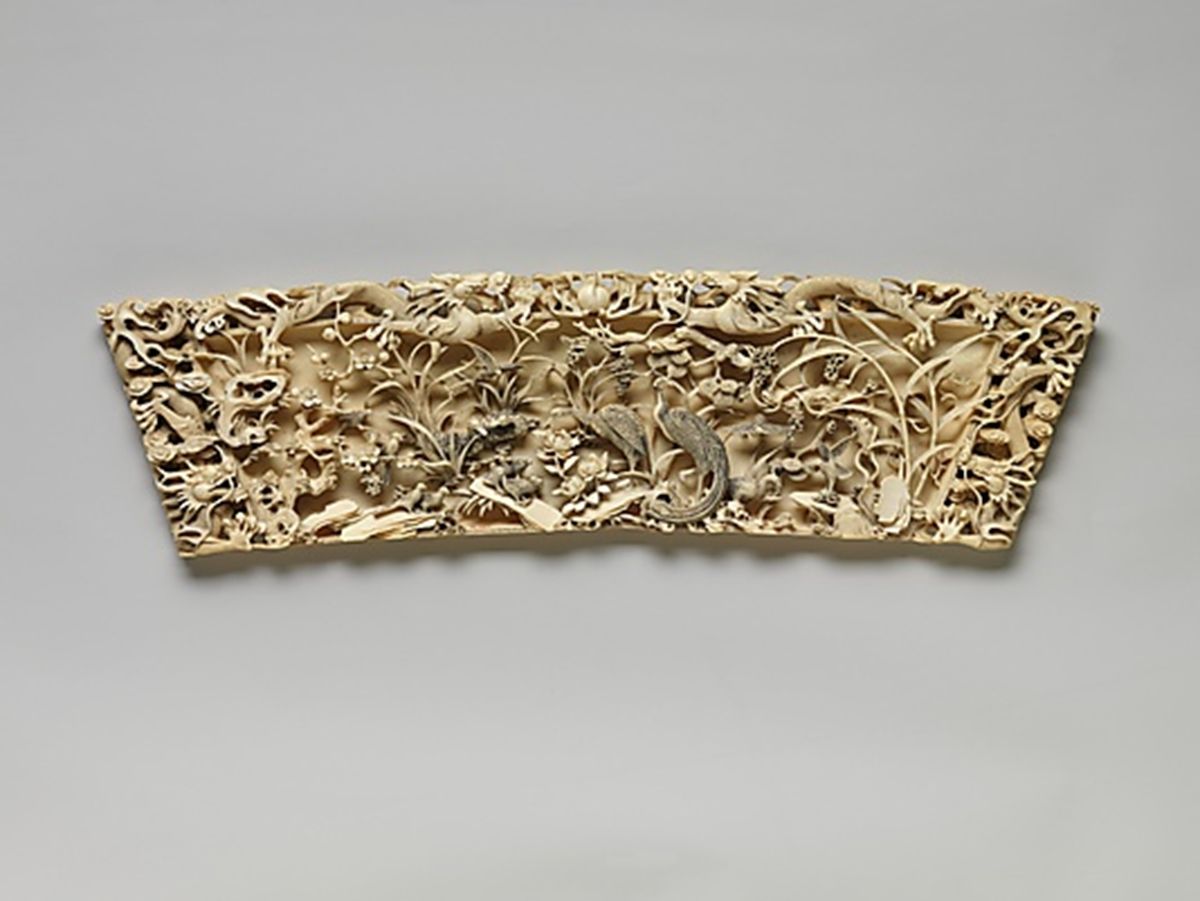
Extravagant Display: Chinese Art in the Eighteenth and Nineteenth Centuries
December 15, 2010–May 1, 2011
The art of the Qing dynasty (1644–1911) has informed Western perceptions of Chinese taste and imagery for centuries, beginning in the late seventeenth century with the European craze for chinoiserie and continuing to this day. Ruled by the Manchus, a non-Han Chinese people from the far northeast, the Qing dynasty, in particular the reign of the powerful and erudite Qianlong Emperor (1736–1795), was a period of peace and prosperity that witnessed a spectacular flowering of the visual arts. Textiles, lacquers, ivories, jades, porcelains, and other objects were created both in palace workshops in Beijing and in specialized artistic centers such as the enormous kiln complex at Jingdezhen, Jiangxi Province.
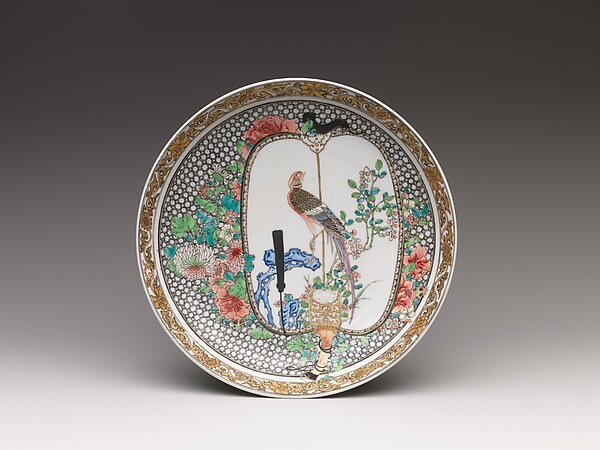
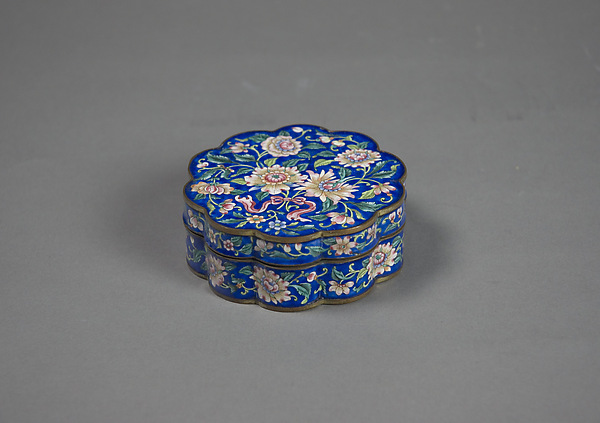
Works in all media exhibit an appreciation for multilayered surfaces covered with dense, disciplined designs, many drawn from earlier periods in Chinese art. Included are figural scenes based on Chinese literature and history; popular gods and mythical creatures such as dragons and phoenixes; birds, bats, fish, deer, and other animals; trees, plants, and flowers; and geometric designs. Most of these motifs are imbued with meanings—usually auspicious—derived from long-standing cultural traditions. For example, the peony, which was first cultivated in the eighth century, alludes to spring and denotes wealth, while the chrysanthemum reflects autumn and symbolizes longevity. The pine tree, deer, and crane also evoke longevity, while squirrels, grapes, and gourds express a wish for generations of children. Other themes exploit the homonymic potential of the Chinese language, in which a word such as "bat" (pronounced in Chinese as "fu") can symbolize "good fortune" (the character for which is also read as "fu"). This rich visual language enhanced the meaning of gifts, given seasonally and for important events such as birthdays, and of objects intended for display, either individually or in groups, thus creating specific messages for special occasions.
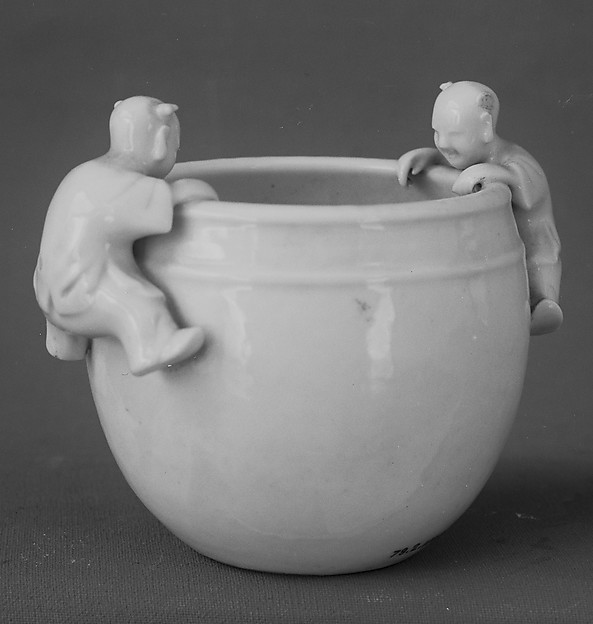
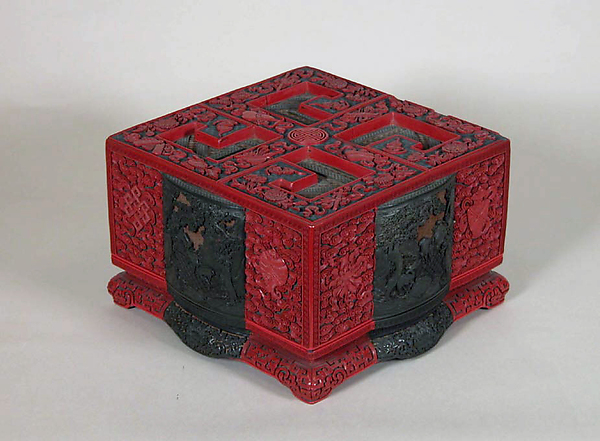
Drawn largely from the Museum's permanent collection, this exhibition explores the vibrancy and innovation of Chinese art in the eighteenth and nineteenth centuries, underscoring the taste for extravagant imagery that characterized the period. In one room, theatrical costumes used in lavish court performances are on display, while objects in another room demonstrate the mastery with which Qing artists manipulated natural materials such as lacquer (made from tree sap), ivory, and bamboo. The third room features works in more resilient materials—jade and other hard stones, metals, and enamels—that were made not only for the court but as part of the extensive global trade in Chinese objects that marked this period in world history.