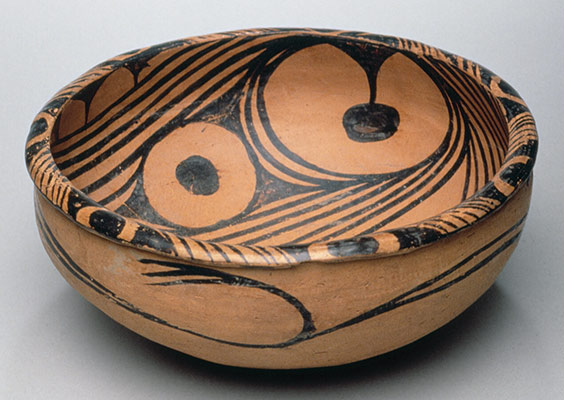
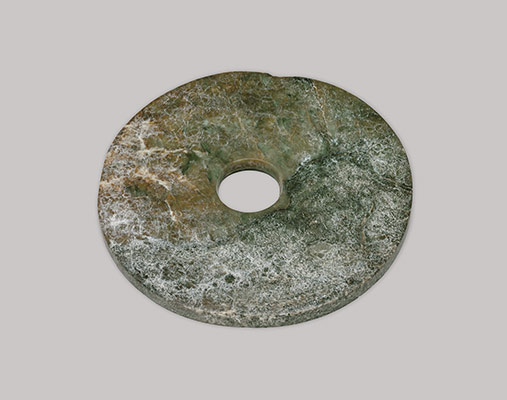
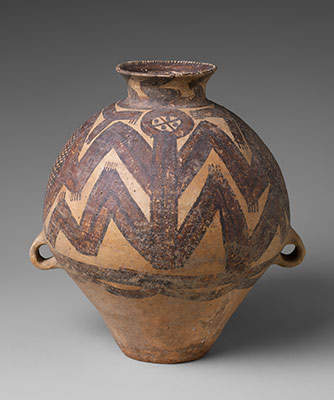
Evidence of pottery making appears during the Early Neolithic period with the rise of agriculture and sedentary living. As villages develop into settled cultures, discrete ceramic traditions evolve that show a distinctive Chinese approach to form, decoration, and technique, leading to the identification of more than thirty Late Neolithic cultures throughout China. Other artifacts include the earliest multinote instrument (flute) and reveal evidence of the earliest uses of lacquer, writing, and the themes of the tiger and dragon. Objects made of jade are thought to have played a ceremonial role in Late Neolithic cultures.
China, 8000–2000 B.C.
-
 2009.176
 -
 L.1996.55.6
 -
 1986.112
 -
 1992.165.8
Timeline
8000 B.C.
6500 B.C.
Early Neolithic period, ca. 10,000–5000 B.C.
6500 B.C.
5000 B.C.
Early Neolithic period, ca. 10,000–5000 B.C.
Late Neolithic period, ca. 5000–2000 B.C.
Yangshao culture (North and Northwest China), ca. 5000–1500 B.C.
Hemudu culture (South China), ca. 5000–4500 B.C.
5000 B.C.
3500 B.C.
Early Neolithic period, ca. 10,000–5000 B.C.
Late Neolithic period, ca. 5000–2000 B.C.
Yangshao culture (North and Northwest China), ca. 5000–1500 B.C.
Hongshan culture (North China), ca. 3500–2000 B.C.
Dawenkou culture (East Coast), ca. 4500–2500 B.C.
Hemudu culture (South China), ca. 5000–4500 B.C.
Liangzhu culture (South China), ca. 3200–2000 B.C.
3500 B.C.
2000 B.C.
Late Neolithic period, ca. 5000–2000 B.C.
Yangshao culture (North and Northwest China), ca. 5000–1500 B.C.
Hongshan culture (North China), ca. 3500–2000 B.C.
Dawenkou culture (East Coast), ca. 4500–2500 B.C.
Longshan culture (East Coast), ca. 2500–1700 B.C.
Liangzhu culture (South China), ca. 3200–2000 B.C.
Overview
Key Events
-
ca. 20,000–8000 B.C.
Paleolithic sites are found as early as 700,000 B.C. Zhoukoudian (ca. 500,000 B.C.) near Beijing is one of the most famous and most extensive. Homo erectus, also known as “Peking Man,” is first identified from fossils found in a cave at this rich site that also yields antlers, bones, and teeth from many animals, and evidence for the use of fire. Homo sapiens fossils are found at the later “Upper Cave” dating from about 10,000 B.C.
-
ca. 10,000–7000 B.C.
Early evidence for pottery, usually associated with the rise of agriculture and sedentary living, comes from rock shelters discovered at sites in the southern provinces of Zhejiang and Guangxi.
-
ca. 7000–5000 B.C.
Small agricultural villages, such as those excavated at the sites at Cishan and Peilingang on the central plain, have simple pottery traditions sometimes with cord impressions or other decorative markings. Some evidence suggests that wood and other perishable materials are used in these early societies as well.
-
ca. 7000–5700 B.C.
Six exquisitely preserved flutes and fragments of many others made from the ulnae (bone of the lower leg) of the red-nosed crane are excavated at Jiahu, an extensive site in Henan Province with multiple dwellings and a massive cemetery. These are the earliest complete, playable, multinote instruments that are preserved.
-
ca. 5000–4500 B.C.
The village of Hemudu in Zhejiang Province in the southeast features wooden houses raised on stilts, an enormous sacrificial structure, wood and bone artifacts, and weaving tools. The earliest example of the use of lacquer (the resin of the Lac tree) is also discovered during the excavation of this site.
-
ca. 5000 B.C.
During the Late Neolithic period, numerous settled cultures, which increasingly interact with one another and are often highly stratified, flourish throughout China. In the early part of the twentieth century, only two such cultures were known. Currently, more than thirty have been identified. They are distinguished from one another by the types of ceramics or jade carvings they produce, are usually named after specific archaeological sites, and are often subdivided into phases.
-
ca. 5000–1500 B.C.
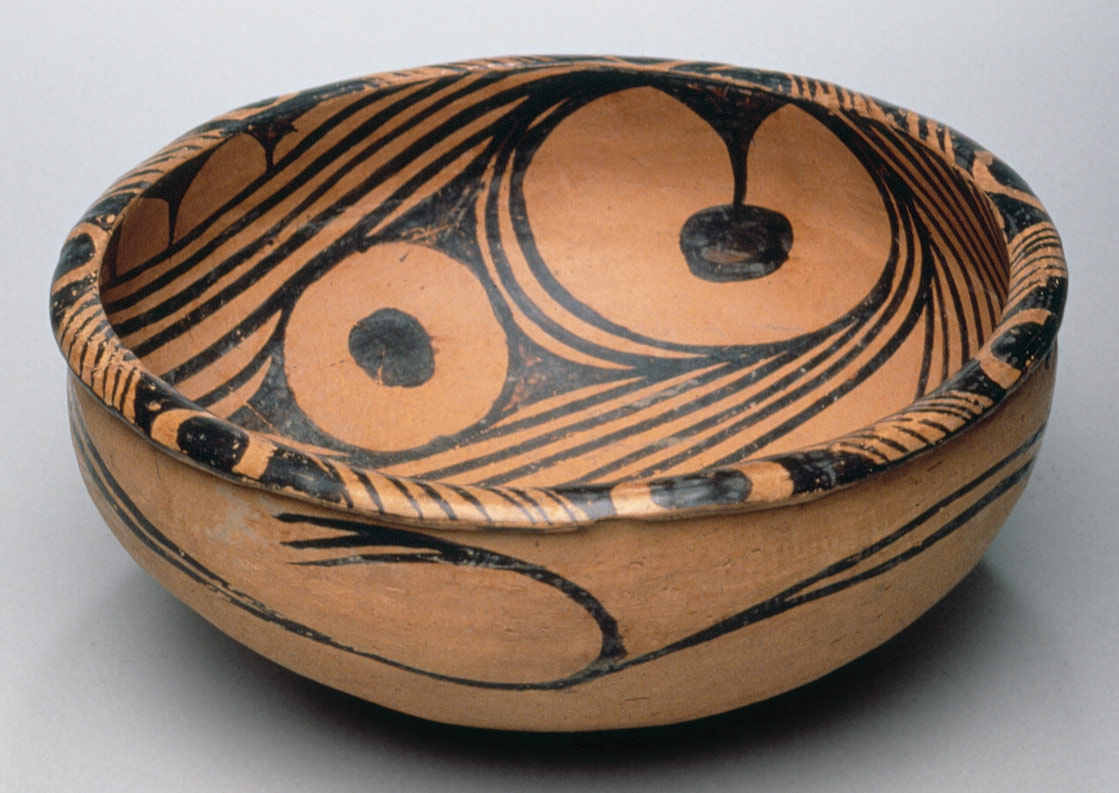
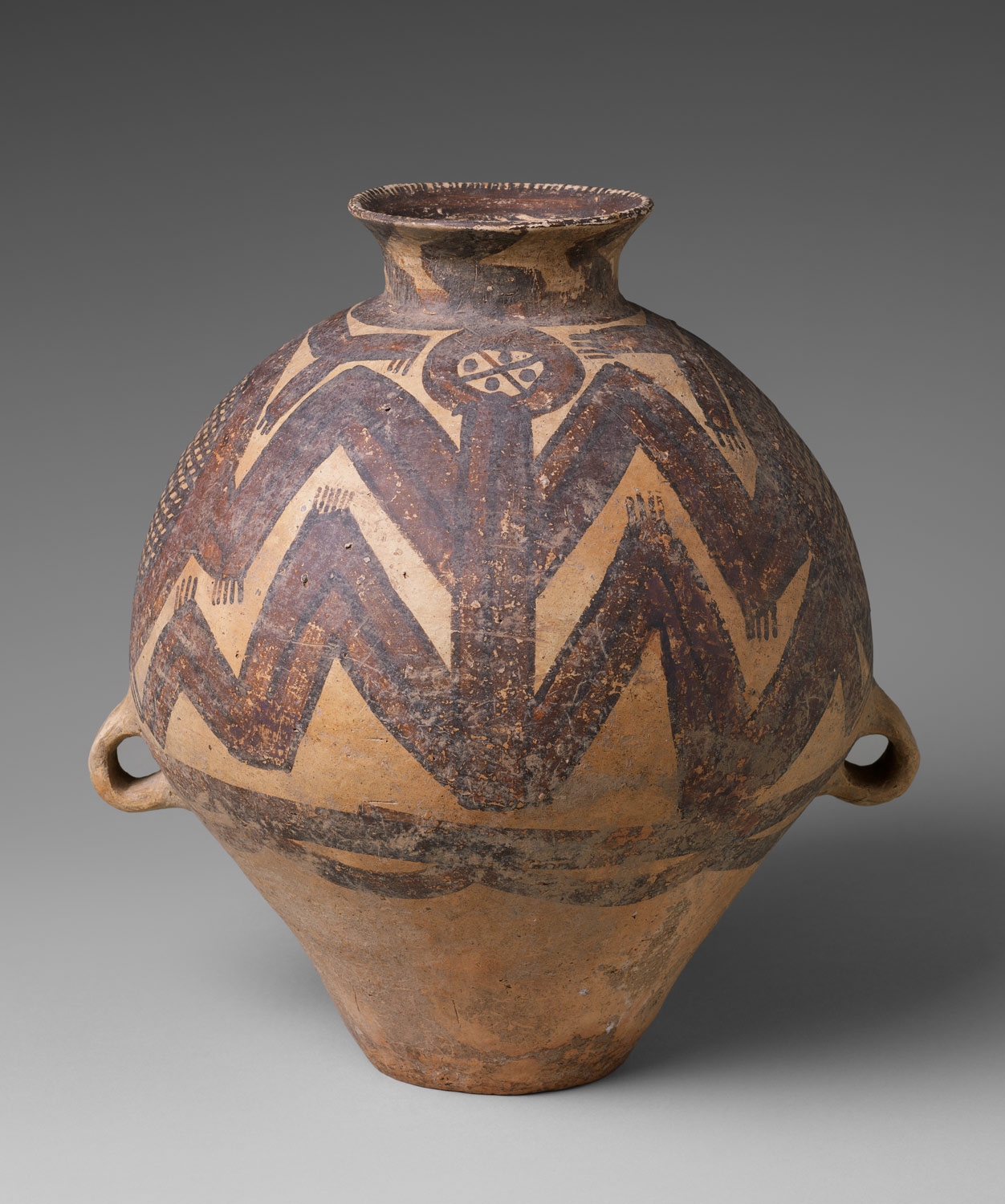
Some of the earliest painted ceramics are produced by the Yangshao culture, which flourishes first in north central China and later in the northwest. Early Yangshao designs include masks, dancing figures, frogs, and creatures with feathers. Later examples are characterized by their vibrant geometric motifs. Xishuipo in Henan Province provides two extraordinary mosaics made of river mussel shells. One depicts a tiger, the other a dragon. They are thought to represent the earliest examples of these two perennial themes.
-
ca. 4500 B.C.
In its later phase, the Dawenkou culture along the east coast develops a firing technology to make fine undecorated black and white wares. Ceramics of the subsequent Longshan culture (ca. 2500–1700 B.C.) are admired for their extremely thin walls. Shapes common to both cultures are influential in the development of the forms of early bronze ritual vessels.
-
ca. 3500 B.C.
Ox scapulae and turtle plastrons are first used in divination. Cracks made by applying hot brands are studied and interpreted. The practice continues for centuries, and inscriptions on oracle bones from the later Shang dynasty provide some of the earliest evidence for writing.
-
ca. 3500–2500 B.C.
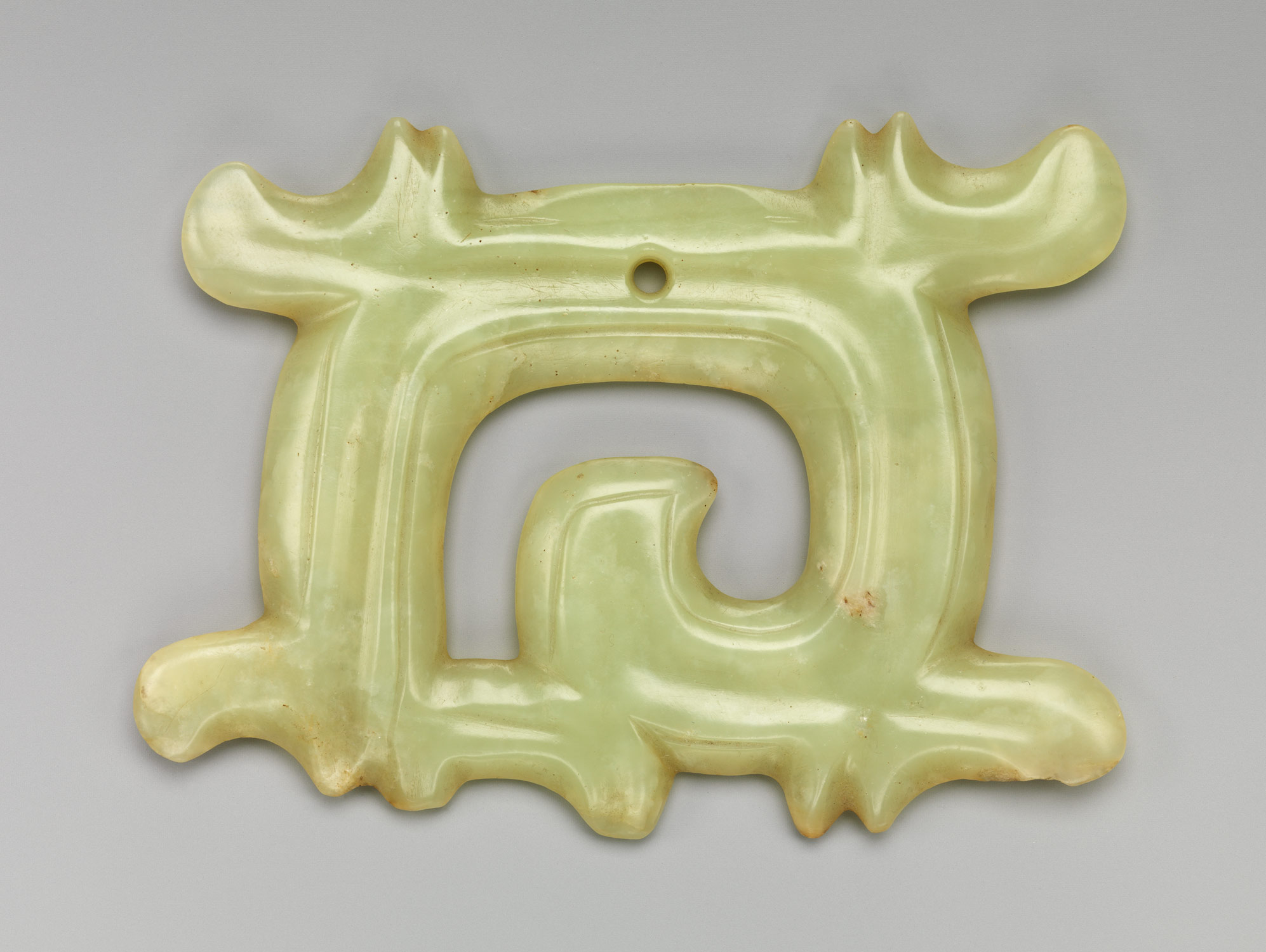
Cultures such as the Hongshan in the northeast and the Liangzhu in the southeast produce an astonishing range of figurines, adornments, and implements made of jade (nephrite), and often decorated with engravings or low-relief carvings. In addition, unusual (for China) clay sculptures of women with protruding stomachs (probably indicative of pregnancy), a few lifesize, are found in sites associated with the Hongshan culture such as Dongshangzui and the “Temple of the Goddess” in Liaoning Province.
Citation
“China, 8000–2000 B.C.” In Heilbrunn Timeline of Art History. New York: The Metropolitan Museum of Art, 2000–. http://www.metmuseum.org/toah/ht/?period=02®ion=eac (October 2000)