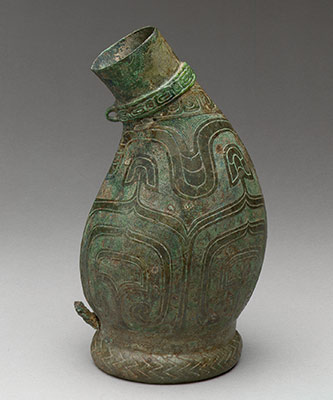
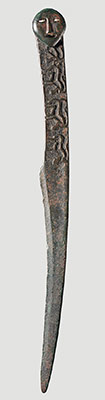
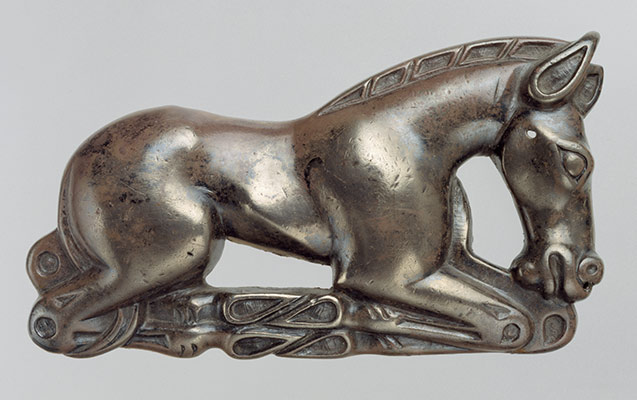
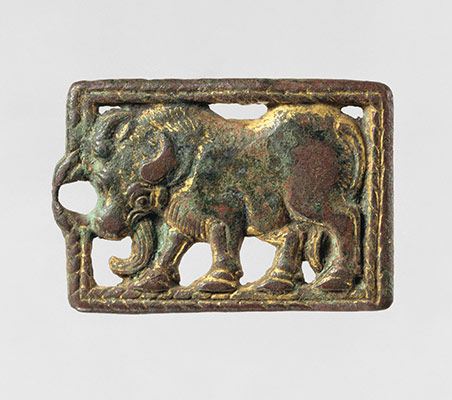
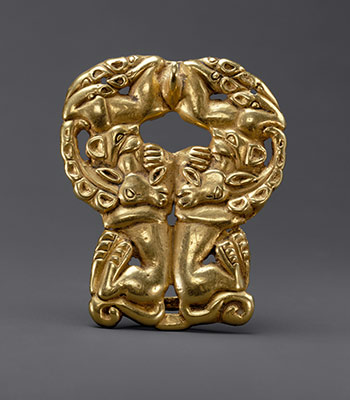
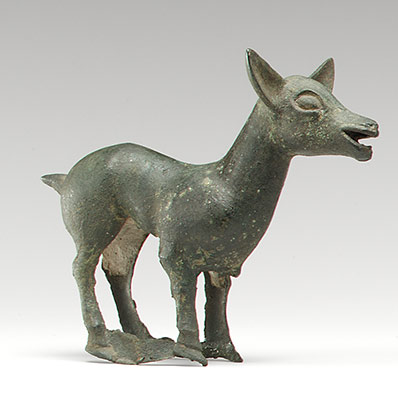
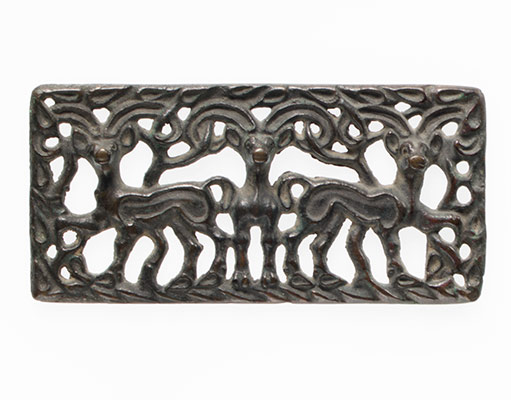
This millennium sees many changes in the ways of life in North and Central Asia, although in the far north, hunting, fishing, and reindeer herding continue. On the steppes, horse-riding pastoralism becomes the dominant way of life at the beginning of the millennium, and a new military elite arises among these nomadic groups. By the middle of the millennium, major states to the west and east extend their political power into Central Asia, and new kinds of cities develop as a result. The rich mix of cultures, religions, and art styles intensifies through regular east-west trade along the Silk Road.
Central and North Asia, 1000 B.C.–1 A.D.
-
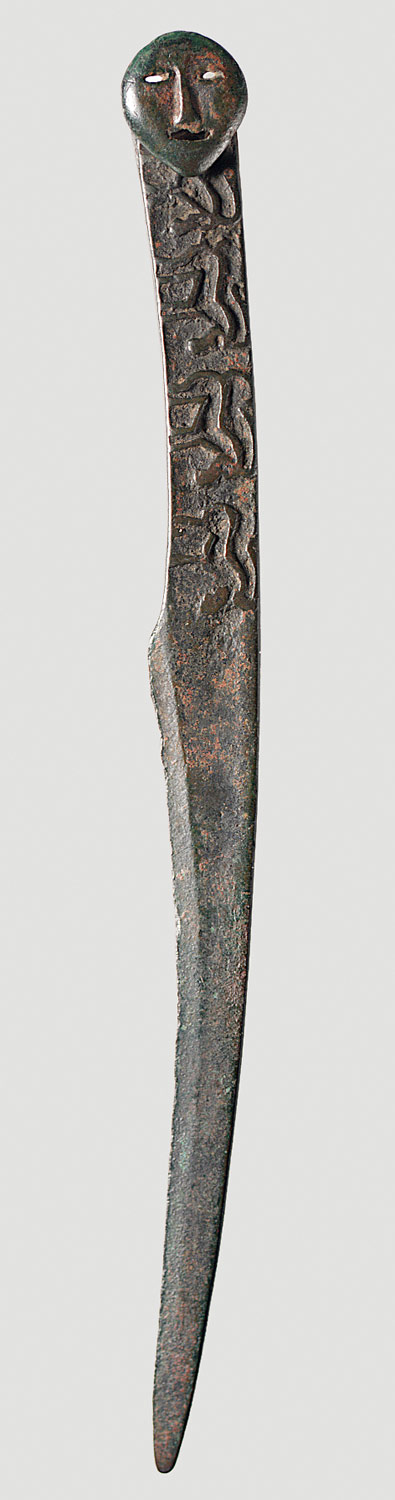
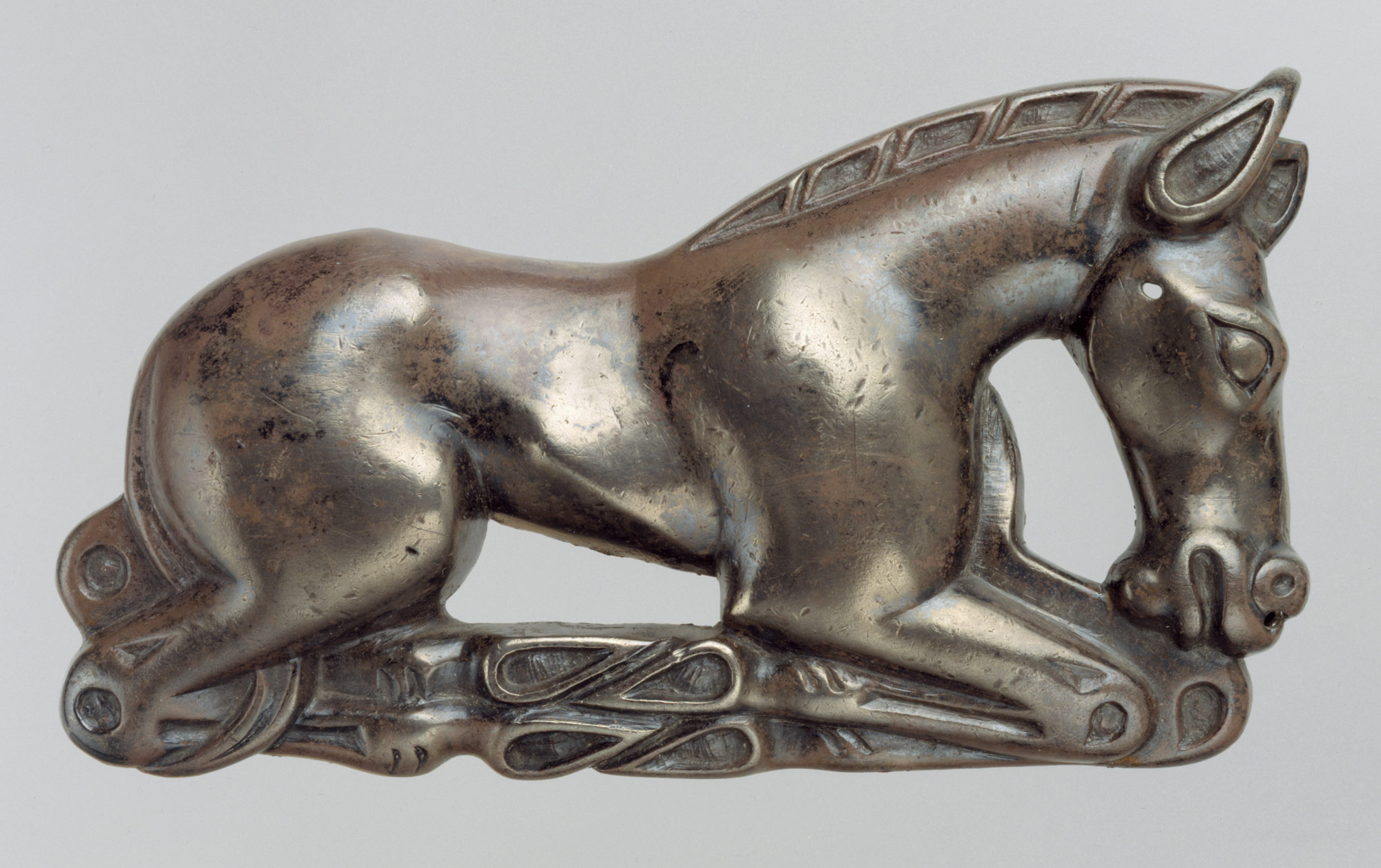
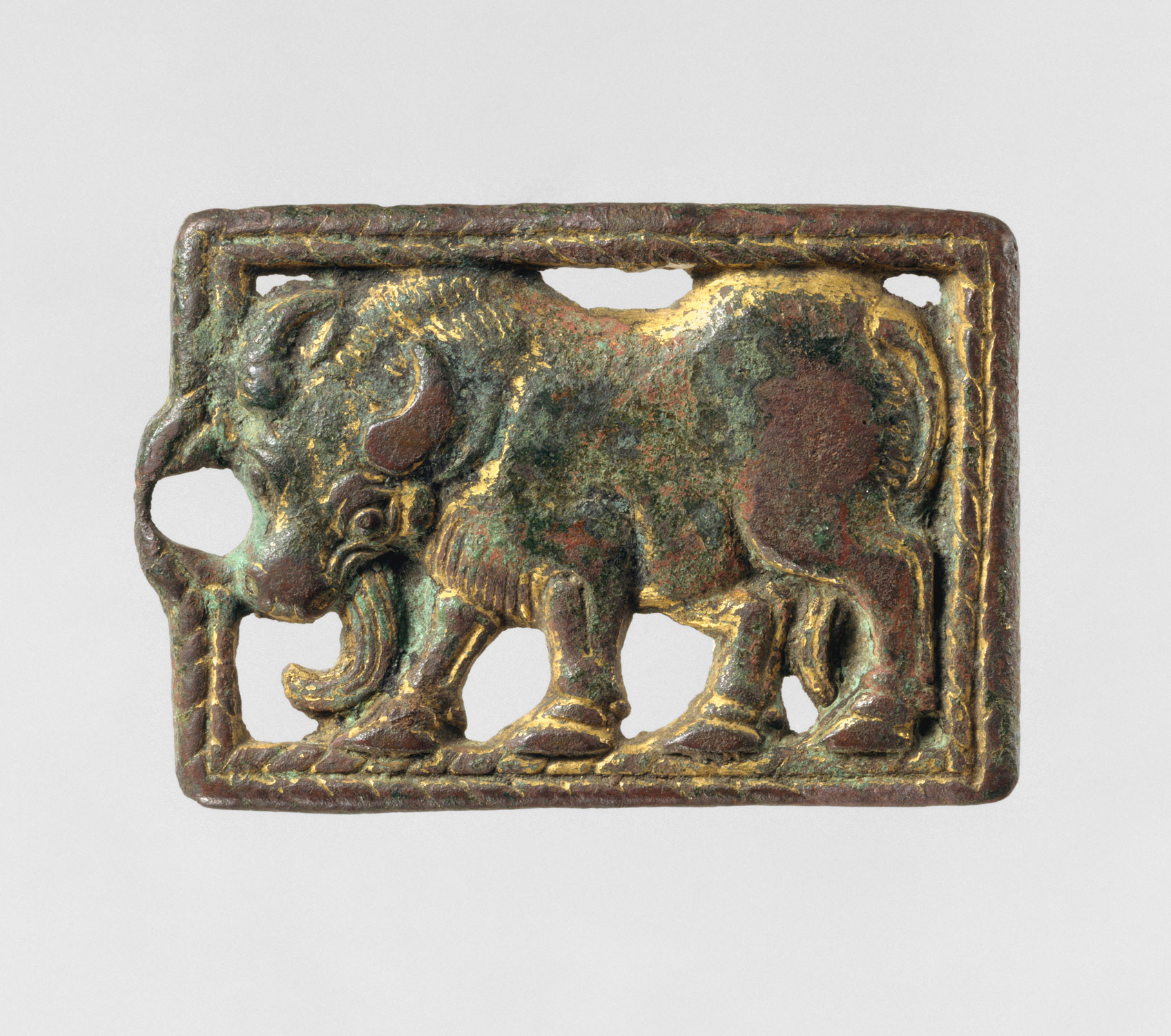
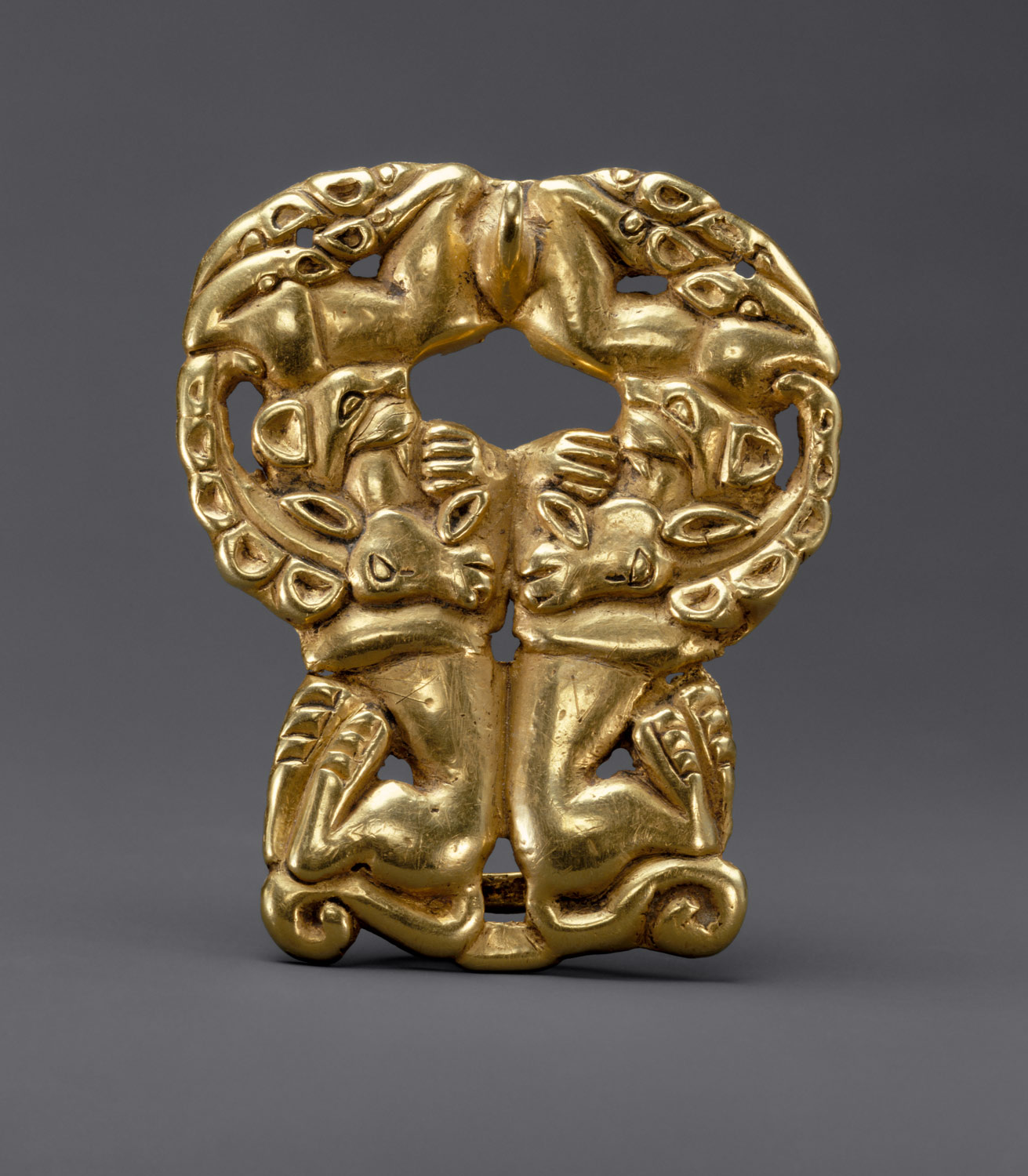
 49.135.9a,b
 -
 24.216.1
 -
 1985.214.78
 -
 18.33.1
 -
 17.190.1672
 -
 1985.214.88
 -
 28.68.4
Timeline
1000 B.C.
750 B.C.
Iron Age, ca. 1000–500 B.C.
NORTH
Nomadic groups, including the Scythians and the Cimmerians, ca. 1000–500 B.C.
Yaz I, ca. 1500/1000–800/650 B.C.
Many small states and city-states in oasis areas, ca. 1000–500 B.C.
SOUTH
Nomadic groups, including the Sauromatians, Sarmatians, and Saka, ca. 1000 B.C.–1 A.D.
Tagar culture, ca. 1000/800–?4th century B.C.
Cist tomb cultures in Mongolia and Buryatia, 8th–3rd century B.C.
750 B.C.
500 B.C.
Iron Age, ca. 1000–500 B.C.
NORTH
Nomadic groups, including the Scythians and the Cimmerians, ca. 1000–500 B.C.
Yaz I, ca. 1500/1000–800/650 B.C.
Many small states and city-states in oasis areas, ca. 1000–500 B.C.
Achaemenid empire, ca. 545–330 B.C.
SOUTH
Nomadic groups, including the Sauromatians, Sarmatians, and Saka, ca. 1000 B.C.–1 A.D.
Tagar culture, ca. 1000/800–?4th century B.C.
Cist tomb cultures in Mongolia and Buryatia, 8th–3rd century B.C.
Small states or city-states in oasis areas, ca. 500 B.C.–500 A.D.
500 B.C.
250 B.C.
Iron Age, ca. 1000–500 B.C.
NORTH
Nomadic groups, including the Scythians and the Cimmerians, ca. 1000–500 B.C.
Many small states and city-states in oasis areas, ca. 1000–500 B.C.
Achaemenid empire, ca. 545–330 B.C.
Alexandrian empire, ca. 330–323 B.C.
Seleucid empire, ca. 305/304–246/238 B.C.
SOUTH
Nomadic groups, including the Sauromatians, Sarmatians, and Saka, ca. 1000 B.C.–1 A.D.
Tagar culture, ca. 1000/800–?4th century B.C.
Cist tomb cultures in Mongolia and Buryatia, 8th–3rd century B.C.
Small states or city-states in oasis areas, ca. 500 B.C.–500 A.D.
Xiongnu confederation, 3rd century B.C.–1st century A.D.
250 B.C.
1 A.D.
NORTH
Parthian empire, ca. 209 B.C.–223 A.D.
Seleucid empire, ca. 305/304–246/238 B.C.
Greco-Bactrian kingdom, 246/238–130 B.C.
SOUTH
Nomadic groups, including the Sauromatians, Sarmatians, and Saka, ca. 1000 B.C.–1 A.D.
Cist tomb cultures in Mongolia and Buryatia, 8th–3rd century B.C.
Small states or city-states in oasis areas, ca. 500 B.C.–500 A.D.
Xiongnu confederation, 3rd century B.C.–1st century A.D.
Han empire, 54 B.C.–24 A.D.
Overview
Key Events
-
ca. 1000–800 B.C.
Horse-riding pastoralism emerges as a significant lifeway on the steppes. Although earlier peoples had both ridden horses and been pastoralists, the development of new riding equipment and the military tactic of using a compound bow from horseback allow for the development of an effective fighting force. This new lifeway spreads rapidly across the steppes of Eurasia, and military incursions of nomadic groups disrupt many settled population centers. Eventually the Greek historian Herodotus (ca. 484–ca. 425 B.C.) and many Chinese authors describe details of this lifeway.
-
ca. 545 B.C.
Many of the city-states and small kingdoms of western Central Asia are incorporated as satrapies into the Achaemenid empire. The Achaemenid armies maintain peace and provide political stability; the Central Asian satrapies pay taxes and tribute to the central government. This system of control from far abroad continues after Alexander defeats the Persians, and during the time of Alexander’s successors, the Seleucids.
-
ca. 5th–4th century B.C.
In the Altai Mountains, burials of the Pazyryk culture are placed in log cabins buried underground with stone mounds above. Some of these burials are flooded with groundwater and then frozen until recent excavation in the twentieth and twenty-first centuries. These frozen burials preserve silk textiles from China, pile carpets from far to the west, and lively, gold-covered wooden decorations for the many horses buried with their masters.
-
ca. 330 B.C.
Conquest by Alexander brings Hellenism to western Central Asia. Greek-style cities are built in Afghanistan and Bactria, where Macedonian and Greek soldiers settle. A dialect of Greek in use throughout the western Mediterranean and western Asia becomes the language of commerce and the elite. The influence of Hellenistic art, a fusion of Near Eastern and Classical Greek traditions, transforms much of the architecture and ornament of the area.
-
3rd century B.C.
Buddhism is brought to the Greco-Bactrian kingdom by Indian traders. The introduction of this religion adds yet another element to the rich mixture of Central Asian art.
-
54 B.C.
The Han Chinese defeat the Xiongnu protectors of the thirty-six city-states of Xinjiang and rule the area directly for about thirty years. These walled cities play a role in the “silk road” trade and also act as buffers between the Chinese and the nomads to the north and west. This is the first, but not the last, time that the Chinese take direct control of the area. This pattern of alternating between being part of China and being independent city-states will continue for many centuries.
-
53 B.C.
Roman legions under Crassus suffer a decisive defeat at the hands of the Parthians, at Harran, in northern Mesopotamia. As a result, the Parthians of Iran dominate the Silk Road, along which an extensive trade in luxury goods flows between Rome and China. The overland trade crosses southern Central Asia, passing through many independent oases.
Citation
“Central and North Asia, 1000 B.C.–1 A.D.” In Heilbrunn Timeline of Art History. New York: The Metropolitan Museum of Art, 2000–. http://www.metmuseum.org/toah/ht/?period=04®ion=nc (October 2000)
Related
Map

Primary Chronology
Secondary Chronology
Lists of Rulers
See also
CLOSE
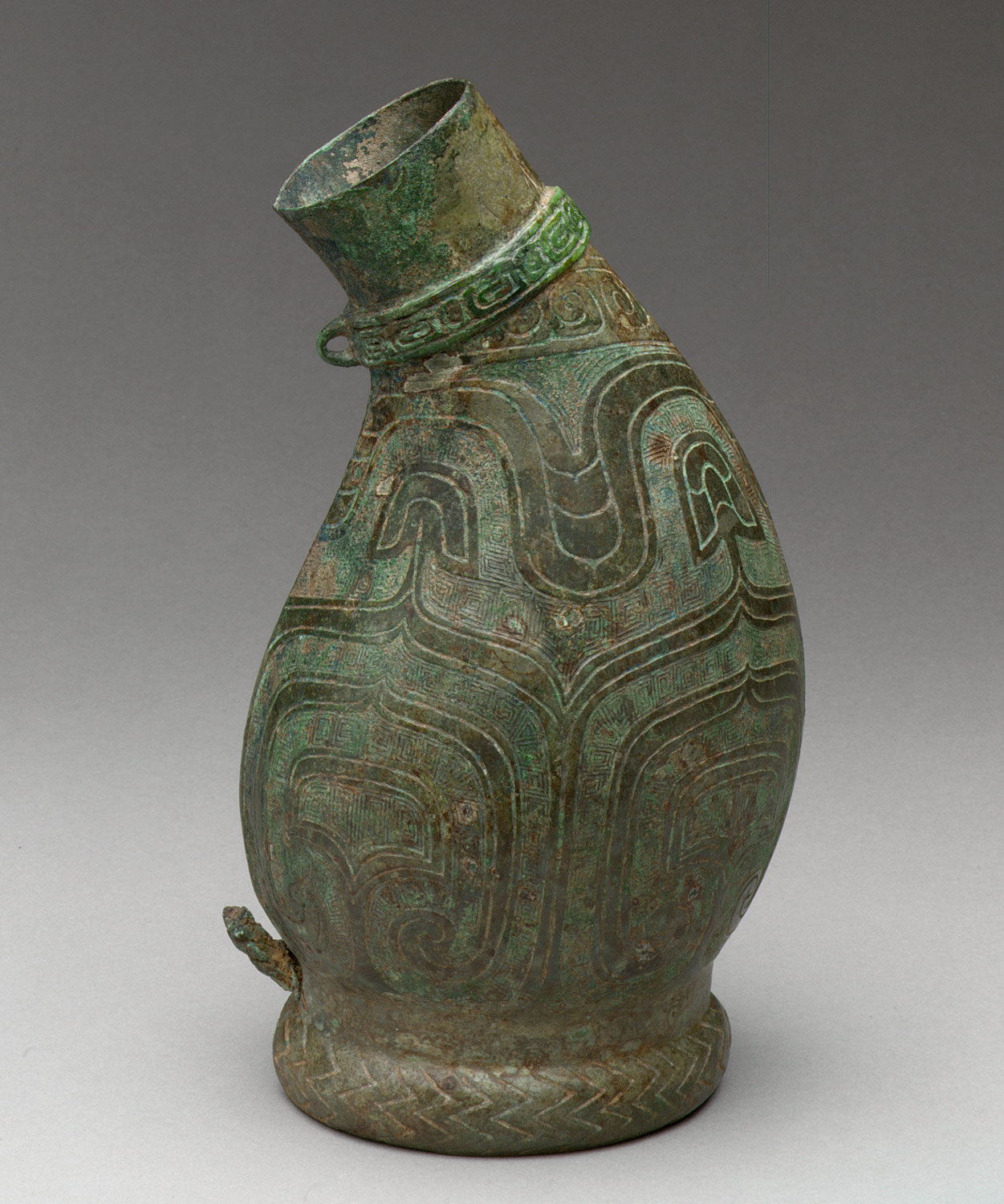
Heilbrunn Timeline of Art History