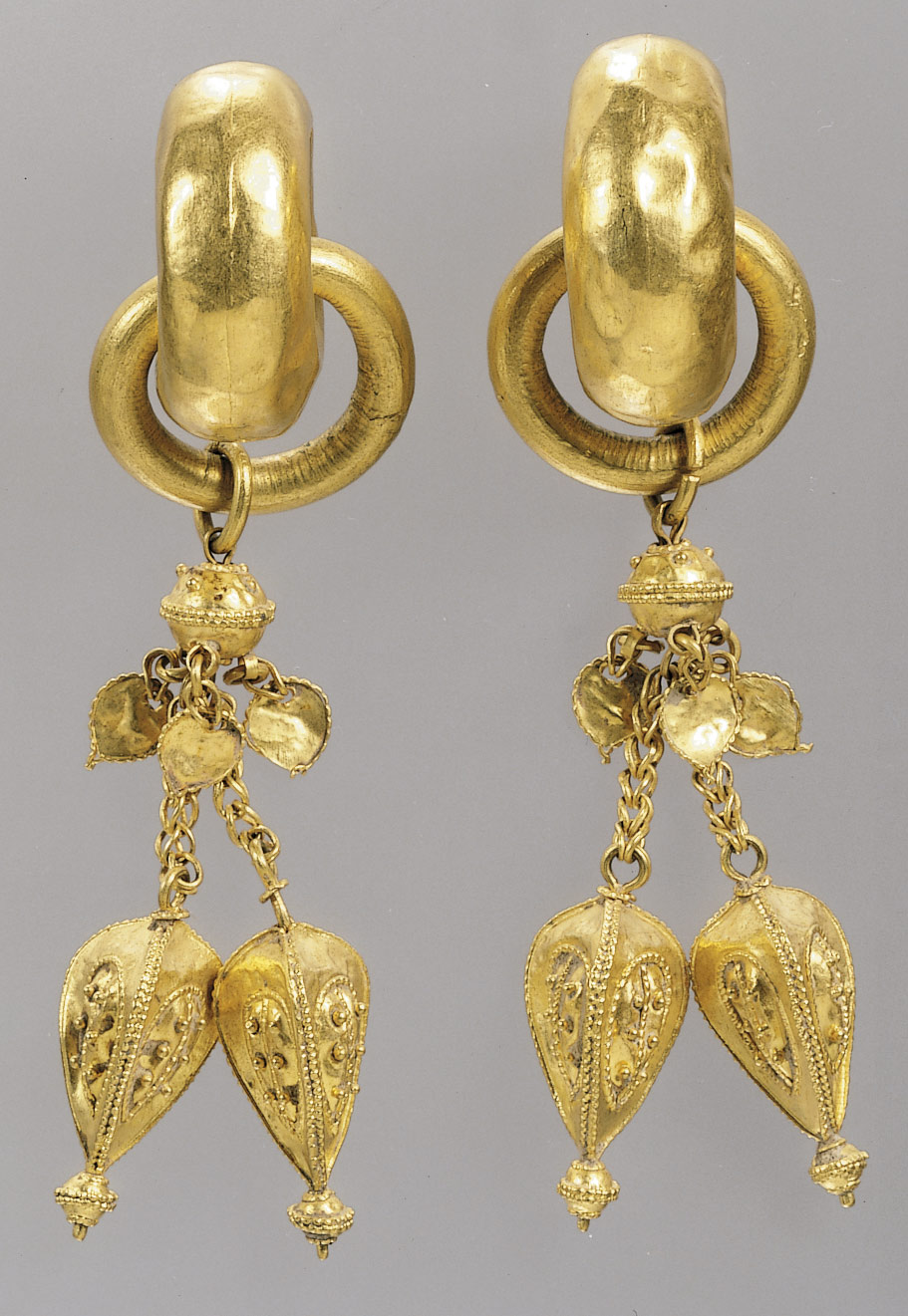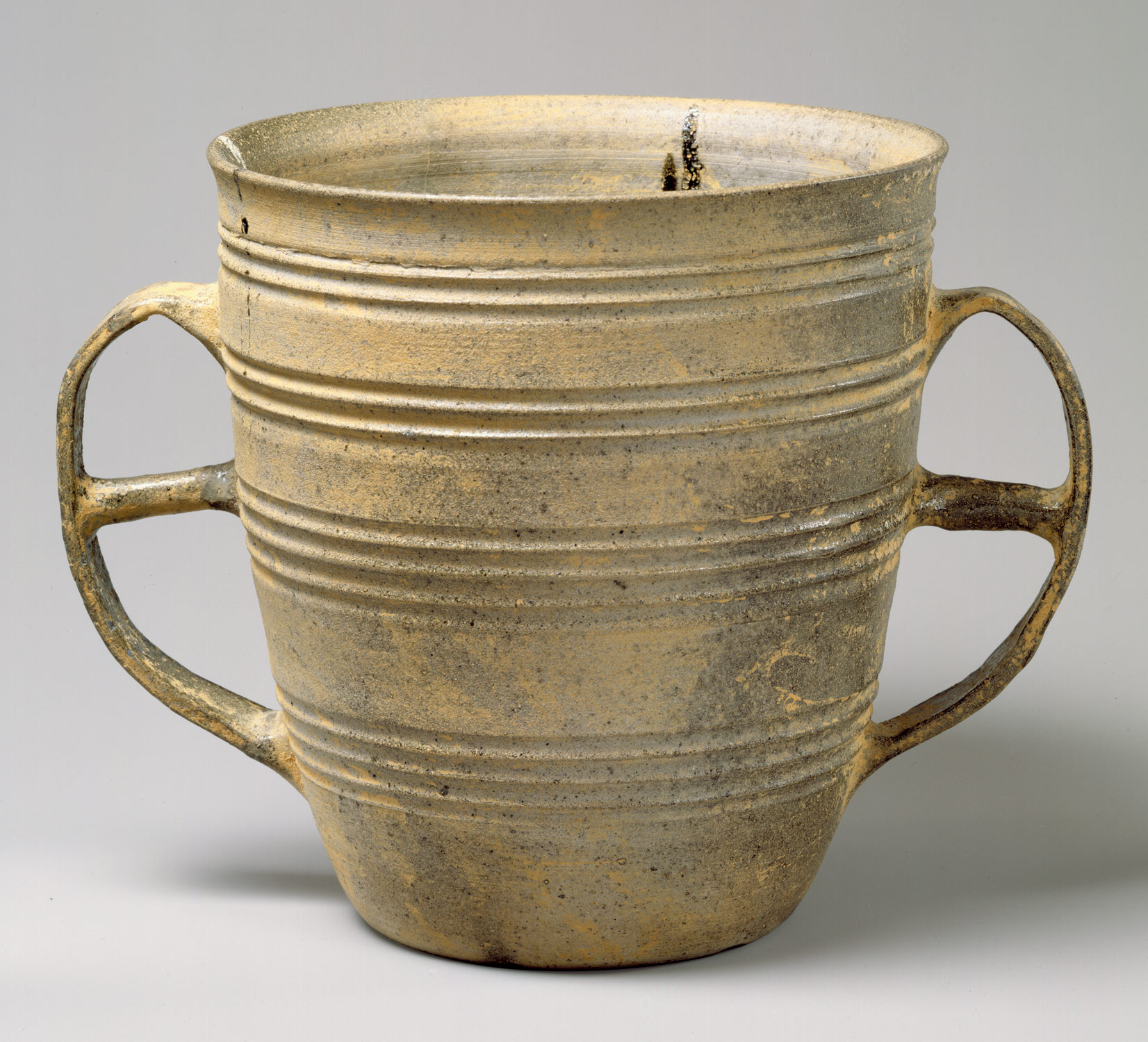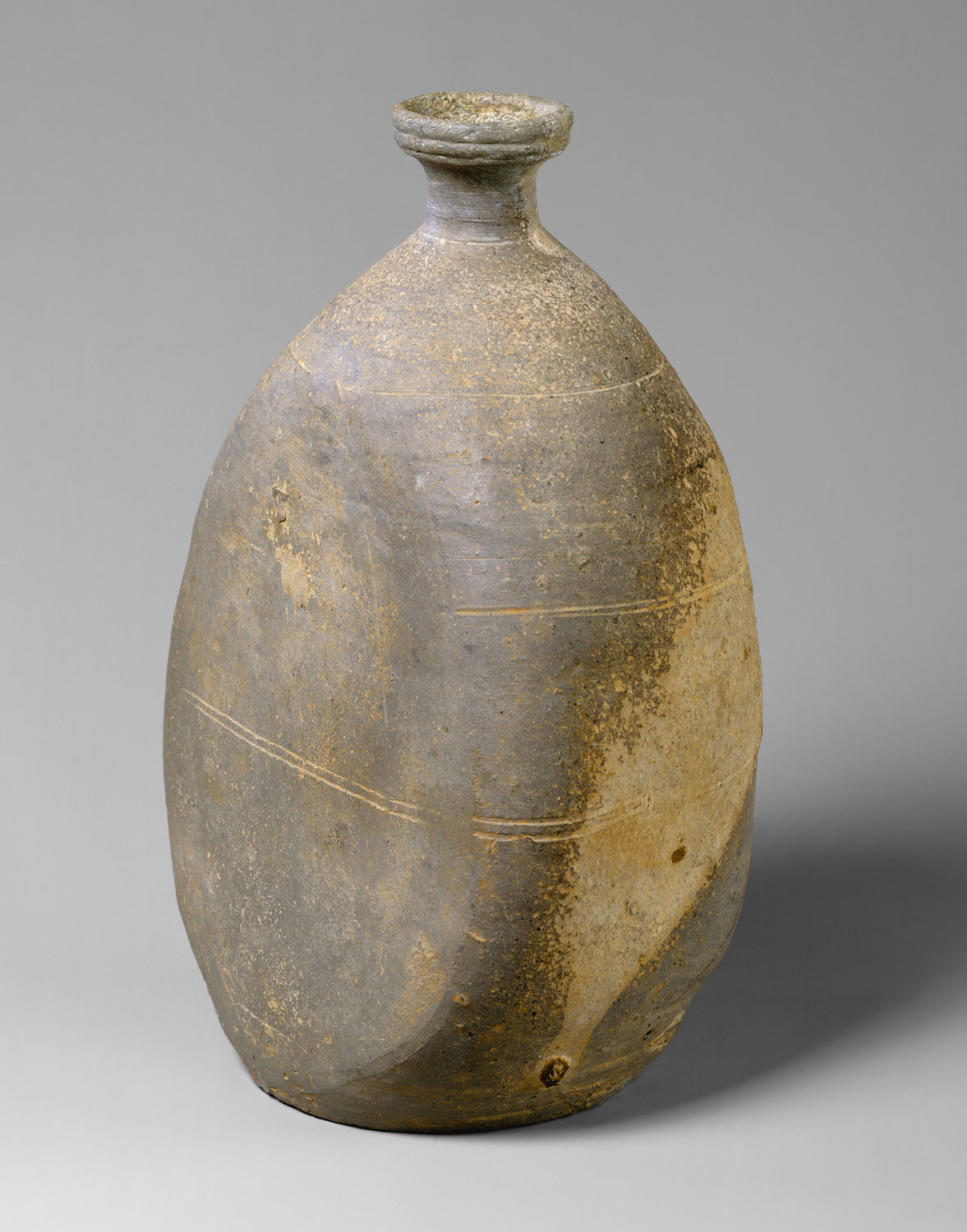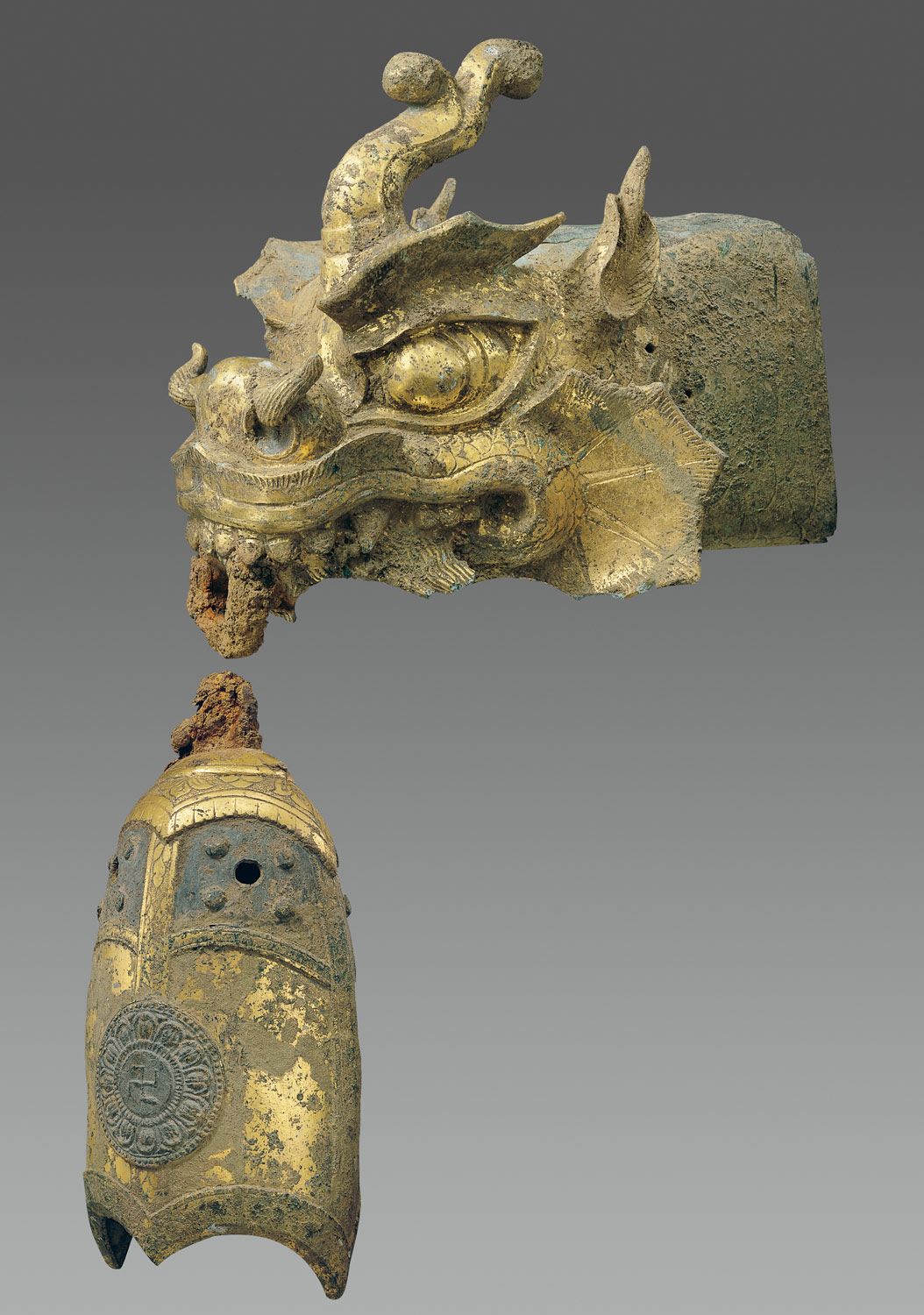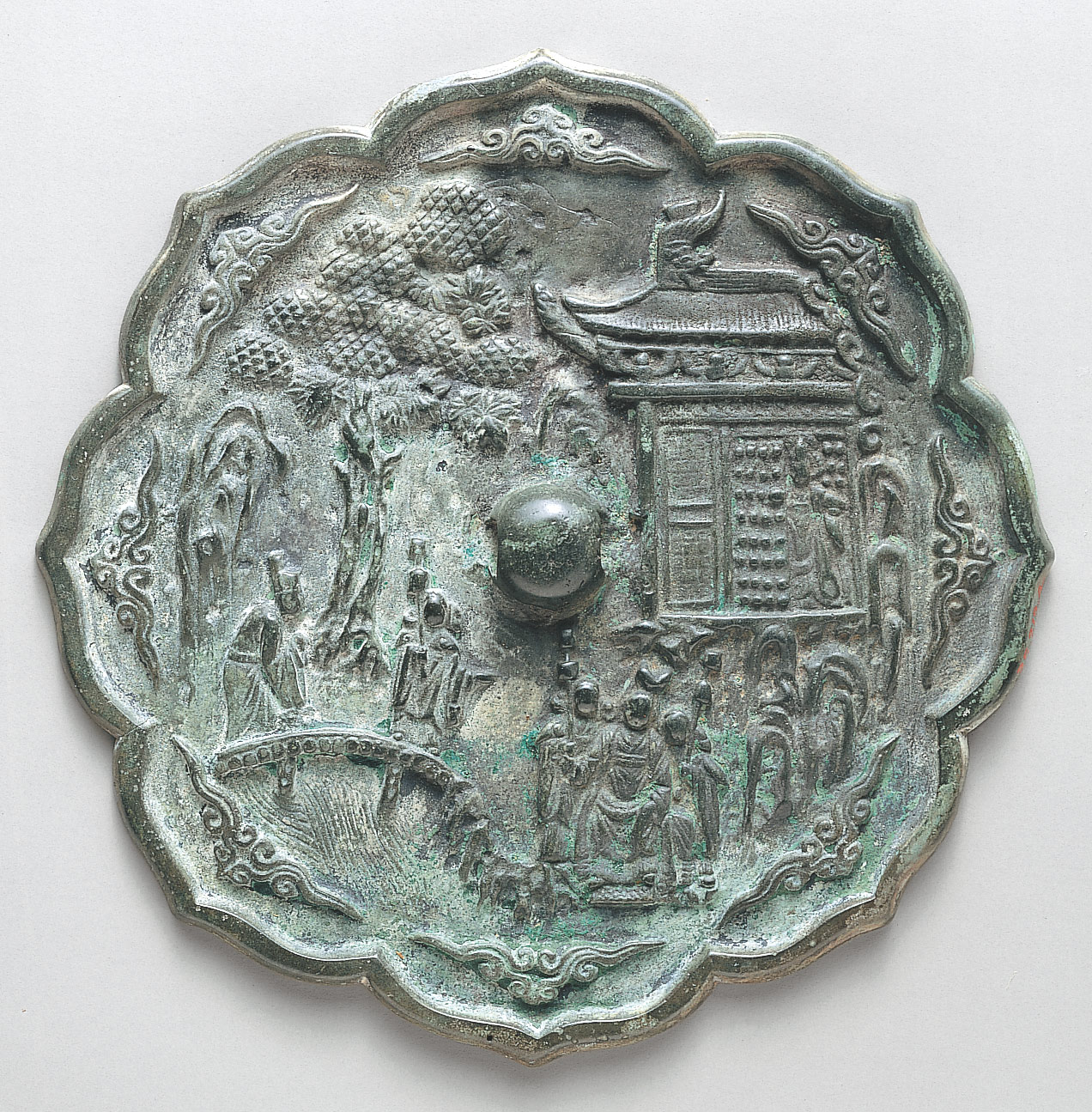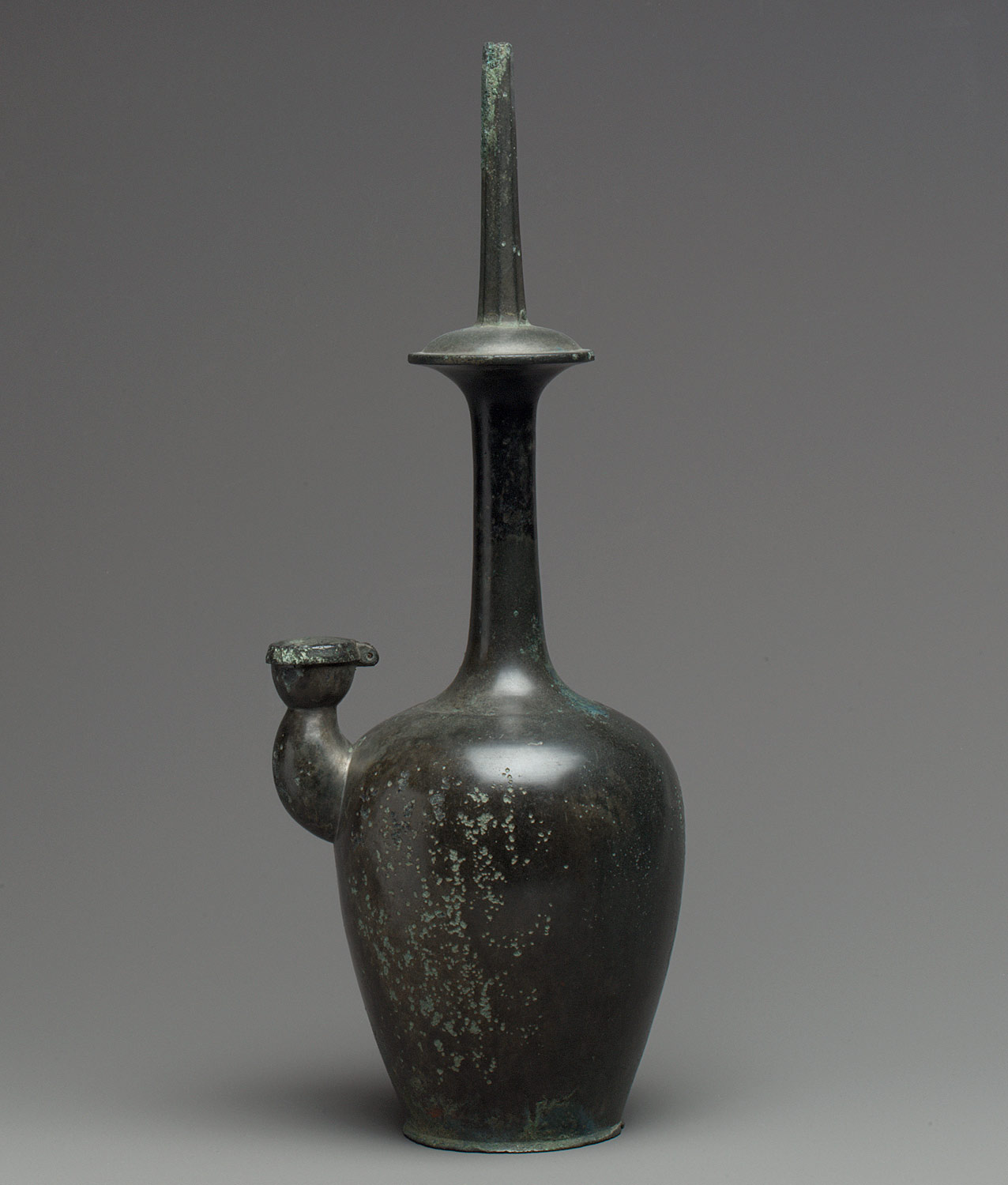
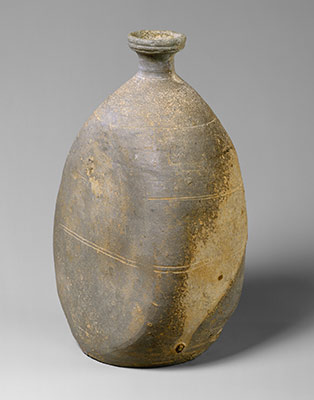
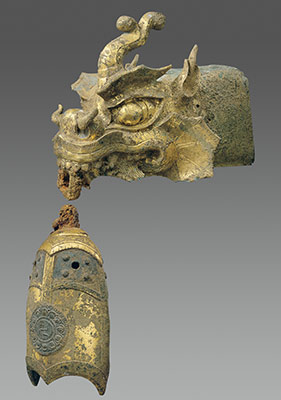
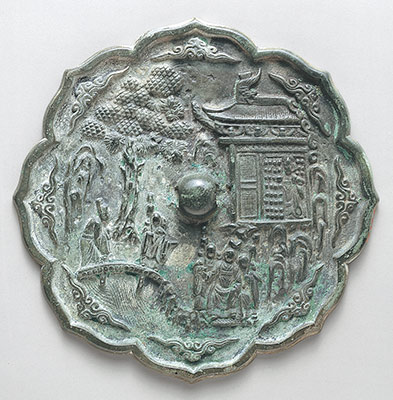
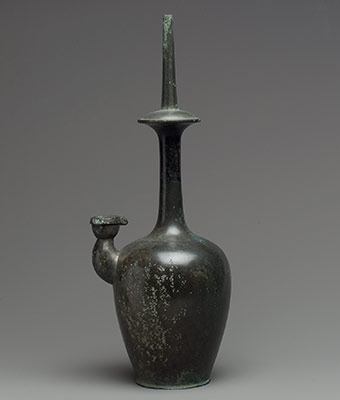
Through a series of military and political moves, the kingdom of Silla (57 B.C668 A.D.) achieves dominance over most of the Korean peninsula by the end of the seventh century. Its campaign of unification begins with the defeat of the Gaya Federation in 562; after an alliance with the Chinese Tang (618906) court, it succeeds in conquering the kingdoms of Baekje in 660 and Goguryeo in 668. By 676, Silla forces Chinese troops to withdraw into Manchuria, and for the first time in history the peninsula comes under the sway of a single Korean government. In the succeeding Unified Silla dynasty (668935), Korean culture flourishes, creating a political and cultural legacy that will be handed down to subsequent rulers of the country.
Consolidation of the three kingdoms under a single absolute ruler leads to an increase in the wealth of the aristocracy, whose status is secured by a rigid hereditary class system. Gyeongju, the capital of Unified Silla, is a prosperous metropolis with magnificent palaces and imposing Buddhist temples. Officially sanctioned as the state religion, Buddhism exerts a profound influence on the arts; some of the most refined and sophisticated Buddhist art and architecture in East Asia is produced in Korea during this period. The Unified Silla court maintains close relations with Tang China through trade and diplomatic exchanges. Throughout this period, Korea continues to play a crucial role in the transmission of technology and ideas to Japan.
Beset by power struggles between the court and the aristocracy, Unified Silla declines in the late eighth century. The rise of local military garrisons and landed gentry, coupled with increasing unrest among the common people, lead to a deterioration of the social fabric and the establishment of competing regional states. In 918, Wang Geon (877943), a high-ranking military official, reunites the country under the new Goryeo dynasty (9181392).
528 (552 according to an alternate tradition)
Buddhism is officially recognized as the state religion by the kingdom of Silla. Although the religion has been known to the local society since the early fifth century through the activities of monks from the Koguryô Kingdom in the north, Silla, located in the far southeastern corner of the peninsula, is the last of the Three Kingdoms to sanction formally the practice of Buddhism. early 6th century
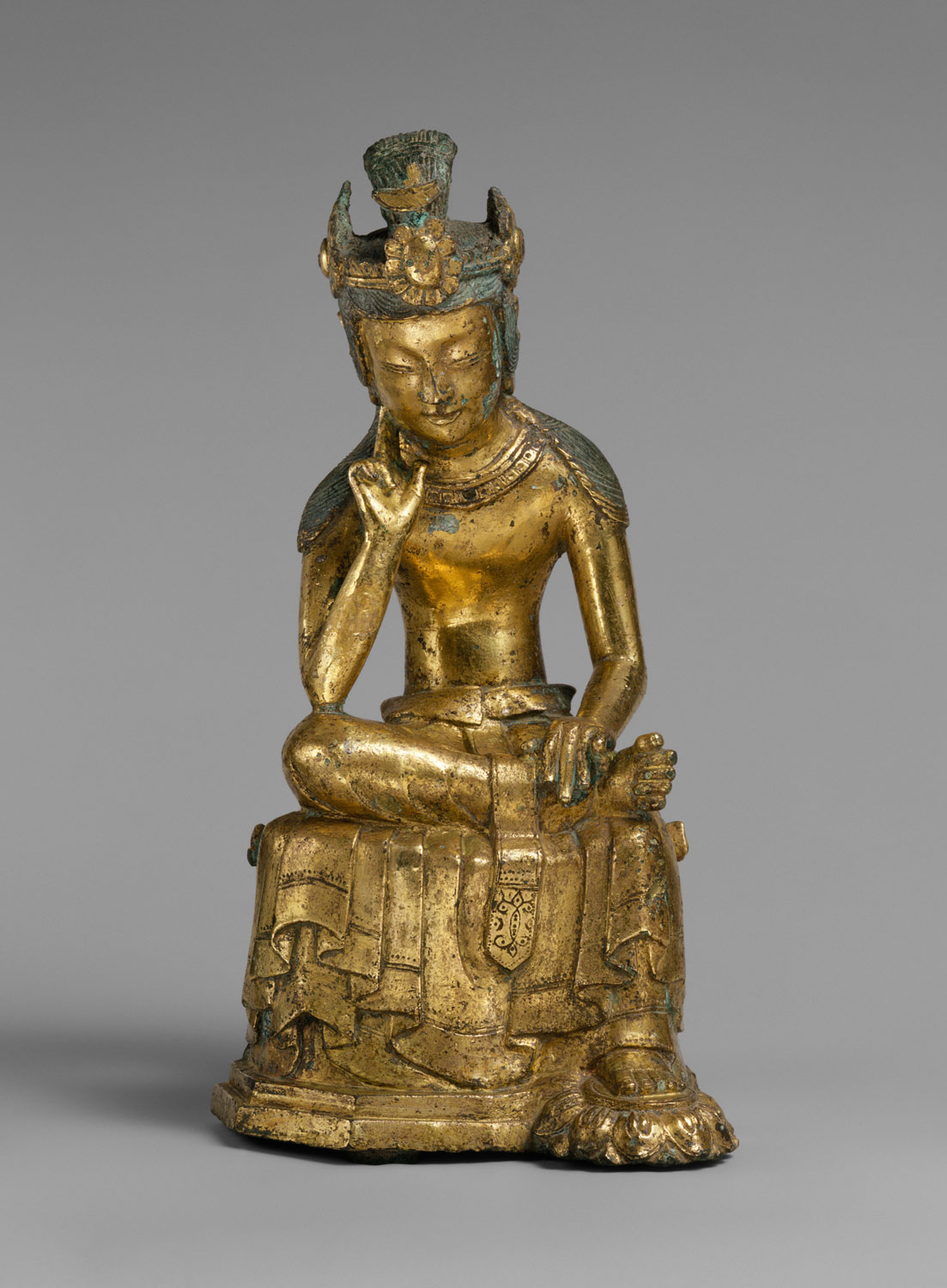
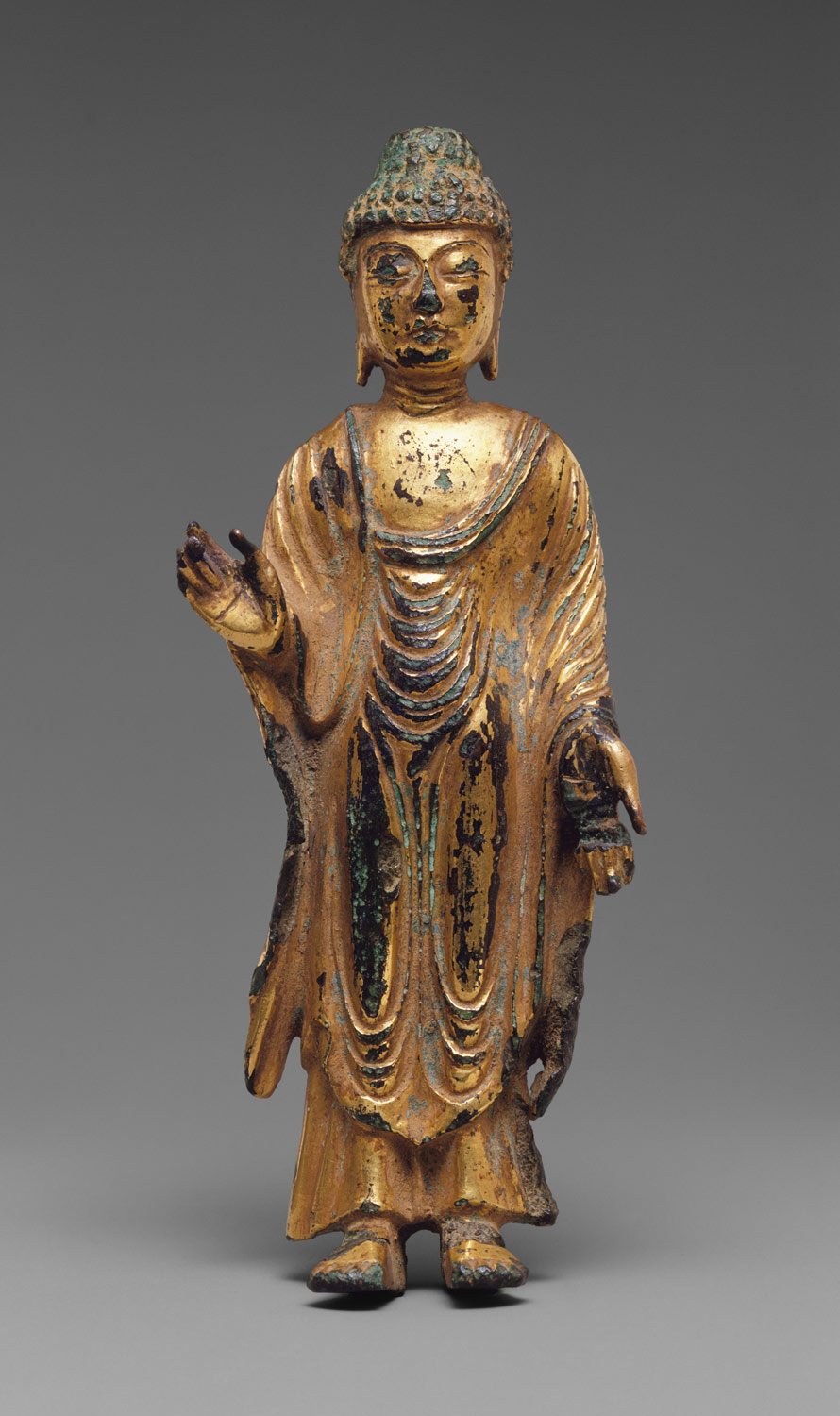
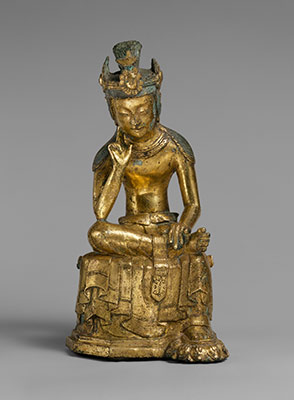
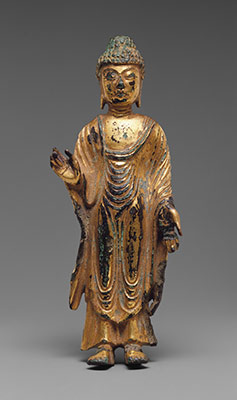
By this time, all of Korea's rulers appear to be convincedlikely swayed by contemporary Chinese imperial examplesthat the Buddhist religion has the potential for strengthening and safeguarding the nation. Throughout the peninsula, the increasingly close association of Buddhism and the state is signaled by the erection of temples and crafting of icons at royal expense. For example, in 527, the impressive Taet'ong-sa temple is built at the center of the Paekche capital, Ungjin (modern Kongju, South Ch'ungch'ông Province), in part as a diplomatic gesture intended to reinforce the kingdom's ties to a pious Chinese sovereign. Twenty-six years later, in 553, in the Silla capital of Kumsông (modern Kyôngju, North Kyôngsang Province), construction is initiated on Hwangnyong-sa, a royally endowed temple whose famous nine-storied pagoda (begun more than a century after the founding of the temple) comes to be revered as one of the protective talismans of the nation.Korean Buddhist sculpture of the sixth century begins to show distinctive indigenous characteristics but also reflects the strong influence of Korea's diverse contacts with the artistic traditions of China and India.
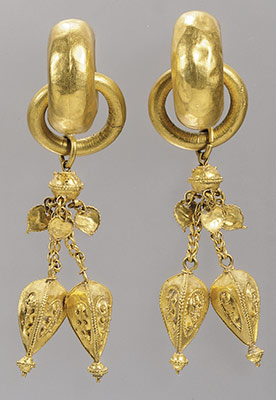
Archaeological evidence indicates that, in an effort to buttress their temporal authority, the monarchs of Silla and Paekche continue to present themselves as possessing shamanic powers as late as at least the sixth century. The discovery of gold crowns of shamanistic design in the royal graves of both states suggests that the rulers who wore them sought the sanction of ancient indigenous religious belief, as well as Buddhism, for their governance.
538 553 562 598614 late 6thmid-7th century
In the first half of the seventh century, Korean landscape painting style undergoes yet another change, as exemplified by mural paintings in two Koguryô tombs in South P'yông'an ProvinceNae-ri Tomb no. 1, in Shijok-myôn, Taegong-gun, and Chinp'a-ri Tomb no. 1, in Chunghwa-gun. The Nae-ri Tomb paintings, like those of the late-sixth-century Kangsô Tomb, feature a tripartite composition of a host mountain and two guest peaks, but the profile of the central mountain is steeper, conveying a greater sense of height. In addition, the trees along the mountain ridges are more realistically rendered, with clusters of leaves and curvilinear trunks. An even greater sense of movement is expressed in the tomb murals at Chinp'a-ri. The windblown trees, whose trunks, limbs, and leaves are described in detail, and the swirling clouds show the influence of Chinese painting style of the Six Dynasties period (220589). What begins in Koguryô as a largely symbolic representation of landscape gradually moves, by the early seventh century, toward a view of landscape as a subject worthy of realistic portrayal in its own right.
There is little surviving evidence of a tradition of landscape painting in the southern kingdoms of Paekche and Silla. A notable exception are two earthenware tiles with landscape decoration, which are among a group of eight tiles excavated from a Buddhist temple site in Puyô, South Ch'ungch'ông Province, the last capital of Paekche. Dated to the first half of the seventh century, these tiles display in their decoration a technical and stylistic sophistication that evinces a long process in the development of landscape depiction prior to this time.
645648 660 668 676
The largely conciliatory policies of Unified Silla's first kings toward their former foes, the defeated states of Paekche and Koguryô, and the establishment of an administrative structure for governing the whole country brings about a "golden age" of prosperity and peace, which lasts for nearly a century (ca. 675765). The new government maintains close relations with Tang China and Japan through trade as well as diplomatic and scholarly exchanges. The peace that characterizes Unified Silla's external relations nurtures general prosperity throughout the country and the remarkable affluence of the capital, Kyôngju. Korean Buddhism, supported by the government as the state religion and lavishly patronized by the wealthy aristocracy, enters a phase of unparalleled institutional development, societal expansion, and scholarly achievement. Some of the most refined and sophisticated Buddhist art and architecture in East Asia is produced in Korea during the Unified Silla period.
698 7th8th century early 8th century 751after 774
Another major project undertaken at this time is the rebuilding of Pulguk-sa, originally founded in 553. Located in the foothills of Mount T'oham near Sôkkuram, it is Korea's oldest surviving Buddhist temple.
late 8thearly 10th century 918
Buddhism continues to flourish under the patronage of the Koryô court and aristocracy. Temples increase in number, landholdings, and wealth, as well as political influence, over the course of the dynasty. Elaborate Buddhist rituals are regularly performed at public expense for the welfare of the state and at the behest of wealthy private devotees. The elegant, refined lifestyle of the court and upper classes is clearly reflected in the arts of the period. Exquisitely crafted bronzes, lacquerware, and celadon ceramic wares intended as devotional objects also reflect the increasingly personal nature of Buddhist religious expression. The production of Buddhist paintings and illustrated sutras reaches the highest level of artistic achievement in response to the demand of the court and aristocracy for images to serve as objects of worship.
Frequent official exchanges and trade with China, especially in the early part of the Koryô period, offer Korean artisans a rich array of new technologies and motifs, which they adapt and refine to accommodate native tastes. Early Koryô trade missions export gold, silver, ginseng, paper, brushes, ink, and fans to China, and import silk, ceramics, books, musical instruments, spices, and medicine. Further stimulus is provided by interaction with countries beyond East Asia, facilitated by the travels of Buddhist monks to and from India and the arrival of merchant seamen from the Middle East. Similarly, many Buddhist monks travel to China for lengthy periods to study religious doctrines and texts, which they bring back to Korea upon their return. Korean intellectuals pride themselves on their knowledge of China's classical literature and their ability to write and compose poetry in Chinese.
9931018
|
About the Timeline | Credits | Image Copyrights and Credits | Share the Timeline | Connections |
|
|