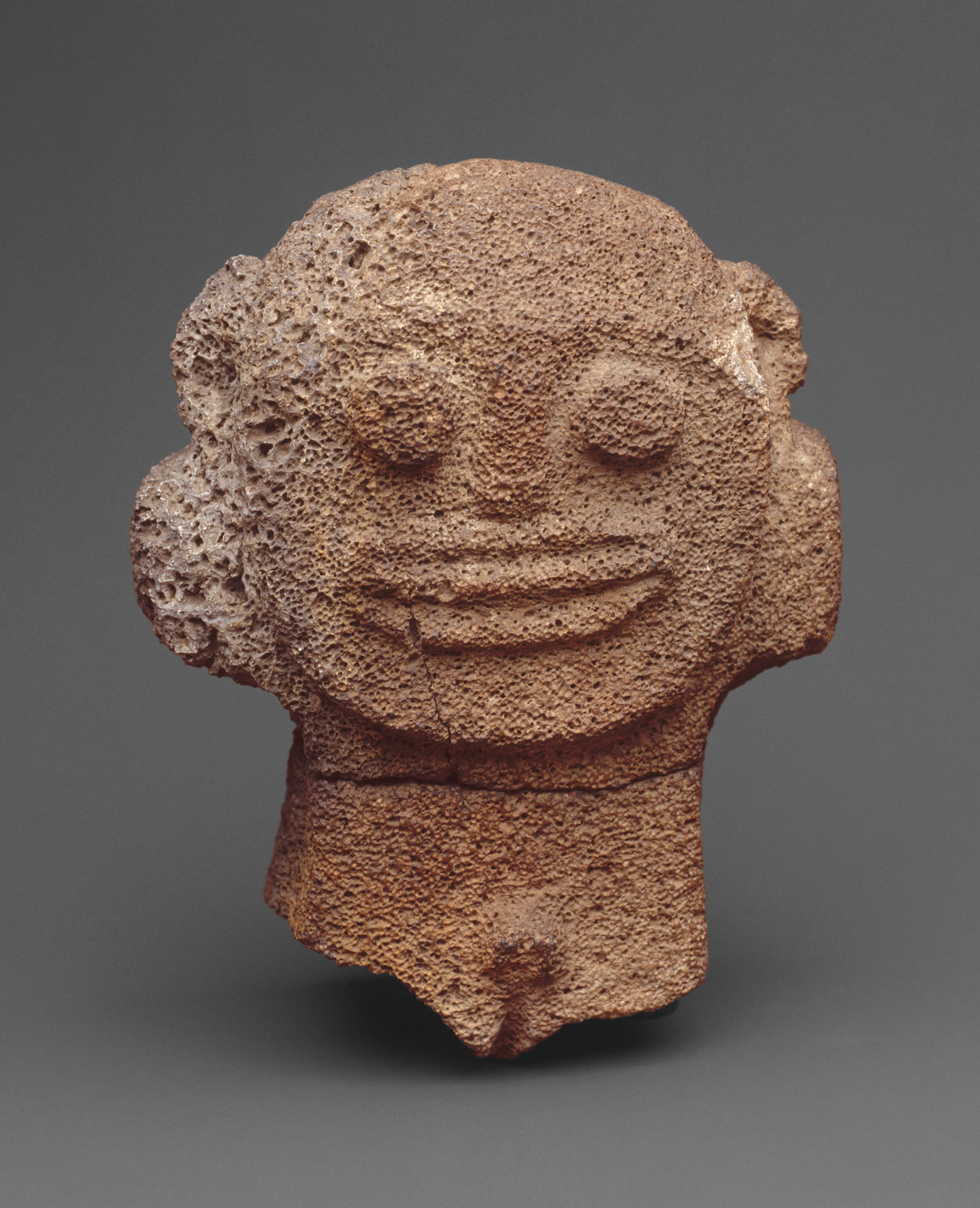
As with the preceding eras, our knowledge of the forms and development of Oceanic art from 500 to 1000 remains scant. In Australia, rock art of great intricacy and sophistication continues to be produced, as do the stone figures of the New Guinea Highlands. While the early Sohano ceramic traditions of the Solomon Islands cease around 600, the distinctive Manga’asi pottery of Vanuatu continues throughout the period. In the eastern Pacific, Polynesian peoples continue to explore and colonize previously uninhabited islands and archipelagos, including Hawai’i, Tahiti, and Easter Island (ca. 800), eventually heading southwestward to settle New Zealand around 900–1000. Around 800, the Polynesians of Necker Island near Hawai’i begin to carve distinctive anthropomorphic figures from porous volcanic stone.
Oceania, 500–1000 A.D.
Related
Map
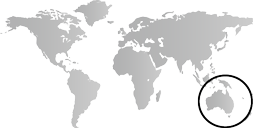
Encompasses present-day Australia, island Southeast Asia, and the islands of the tropical north and south Pacific