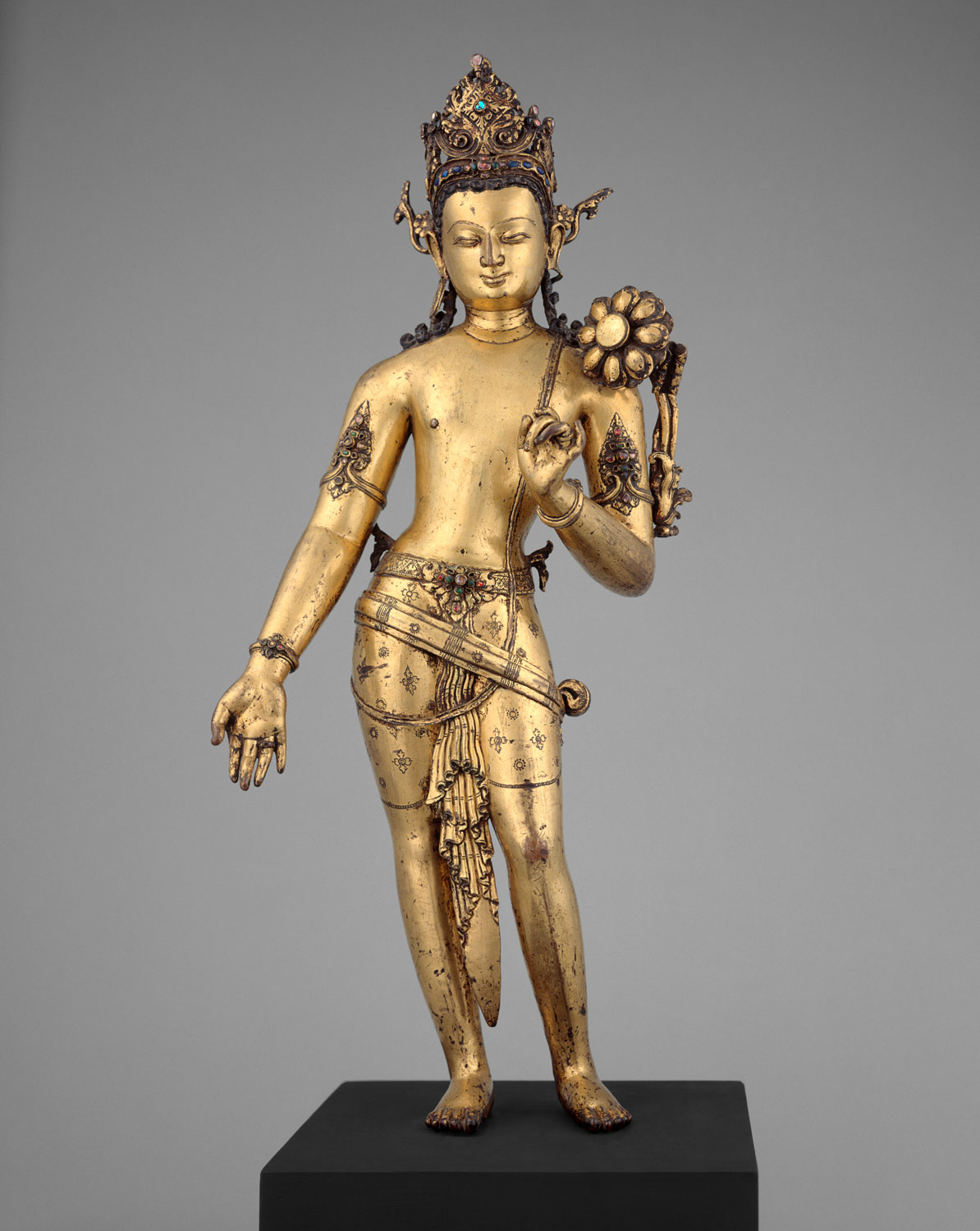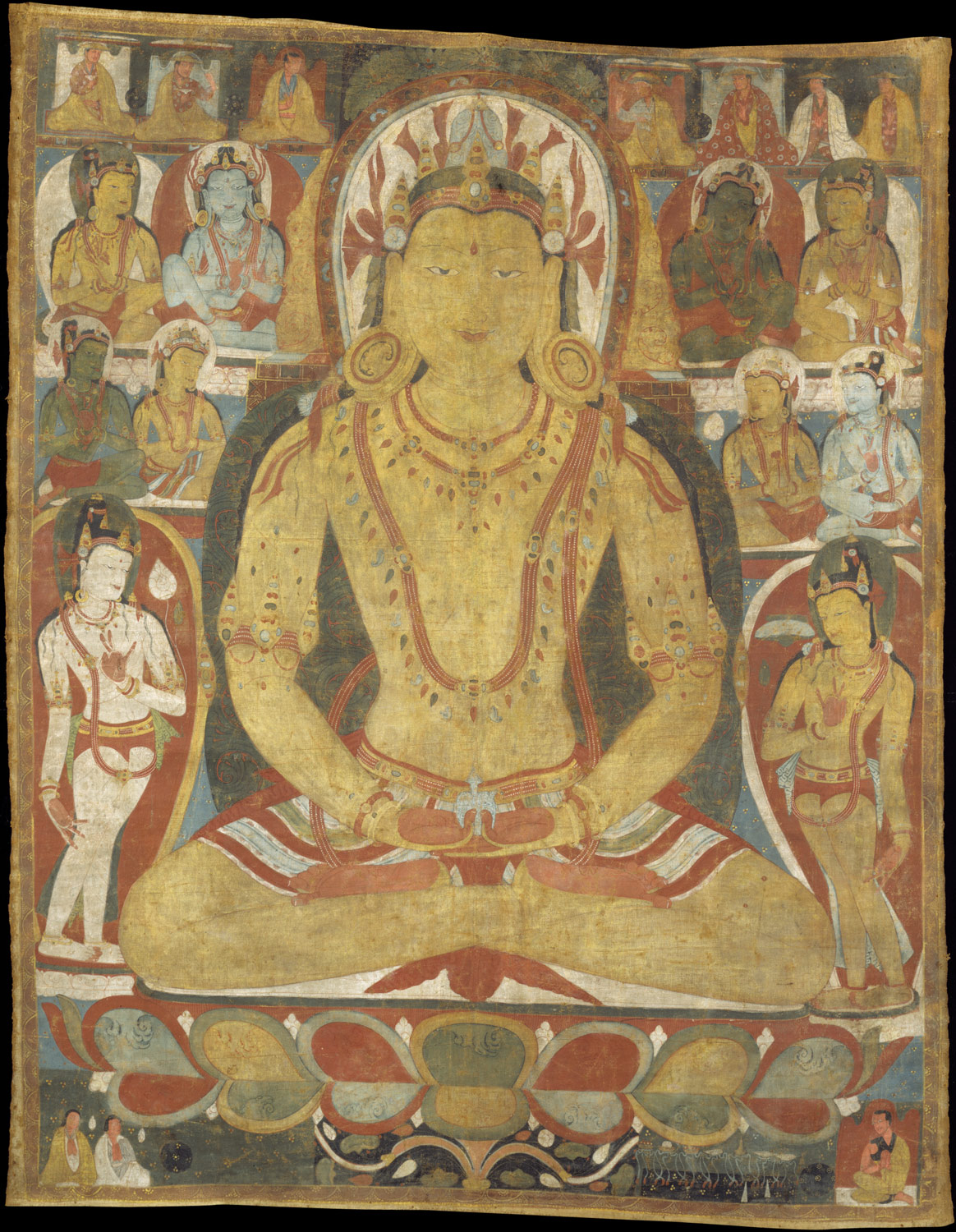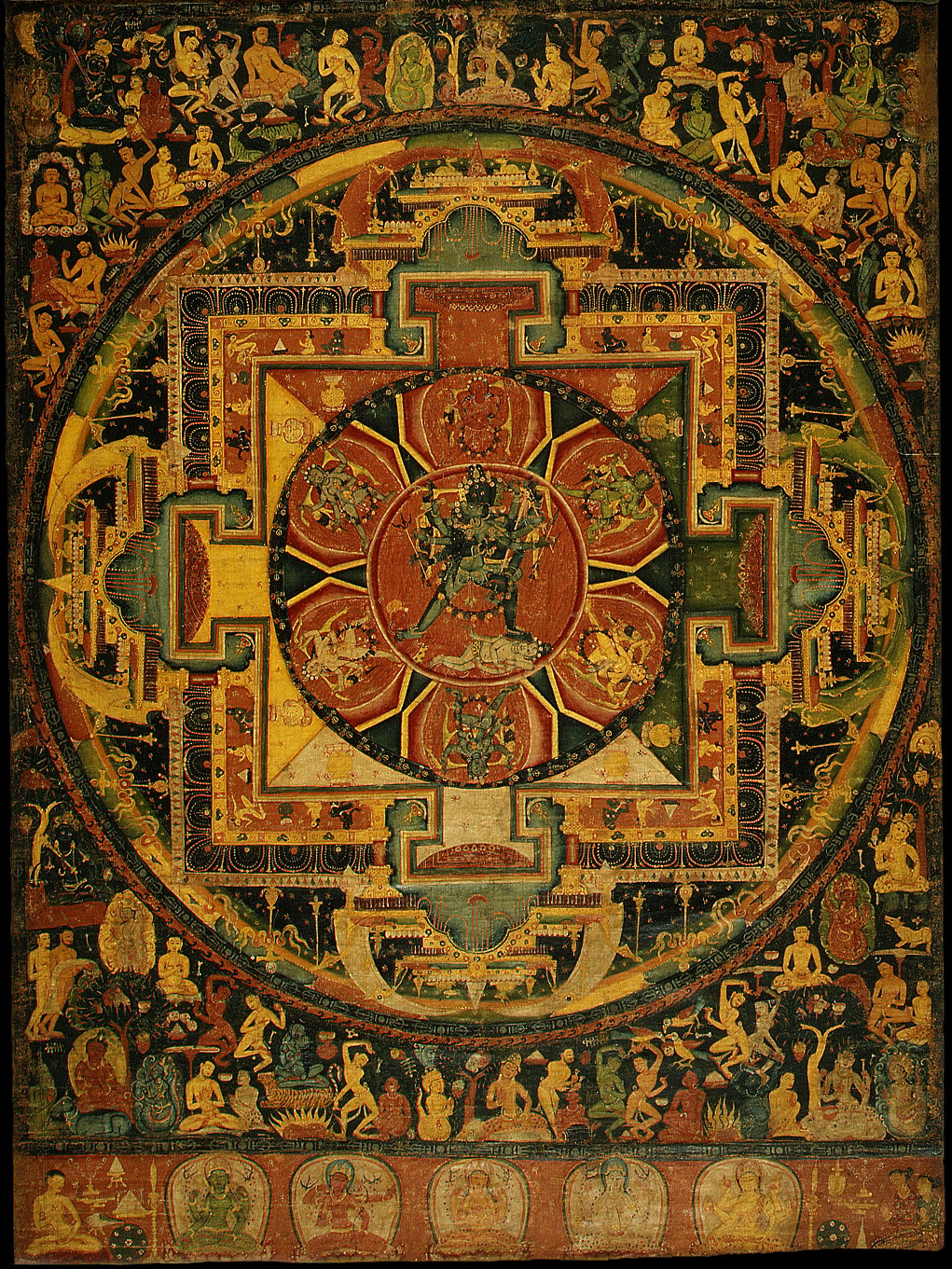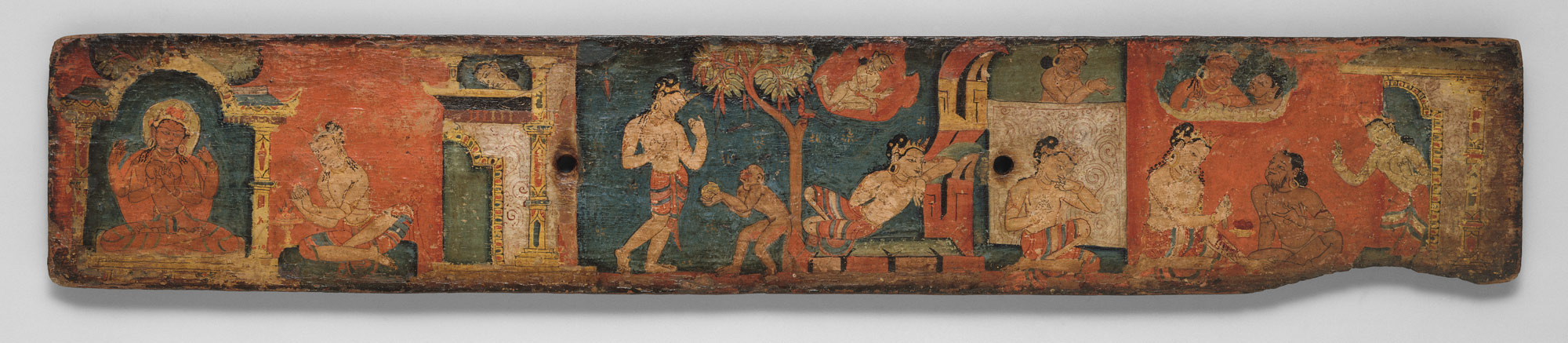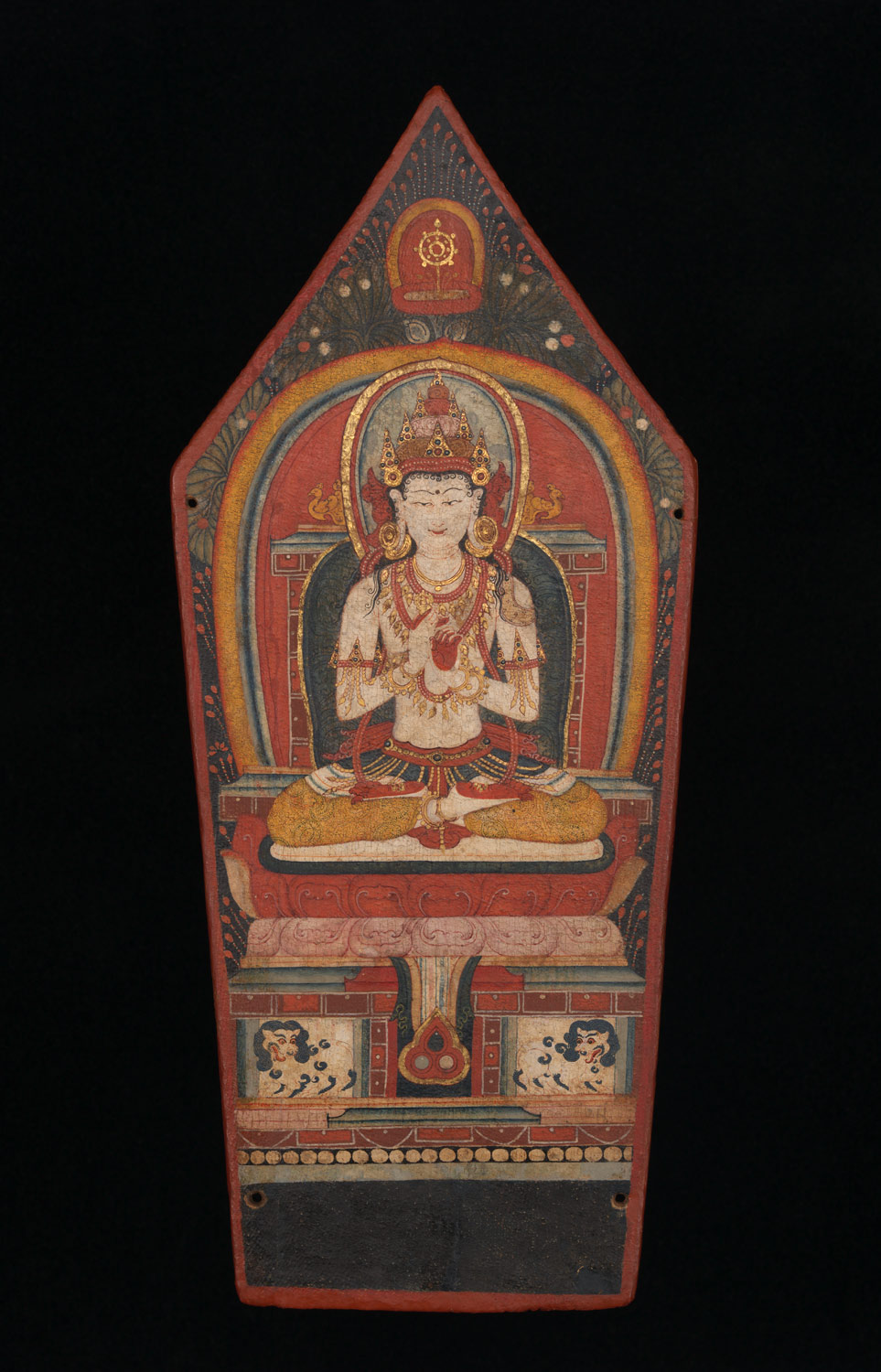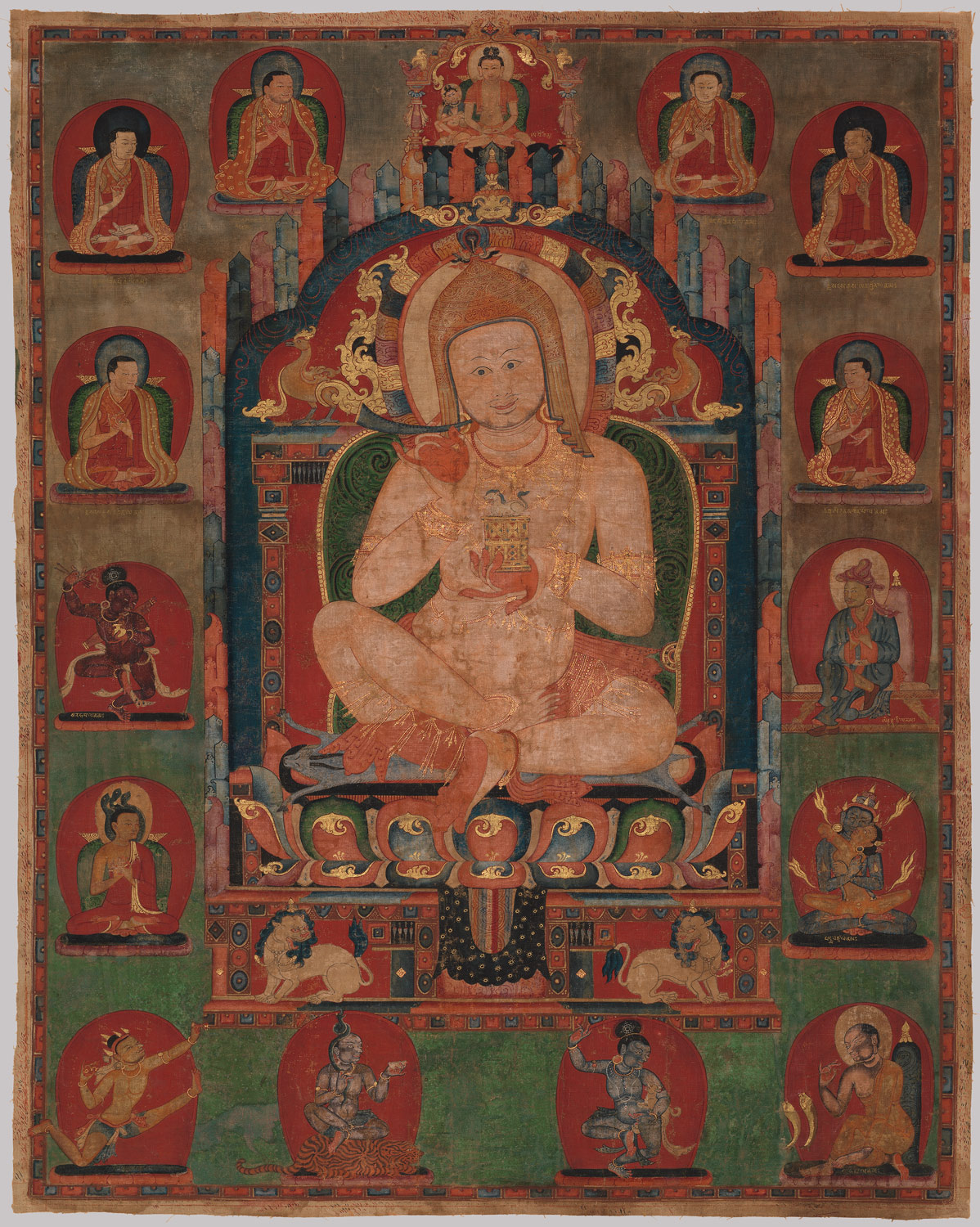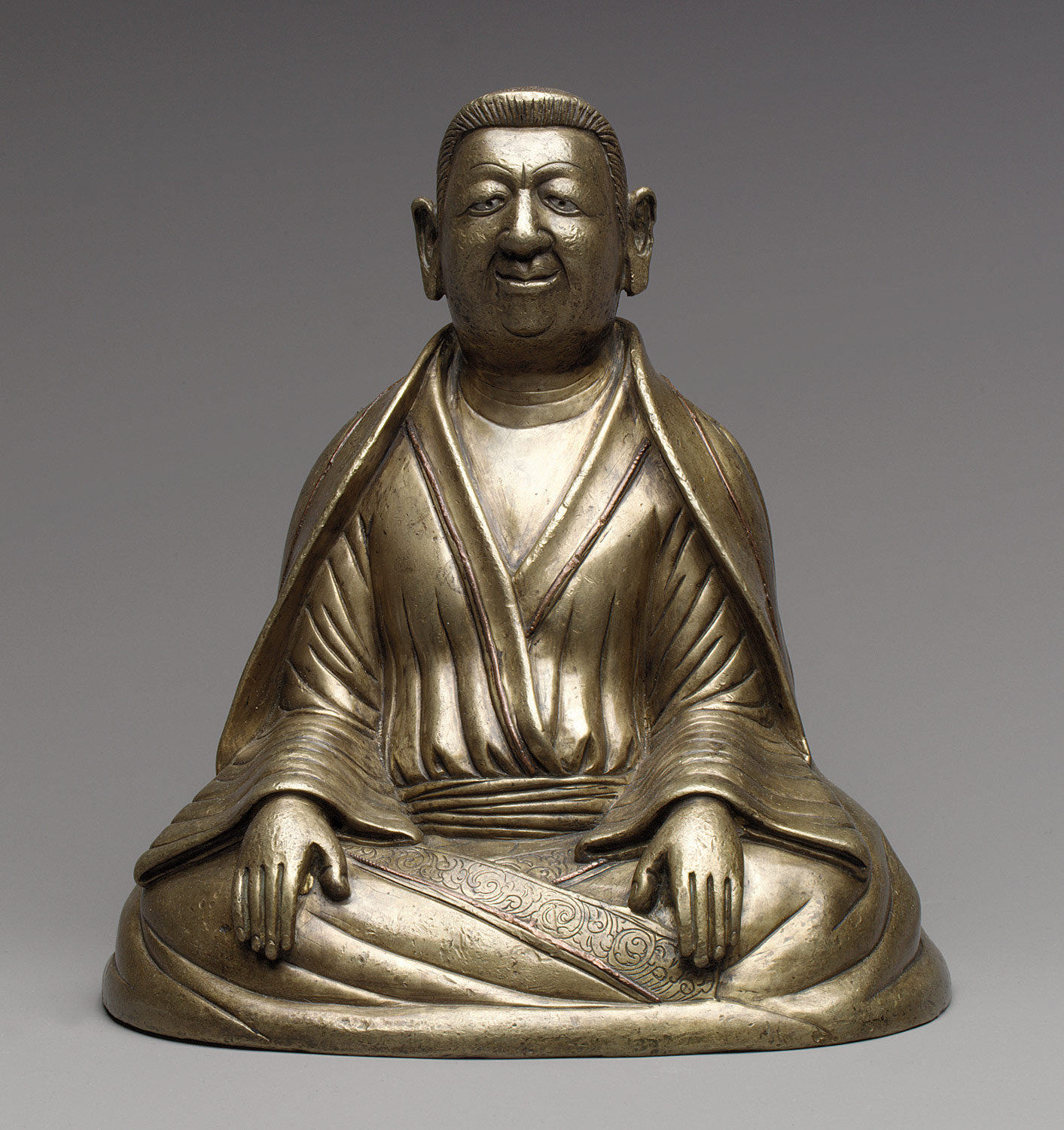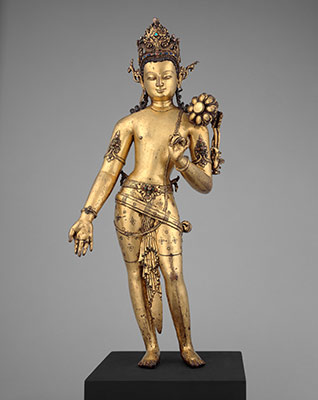
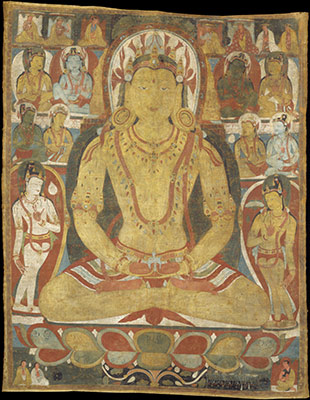
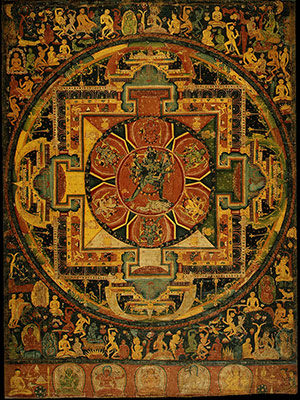
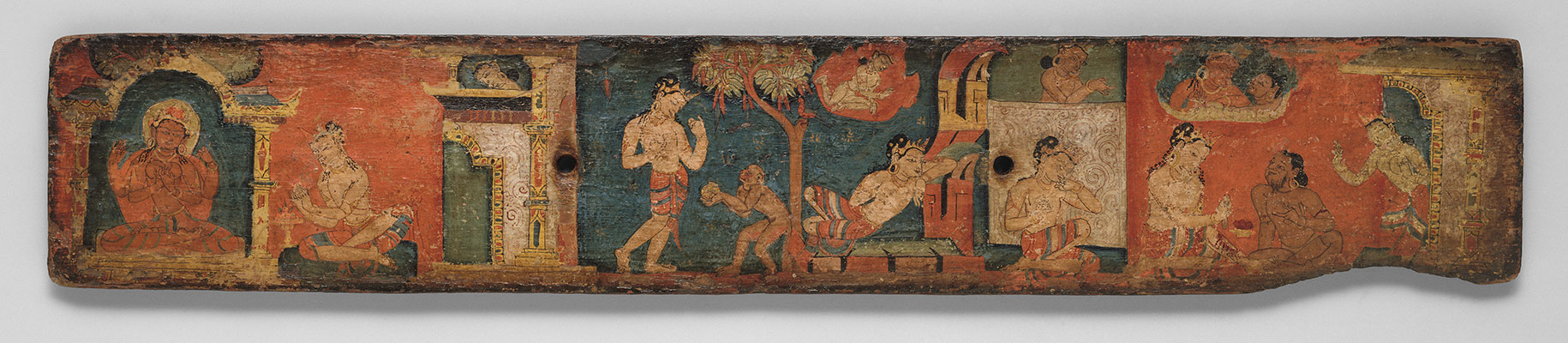

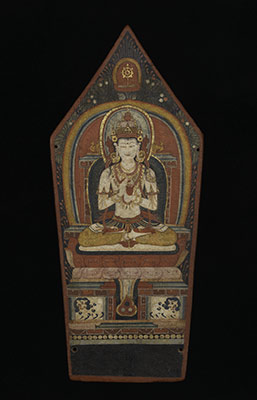
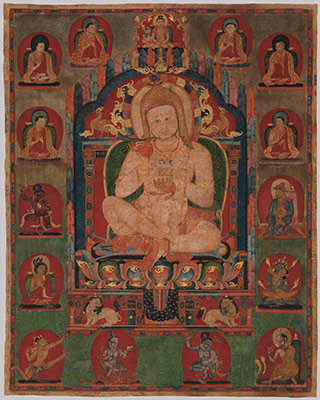
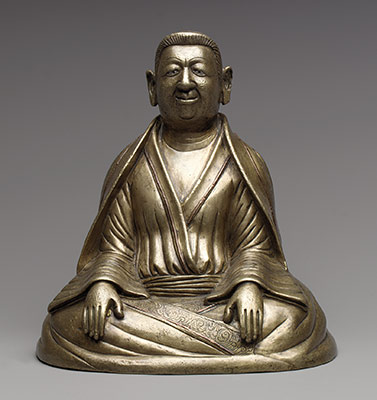
Buddhism becomes the dominant cultural force in Tibet, superceding the indigenous Bon religion. Buddhist monasteries emerge as religious, political, and economic centers. By 1200, Buddhism has all but disappeared from India, which for centuries had served as the source of religious texts and teachings for surrounding cultures. Tibetan Buddhism is firmly established, with four major lineages: Nyingmapa, Kagyupa, Sakyapa, and Kadampa. Political disunity continues in Tibet until around 1250, when the Sakya order—with Mongol support—becomes dominant. In Nepal, Buddhism no longer receives much royal patronage, but continues to flourish alongside Hinduism. Buddhist and Hindu arts in all forms—painting, sculpture, metalwork—flourish in Nepal during this period. Art in Tibet is mainly Buddhist but some continues to be made for the Bon. In the early fifteenth century, the Gelugpa school is founded in Tibet and will become the dominant religious and political force there.
Himalayan Region, 1000–1400 A.D.
-
 1982.220.2
 -
 1989.284
 -
 1995.233
 -
 1984.479.1a,b
 -
 1988.148.2
 -
 1997.152
 -
 1987.144
 -
 1995.176
Timeline
1000 A.D.
1100 A.D.
NEPAL
TIBET
1100 A.D.
1200 A.D.
NEPAL
TIBET
1200 A.D.
1300 A.D.
NEPAL
TIBET
1300 A.D.
1400 A.D.
NEPAL
TIBET
Overview
Key Events
-
ca. 1000 onward
The rich artistic traditions of Nepal continue with wood, stone, cast copper, and beaten copper (repoussé); the earliest paintings on palm leaf and cloth (paubhas) survive from this period. In Tibet, few paintings and sculptures survive before this time, but a renaissance of Buddhism in the eleventh century leads to the growth of the monastic system, schools of Buddhism, and artistic traditions.
-
ca. 1042
The Indian teacher and mystic Atisha (985–1054) visits central Tibet and revitalizes Buddhist practice there. His purification of religious practice, often called the “second transmission,” spurs the building of numerous monasteries. His followers are known as the Kadampas, “Adherants of Verbal Advice.” India is the initial source of artistic inspiration.
-
ca. 1073
Konchok Gyalpo founds the Sakya, or “gray earth,” monastery from which the second major order of Tibetan Buddhism derives its name.
-
ca. 1100–1200
Monks fleeing India in the wake of the destruction of Buddhist centers take refuge in Nepali institutions, fostering intellectual and religious life in Nepal and Tibet.
-
1123
Milarepa, the famous cotton-clad ascetic, dies. He transmitted the teachings of his master Marpa (1012–1096) and Marpa’s teacher, the Indian yogi Naropa (956–1040), to Phakmo Drupa (1110–1170), which constitute the basis of the Kagyu (oral transmission), the third order of Tibetan Buddhism.
-
1200
The Malla dynasty is founded by King Arimalla (r. 1200–1216).
-
1200–1300
The Tibetan translation of 4,569 works in the Buddhist canon is finished. Together with earlier Chinese translations, this work remains the most complete preserved collection of the voluminous Indian Buddhist writings.
-
1247–1300
The Sakya school hierarch Sakya Pandita reaches the Mongol ruler Khubilai Khan at the Yuan court in China, marking the beginning of Mongol/Sakya political and cultural relations. The Mongols become the de facto rulers of Tibet, and Sakya Pandita’s nephew, Phagspa (1235–1280), becomes state preceptor for the Mongols. In 1265, the Nepalese artist Anige (1244–1306) is taken by Phagspa to China to work at the court of the Yuan emperor, and he later becomes head of the imperial workshops.
-
1287–1349
A series of raids destroys all of the early wooden buildings in the Khatmandu Valley, Nepal.
-
ca. 1300–1400
Paper is introduced in the production of manuscripts in Nepal, and a new, bolder and more elaborate style emerges in painting. Nepalese artists working for Tibetan patrons introduce a variant of the Nepalese style into Tibet.
-
ca. 1322
The scholar and teacher Buston (1290–1364) completes a history of Buddhism in Tibet and divides the canon into Kangui (Buddha’s words) and Tenjur (commentaries and treatises).
-
1346
Muslim armies raid the Kathmandu Valley in Nepal, destroying images and temples.
-
ca. 1382–1395
Jayasthiti of the Malla dynasty in Nepal consolidates power in the Kathmandu Valley, codifying Hindu law and repairing the damage done by Muslim raids. Stone sculpture decreases in popularity, as metalwork (in particular, fine copperwork) takes precedence.
Citation
“Himalayan Region, 1000–1400 A.D.” In Heilbrunn Timeline of Art History. New York: The Metropolitan Museum of Art, 2000–. http://www.metmuseum.org/toah/ht/?period=07®ion=ssh (October 2001)
Related
Map