English
DonateMembershipTickets

Vase with cover (Vase en ivoire) (one of a pair)

ca. 1786
On view at The Met Fifth Avenue in Gallery 526
Ivory-turning had been a fashionable pastime at European courts during the sixteenth and early seventeenth centuries, and it was revived in France and elsewhere during the second half of the eighteenth century. Louis XV worked the lathe himself, and his daughters received instruction in this art form. His grandson the dauphin, the future Louis XVI, also took lessons, as did his brothers. A group of ivory vases was recorded at the Château de Versailles on the eve of the Revolution, possibly created by members of the royal family. It is more likely, however, that Michel Voisin (1729–1786), turning master to Louis XVI, or his son François was responsible for these precious, lacelike objects. A series of engraved designs by the younger Voisin, entitled Nouveau Cahier de vases, composés par Voisin Fils, includes a vase that is similar to but more elaborate than the Museum’s pair. The chief difference is that the body and shoulder of the Museum’s covered vases are decorated with vertical openwork channels instead of spiraling ones. As suggested in the engraving, the Museum’s vessels are richly embellished with gilt-bronze mounts. Especially noteworthy are the beautifully modeled female busts and the scrolling handles shaped like interlaced branches of berried ivy.

Since the eighteenth-century provenance of the Museum’s pair remains a mystery, one can only wonder if they were part of the ivory collection at Versailles. Nine such vases were also documented in the Cabinet Intérieur of the king’s aunt Madame Victoire at the Château de Bellevue in 1786, displayed in individual glass cases. The presence of such protective cases suggests that these exotic openwork vessels were purely decorative and considered too delicate for use as potpourri holders.

Artwork Details

Object Information
  • Title: Vase with cover (Vase en ivoire) (one of a pair)
  • Date: ca. 1786
  • Culture: French, Paris
  • Medium: Ivory and gilt bronze
  • Dimensions: H. 15 x W. 9 x D. 6-1/2 in. (38.1 x 22.9 x 16.5 cm)
  • Classification: Natural Substances-Ivory
  • Credit Line: Bequest of George Blumenthal, 1941
  • Object Number: 41.190.60a, b
  • Curatorial Department: European Sculpture and Decorative Arts
More Artwork
Vase with cover (Vase en ivoire) (one of a pair), Ivory and gilt bronze, French, Paris
French, Paris
ca. 1786
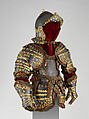
Armor of Infante Luis, Prince of Asturias (1707–1724), Jean Drouart  French, Steel, gold, brass, silk, cotton, metallic yarn, paper, French, Paris
Armorer Signature probably refers to Jean Drouart
dated 1712
Portrait of a General Officer, Hyacinthe Rigaud  French, Oil on canvas
Hyacinthe Rigaud
ca. 1710
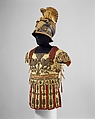
Costume Armor in the Classical Style, Hallé  French, Helmet: linen, papier-mâché, bole, gold leaf, graphite; tunic: silk, cotton, metal coils and spangles, metallic yarn, French, Paris
Helmet includes original paper label of Hallé
ca. 1788–90
Table, Pierre Gole, Oak and fruitwood veneered with tortoiseshell, stained and natural ivory, ebony, and other woods; gilt bronze, French, Paris
Attributed to Pierre Gole
ca. 1660

Research Resources

The Met provides unparalleled resources for research and welcomes an international community of students and scholars. The Met's Open Access API is where creators and researchers can connect to the The Met collection. Open Access data and public domain images are available for unrestricted commercial and noncommercial use without permission or fee.

To request images under copyright and other restrictions, please use this Image Request form.

Feedback

We continue to research and examine historical and cultural context for objects in The Met collection. If you have comments or questions about this object record, please contact us using the form below. The Museum looks forward to receiving your comments.

Send feedback

Content Notice

The Metropolitan Museum of Art presents over 5,000 years of art from around the world, and our online collection reflects ongoing work conducted over the course of our more than 150-year history. You may encounter objects or images that may be inappropriate for some viewers or information that may be outdated.