Apparels for a Requiem Mass
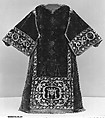
At some point, probably in the early nineteenth century, the embroidered panels were applied to a thin black velvet support, cut and retailored to create the current chasuble-like shape, with the apparels incongruously set on their sides, edge-to-edge up the front and rear of the garment. Thus repurposed, the vestment was apparently used for a century, displaying multiple signs of wear-and-tear, before it entered the collector of Parisian decorator and designer, Georges Hoentschel.
Artwork Details
- Title: Apparels for a Requiem Mass
- Date: ca. 1700 (embroidery) patched and reassembled to current shape in the 19th century
- Culture: Spanish
- Medium: Silk and metal thread
- Dimensions: L. (as assembled) 52 1/2 inches (133.4 cm)
- Classifications: Textiles-Velvets, Textiles-Embroidered, Textiles-Ecclesiastical
- Credit Line: Gift of J. Pierpont Morgan, 1916
- Object Number: 16.32.319
- Curatorial Department: European Sculpture and Decorative Arts
More Artwork


Research Resources
The Met provides unparalleled resources for research and welcomes an international community of students and scholars. The Met's Open Access API is where creators and researchers can connect to the The Met collection. Open Access data and public domain images are available for unrestricted commercial and noncommercial use without permission or fee.
To request images under copyright and other restrictions, please use this Image Request form.
Feedback
We continue to research and examine historical and cultural context for objects in The Met collection. If you have comments or questions about this object record, please contact us using the form below. The Museum looks forward to receiving your comments.
Content Notice
The Metropolitan Museum of Art presents over 5,000 years of art from around the world, and our online collection reflects ongoing work conducted over the course of our more than 150-year history. You may encounter objects or images that may be inappropriate for some viewers or information that may be outdated.