Bowl
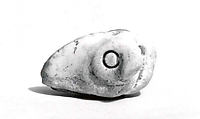
This bowl was excavated in 1932 at Tall-i Bakun A in southwestern Iran, a prehistoric site near Persepolis. During the fifth millennium B.C. Bakun was a hub for trade between pastoral nomads who raised sheep and goats in the highlands and the farmers who raised barley, wheat and peas in the Marvdasht Plain. As a result it grew into a major administrative center, as attested by the many stamp seals found there. It was also where much of the pottery used by the pastoralists was made, including this bowl. Although it has a flat bottom, the bowl was probably used with a stand, as several have been found at Bakun. This would have made the bowl easier to use on rough terrain, even if it meant more to carry. Given its size the bowl was most likely a drinking cup, though it is unclear what was drunk from it.
Artwork Details
- Title: Bowl
- Period: Chalcolithic
- Date: ca. 4500–4100 BCE
- Geography: Iran, Tall-i Bakun A
- Culture: Iran
- Medium: Ceramic, paint
- Dimensions: 3 in. (7.62 cm)
- Credit Line: Rogers Fund and Gifts of Lucy W. Drexel, Theodore M. Davis, Helen Miller Gould, Albert Gallatin, Egypt Exploration Fund and Egyptian Research Account, by exchange, 1950
- Object Number: 51.25.23
- Curatorial Department: Ancient West Asian Art
More Artwork
Research Resources
The Met provides unparalleled resources for research and welcomes an international community of students and scholars. The Met's Open Access API is where creators and researchers can connect to the The Met collection. Open Access data and public domain images are available for unrestricted commercial and noncommercial use without permission or fee.
To request images under copyright and other restrictions, please use this Image Request form.
Feedback
We continue to research and examine historical and cultural context for objects in The Met collection. If you have comments or questions about this object record, please contact us using the form below. The Museum looks forward to receiving your comments.
Content Notice
The Metropolitan Museum of Art presents over 5,000 years of art from around the world, and our online collection reflects ongoing work conducted over the course of our more than 150-year history. You may encounter objects or images that may be inappropriate for some viewers or information that may be outdated.