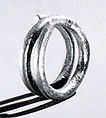
Coil
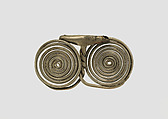
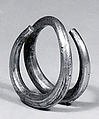
The coil was discovered in a bronze bowl containing 231 pieces of silver, including jewelry, ingots and scraps. At the time coins were not yet in use in Iran, and silver bullion was the primary form of money. The form of the silver did not matter, only the weight, so any silver object, including jewelry, could potentially be used as money. To make a payment, one would weigh out a certain quantity, and to make an exact amount it was sometimes necessary to cut silver into smaller pieces, which is why the hoard includes scraps of metal. It was found below floor level, suggesting that it was hidden for safekeeping. Whether its owner did this as a long-term storage strategy or in response to an emergency is unknown.
Similar coils are attested in the Near East from the 3rd millennium B.C. onwards. Though sometimes interpreted as items of jewelry worn in the hair, such as those found in the Royal Tombs of Ur, they may in fact have been made specifically as money. Sumerian documents from the Ur III period refer to the use of silver rings as a medium of exchange. The occurrence of similar such rings in the Nush-i Jan hoard may well illustrate the continuity of this practice into the Iron Age.
Artwork Details
- Title: Coil
- Period: Iron Age III
- Date: ca. 7th–6th century BCE
- Geography: Iran, Tepe Nush-i Jan
- Culture: Iran
- Medium: Silver
- Dimensions: Diam. 2.4 cm (15/16 in.)
Weight: 10 g - Credit Line: Purchase, H. Dunscombe Colt Gift, 1969
- Object Number: 69.24.7
- Curatorial Department: Ancient West Asian Art
More Artwork
Research Resources
The Met provides unparalleled resources for research and welcomes an international community of students and scholars. The Met's Open Access API is where creators and researchers can connect to the The Met collection. Open Access data and public domain images are available for unrestricted commercial and noncommercial use without permission or fee.
To request images under copyright and other restrictions, please use this Image Request form.
Feedback
We continue to research and examine historical and cultural context for objects in The Met collection. If you have comments or questions about this object record, please contact us using the form below. The Museum looks forward to receiving your comments.
Content Notice
The Metropolitan Museum of Art presents over 5,000 years of art from around the world, and our online collection reflects ongoing work conducted over the course of our more than 150-year history. You may encounter objects or images that may be inappropriate for some viewers or information that may be outdated.