Seated Transcendent Buddha Vairochana
Artwork Details
- Title: Seated Transcendent Buddha Vairochana
- Period: Eastern Javanese period
- Date: ca. second half of the 10th century
- Culture: Indonesia (Java)
- Medium: Buddha: silver; pedestal and throne back: bronze
- Dimensions: H. 3 15/16 in. (10 cm)
- Classification: Sculpture
- Credit Line: Samuel Eilenberg Collection, Gift of Samuel Eilenberg, 1987
- Object Number: 1987.142.13
- Curatorial Department: Asian Art
Audio
7995. Seated Transcendent Buddha Vairochana
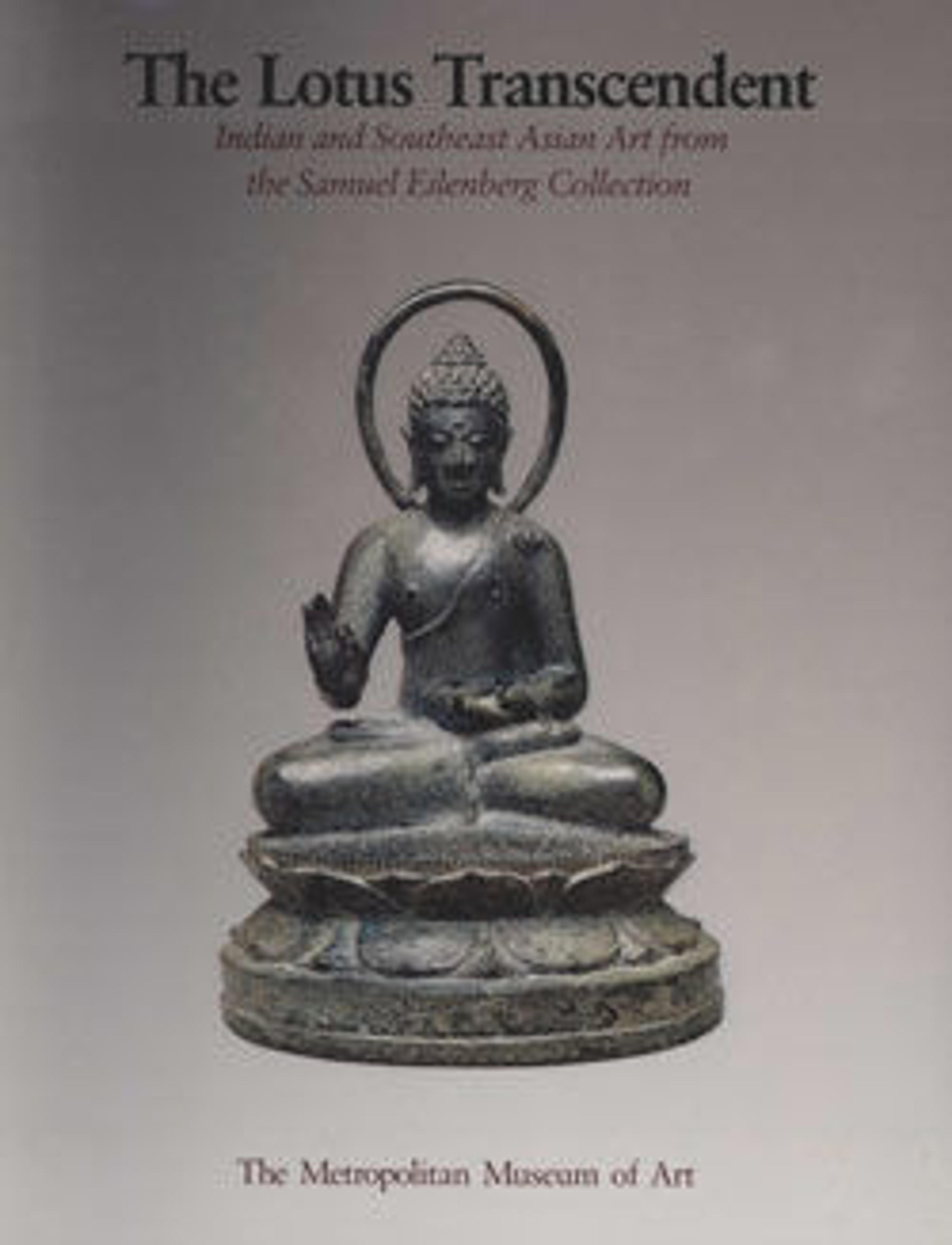
This bronze Buddha rises in a pyramidal form, from a round double-lotus throne to a pointed bulge, or ushnisha, on the head. An ovoid halo frames the face, counterbalancing this triangular shape. Buddha’s contemplative face and hand gestures achieve a visual balance. He sits cross-legged, with both feet turned upward—a yogic posture of meditation. His left hand approximates the dhyanamudra, or meditative gesture. His right hand allays fear. This combination of mudras identifies this as the esoteric deity Vairochana, one of the five cosmic Buddhas, whose realm is the zenith.
This ninth-century figure is from the Indonesian island of Java. Java prospered due to its convenient location on the trade route between India and China. Javanese workshops produced many small, intricately cast and finished bronze sculptures. The form of this one resembles the famous Buddhas at Java’s Borobodur temple complex: an architectural model of the cosmos. This may have been the central figure in a three-dimensional mandala—an assembly of deities.
More Artwork
Related Content
Publications
Books, guides, and catalogues published by The Met.
Research Resources
The Met provides unparalleled resources for research and welcomes an international community of students and scholars. The Met's Open Access API is where creators and researchers can connect to the The Met collection. Open Access data and public domain images are available for unrestricted commercial and noncommercial use without permission or fee.
To request images under copyright and other restrictions, please use this Image Request form.
Feedback
We continue to research and examine historical and cultural context for objects in The Met collection. If you have comments or questions about this object record, please contact us using the form below. The Museum looks forward to receiving your comments.
Content Notice
The Metropolitan Museum of Art presents over 5,000 years of art from around the world, and our online collection reflects ongoing work conducted over the course of our more than 150-year history. You may encounter objects or images that may be inappropriate for some viewers or information that may be outdated.