Brooch
Artwork Details
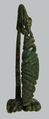
- Title: Brooch
- Date: 1200–800 BCE
- Geography: Made in Carpathian Basin region
- Culture: European
- Medium: Bronze
- Dimensions: Overall: 4 3/8 x 1 9/16 x 11/16 in. (11.1 x 4 x 1.8 cm)
- Classification: Metalwork-Bronze
- Credit Line: Purchase, Caroline Howard Hyman Gift, in memory of Margaret English Frazer, 2000
- Object Number: 2000.281.3
- Curatorial Department: Medieval Art and The Cloisters
Audio
2830. Brooch
NARRATOR: This Bronze Age fibula, or garment fastener, is of much greater antiquity than the objects in the Byzantine galleries. Its spiral decoration demonstrates the advanced craftsmanship practiced in Europe from twelve hundred to nine hundred BC.
Melanie Holcomb is a Curator in the Department of Medieval Art at The Metropolitan:
MELANIE HOLCOMB: If we had to chose one object that epitomized the technological achievements of the 20th or 21st century, we might pull out something like the computer chip. But when you’re talking about the late Bronze Age, you need to look at objects like this fibula, which are extraordinary technical and aesthetic achievements.
NARRATOR: The largest spiral, the base of the fibula, and the menacingly long, pointy pin in back were all crafted of a single piece of wire. Four pairs of smaller spirals were fastened to the base. The pin’s imposing size suggests that it probably fastened a cloak made of a fur or animal skin.
The people of European Bronze Age cultures were pre-literate. Lacking any religious or historical texts, objects like these are the best evidence that remains of their ceremonial cultures.
More Artwork
Research Resources
The Met provides unparalleled resources for research and welcomes an international community of students and scholars. The Met's Open Access API is where creators and researchers can connect to the The Met collection. Open Access data and public domain images are available for unrestricted commercial and noncommercial use without permission or fee.
To request images under copyright and other restrictions, please use this Image Request form.
Feedback
We continue to research and examine historical and cultural context for objects in The Met collection. If you have comments or questions about this object record, please contact us using the form below. The Museum looks forward to receiving your comments.
Content Notice
The Metropolitan Museum of Art presents over 5,000 years of art from around the world, and our online collection reflects ongoing work conducted over the course of our more than 150-year history. You may encounter objects or images that may be inappropriate for some viewers or information that may be outdated.