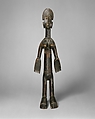
Antelope (probably the roan antelope, dajè) headdress
Dajè sarama yoo ee (Dajè the beloved yoo ee)
ee sogo makari be n’na ee (ee the animal makes me feel pity)
Dajè sarama yoo ee (Dajè the beloved yoo ee)
ee sogo makari be n’na ee (ee the animal makes me feel pity)
Historically, sogo bò performances took place at the beginning of the dry season in late October or early November, a period that marks the beginning of the harvest season. Since the mid-twentieth century, many communities have added a second performance during the transition from the dry to the rainy season, signaling the start of a new agricultural cycle. That spirit of fertility and renewal is inherent to sogo bò, which spurs community farming efforts and facilitates young men’s social and cultural development. During kamelen waati (the time of youth), young men develop as social actors and acquire the skills that society deems necessary to function as competent adult men. They actively seek to surpass the accomplishments of their fathers by showcasing their physical prowess and by encouraging change and innovation in their communities. Sogo bò performances reflect and reproduce that generational tension and cycle of renewal through the development of new characters and the reenvisioning of existing ones.
Artwork Details
- Title: Antelope (probably the roan antelope, dajè) headdress
- Artist: Bamana numu (blacksmith)
- Date: late 19th–mid-20th century
- Geography: Mali, Segu region
- Culture: Bamana peoples
- Medium: Wood, pigment, metal
- Dimensions: H. 27 1/2 × W. 11 1/4 × D. 7 in. (69.9 × 28.6 × 17.8 cm)
- Classification: Wood-Sculpture
- Credit Line: Gift of Carol B. Kenney, in memory of Jerome P. Kenney, 2025
- Object Number: 2025.807.11
- Curatorial Department: The Michael C. Rockefeller Wing
More Artwork
Research Resources
The Met provides unparalleled resources for research and welcomes an international community of students and scholars. The Met's Open Access API is where creators and researchers can connect to the The Met collection. Open Access data and public domain images are available for unrestricted commercial and noncommercial use without permission or fee.
To request images under copyright and other restrictions, please use this Image Request form.
Feedback
We continue to research and examine historical and cultural context for objects in The Met collection. If you have comments or questions about this object record, please contact us using the form below. The Museum looks forward to receiving your comments.
Content Notice
The Metropolitan Museum of Art presents over 5,000 years of art from around the world, and our online collection reflects ongoing work conducted over the course of our more than 150-year history. You may encounter objects or images that may be inappropriate for some viewers or information that may be outdated.