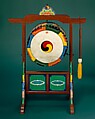
Translated Vase_2017 TVBGJW 1_Nine Dragons in Wonderland
Artwork Details
- Title: Translated Vase_2017 TVBGJW 1_Nine Dragons in Wonderland
- Artist: Yeesookyung (Korean, born 1963)
- Date: 2017
- Medium: Ceramic shards, stainless steel, aluminum, epoxy, 24K gold leaf, armature
- Dimensions: Height: 16 ft. 1 11/16 in., 2645.5 lb. (492 cm, 1200 kg)
Width: 78 3/4 × 74 13/16 in. (200 × 190 cm) - Classification: Sculpture
- Credit Line: Purchase, Johnston Family, Karen Choi and Melissa Ko Gifts, 2026
- Object Number: 2025.919a–i
- Rights and Reproduction: © Yeesookyung
- Curatorial Department: Modern and Contemporary Art
More Artwork
Research Resources
The Met provides unparalleled resources for research and welcomes an international community of students and scholars. The Met's Open Access API is where creators and researchers can connect to the The Met collection. Open Access data and public domain images are available for unrestricted commercial and noncommercial use without permission or fee.
To request images under copyright and other restrictions, please use this Image Request form.
Feedback
We continue to research and examine historical and cultural context for objects in The Met collection. If you have comments or questions about this object record, please contact us using the form below. The Museum looks forward to receiving your comments.
Content Notice
The Metropolitan Museum of Art presents over 5,000 years of art from around the world, and our online collection reflects ongoing work conducted over the course of our more than 150-year history. You may encounter objects or images that may be inappropriate for some viewers or information that may be outdated.