Search the collection

Filter By

Object Type / Material
Geographic Location
Department
Date
Show Only:
  • As part of the Met's Open Access policy, you can freely copy, modify and distribute this image, even for commercial purposes.
    APIPublic domain data for this object can also be accessed using the Met's Open Access API
Showing 50 results for midas
Sort by:
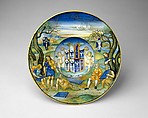
Armorial Plate (tondino): The story of King Midas, Nicola da Urbino  Italian, Maiolica (tin-glazed earthenware)
Nicola da Urbino
ca. 1520–25
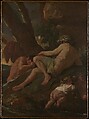
Midas Washing at the Source of the Pactolus, Nicolas Poussin  French, Oil on canvas
Nicolas Poussin
ca. 1627
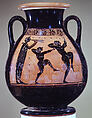
Terracotta pelike (wine jar), Acheloös Painter, Terracotta, Greek, Attic
Acheloös Painter
ca. 510 BCE
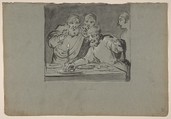
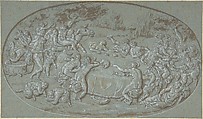
King Midas, Leonaert Bramer  Dutch, Brush and grey ink, heightened with white bodycolor; framing lines in brush and grey ink with white bodycolor
Leonaert Bramer
1611–74
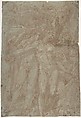
Apollo, Marsyas, and Midas, Anonymous, Netherlandish, 16th century  Netherlandish, Red chalk, brown wash, heightened with white on blue paper. Attached to old mat
Anonymous, Netherlandish, 16th century
16th century
The Judgment of Midas, Frans Pilsen  Flemish, Engraving
Frans Pilsen
Peter Paul Rubens
ca. 1734–77
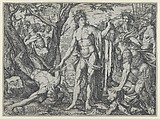
Apollo and Marsyas and the Judgment of Midas, Melchior Meier  German, Engraving
Melchior Meier
1581
Nicolaes Clock
Karel van Mander I
1589
Hendrick Goltzius
1590
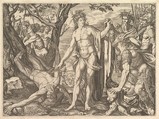
Apollo and Marsyas and the Judgment of Midas, Melchior Meier  German, Etching
Melchior Meier
1581
King Midas Feasting At The Arrival of Silenus, Bernard Picart (?) French, Pen and brown ink, brown wash, heightened with white (slightly oxidized) on blue paper
Multiple artists/makers
late 17th–early 18th century
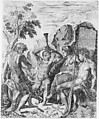
The Competition of Apollo and Marsyas and the Judgment of Midas, Giulio Sanuto  Italian, Engraving (the right section of three-part image)
Giulio Sanuto
Bronzino (Agnolo di Cosimo di Mariano)
1562
Multiple artists/makers
1801
John Sell Cotman
Henry George Bohn
1838
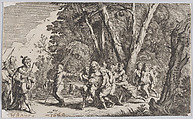
Plate 101: Silenus before King Midas, from 'Ovid's Metamorphoses', Johann Wilhelm Baur  German, Etching
Johann Wilhelm Baur
1641
Alma Woodward
1914
Pan Painter
ca. 470 BCE
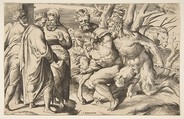
Two satyrs brining Silenus King Midas standing at the left, Giulio Bonasone  Italian, Engraving
Giulio Bonasone
1531–76
Giulio Sanuto
Bronzino (Agnolo di Cosimo di Mariano)
1562
Giulio Sanuto
Bronzino (Agnolo di Cosimo di Mariano)
1562
Multiple artists/makers
1806–22
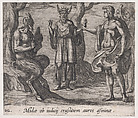
Plate 102: Midas with the Ears of an Ass (Midae ob iudicij craßustiem aures asininae), from Ovid's 'Metamorphoses', Antonio Tempesta  Italian, Etching
Antonio Tempesta
1606
Giulio Sanuto
Bronzino (Agnolo di Cosimo di Mariano)
1562
Giulio Sanuto
Bronzino (Agnolo di Cosimo di Mariano)
1562
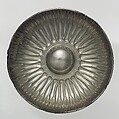
Bowl with a radiating petal design, Silver, Phrygian or Lydian
Phrygian or Lydian
ca. 8th–6th century BCE
Antonio Tempesta
1606
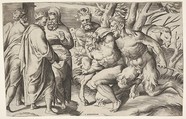
Two satyrs leading Silenus to King Midas, who stands at left with two male attendants, a mule trails behind the satyrs, Giulio Bonasone  Italian, Engraving
Giulio Bonasone
ca. 1550–80
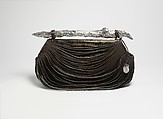
"Gleaner", Michele Oka Doner  American, crocodile skin, silver, American
Michele Oka Doner
Nancy Gonzalez
2007
Multiple artists/makers
1808
Antonio Tempesta
Willem Jansz.
Published after 1606
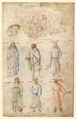
Famous Men and Women from Classical and Biblical Antiquity, Barthelemy d'Eyck  Netherlandish, Pen and brown ink, brush and watercolor of various hues
Multiple artists/makers
1450s
Multiple artists/makers
ca. 1765
Multiple artists/makers
ca. 1765
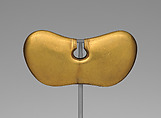
Nose Ornament, Gold alloy, Early Quimbaya
Early Quimbaya
300 BCE–700 CE
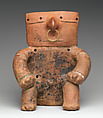
Seated Figure, Ceramic, gold, Late Quimbaya
Late Quimbaya
700–1600 CE
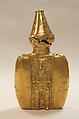
Poporo (Lime container), Gold, Early Quimbaya
Early Quimbaya
300 BCE–700 CE
Neck of Poporo (Lime Container), Gold alloy, Early Quimbaya
Early Quimbaya
300 BCE–700 CE
Anthropomorphic Bead, Gold (cast), Early Quimbaya
Early Quimbaya
300 BCE–700 CE
Armenian Manuscript Bifolium, Illuminator Minas (?), Tempera and gold leaf on paper, Armenian
Illuminator Minas (?)
15th century
Pair of Pistols with Flintlocks a Las Tres Modas, Workshop of the Ybarzabel family  Spanish, Steel, gold, wood (walnut), Spanish, Eibar
Workshop of the Ybarzabel family
late 18th century