Search the collection

Filter By

Object Type / Material
Geographic Location
Department
Date
Show Only:
  • As part of the Met's Open Access policy, you can freely copy, modify and distribute this image, even for commercial purposes.
    APIPublic domain data for this object can also be accessed using the Met's Open Access API
  • Objects with changed or unknown ownership in continental Europe between 1933-1945. Learn more
Showing 1,381 results for Faxon & Read
Sort by:
Robert Conner
Faxon & Read
1842
Robert Conner
Faxon & Read
1842
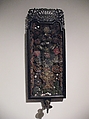
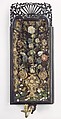
Quillwork Sconce, Ruth Read  American, Paper, shells, wire, glass, American
Ruth Read
1720–40
Quillwork Sconce, Ruth Read  American, Paper, shells, wire, glass, American
Ruth Read
1720–40
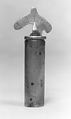
Pitch Pipe, Cook & Read, Metal, American
Cook & Read
after 1876
Frank H. Read
1910
Multiple artists/makers
1825
Multiple artists/makers
1778
Multiple artists/makers
March 12, 1784
Multiple artists/makers
1790
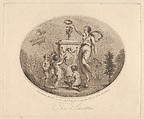
The Seasons, Benedictus Antonio van Assen  British, born The Netherlands, Stipple engraving
Benedictus Antonio van Assen
Joseph Read
1793
Read and Baldwin
1751
Mentzer Read Co.
1925 (?)
Read and Company
1850
Multiple artists/makers
1914
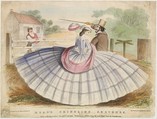
Read's Crinoline Sketches, No. 9, Anonymous, British, 19th century  British, Hand-colored lithograph
Anonymous, British, 19th century
Read and Company
July 22, 1859
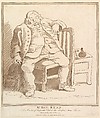
Mr. Ben: Read, A Member of Hogarth's Club at the Bedford Arms Tavern, Drawn by him about the Year 1757, Richard Livesay  British, Etching and aquatint, printed in brown ink
Multiple artists/makers
November 27, 1781
W. Strange
Joseph Read
19th century
Multiple artists/makers
1905 (?)
Multiple artists/makers
after 1822
Multiple artists/makers
1830–97
Multiple artists/makers
1760–80
Multiple artists/makers
1821
Multiple artists/makers
1853
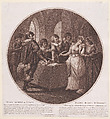
Mary, Queen of Scots signs the paper by which she resigns her crown to her infant son (from "History of England"), William Hamilton  British, Etching and stipple engraving
Multiple artists/makers
May 1, 1787
Multiple artists/makers
second half 19th century
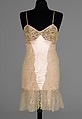
Corset, Facon, silk, elastic, metal, French
Facon
Saks Fifth Avenue
1930–35
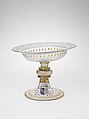
Armorial tazza, Italian (Venice) or façon de Venise (Venetian-style), Colorless (slightly gray) nonlead glass; blown, pattern-molded, enameled, gilt, Venetian or façon de Venise, or French
Italian
French
1499–1514
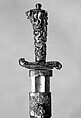
Hunting Sword with Scabbard, Steel, bronze, gold, wood, leather, Saxon
Saxon
early 18th century
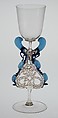
Goblet, Colorless (yellowish), transparent turquoise blue, and opaque brick red, yellow, and white nonlead glass.  Blown, trailed, pincered, "vetro a retorti"., Façon de Venise, probably south Lowlands or Germany
Façon de Venise, probably south Lowlands or Germany
17th century
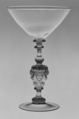
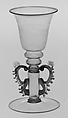
Wineglass, Colorless (slightly tan) and transparent bright blue-green bubbly nonlead glass. Blown, trailed, pincered., Façon de Venise, northern European
Façon de Venise, northern European
probably 17th century, possibly late 19th century
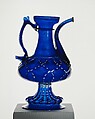
Spouted jug, Transparent dark blue and opaque white nonlead glass. Blown, pattern molded, trailed., Façon de venise, probably Barcelona
Façon de venise, probably Barcelona
ca. 1500
Goblet, Gray nonlead glass. Blown, mold blown, enameled, gilt., Façon de Venise, probably Bohemian
Façon de Venise, probably Bohemian
late 16th century
Tazza, Colorless (slightly gray) and opaque white nonlead glass. Blown, "vetro a retorti", pincered., Venetian or façon de Venise
Venetian or façon de Venise
first half 16th century
Wineglass, Colorless (strongly greenish gray) nonlead glass. Blown, mold blown., Façon de Venise, northern European
Façon de Venise, northern European
16th century
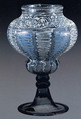
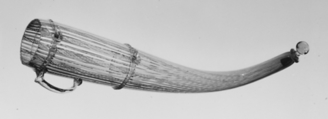
Drinking horn, Colorless (slightly gray) and opaque white nonlead glass. Blown, "vetro a retorti", trailed., Venetian or façon de Venise
Venetian or façon de Venise
late 16th century
Goblet, Gray-green nonlead glass. Blown, pattern molded, enameled, gilt., Façon de Venise, probably Bohemian
Façon de Venise, probably Bohemian
late 16th century
Square-Headed Bow Brooch, Gilded copper alloy inlaid with niello, Anglo-Saxon
Anglo-Saxon
500–600
Sprinkler bottle(?), Colorless (purplish gray) and opaque white nonlead glass. Blown, pattern molded, trailed., Façon de venise, possibly Spanish (Barcelona)
Façon de venise, possibly Spanish (Barcelona)
17th century
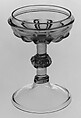
Stemmed cup (?), Colorless (slightly grayish tan) nonlead glass. Blown, pattern molded, trailed, gilt., Italian (Venice) or façon de Venise
Italian (Venice) or façon de Venise
probably 16th century