Search the collection

Filter By

Object Type / Material
Geographic Location
Department
Date
Show Only:
  • As part of the Met's Open Access policy, you can freely copy, modify and distribute this image, even for commercial purposes.
    APIPublic domain data for this object can also be accessed using the Met's Open Access API
  • Objects with changed or unknown ownership in continental Europe between 1933-1945. Learn more
More than 10,000 results for Italian School
Sort by:
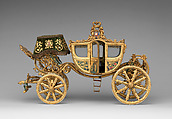
Model of a Coach, Italian School, Hand painted gilt-wood, velvet, glass, and tin
Italian School
19th century
Italian School
ca. 1850–1900
Italian School
ca. 1850–1900
Italian School
ca. 1850–1900
Italian School
ca. 1850–1900
Italian School
ca. 1850–1900
Italian School
ca. 1850–1900
Italian School
ca. 1850–1900
Italian School
ca. 1850–1900
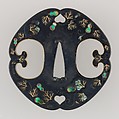
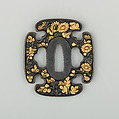
Sword Guard (Tsuba), Hirata School  Japanese, Copper-gold alloy (shakudō), gold, enameled cloisonné (shippō), copper, Japanese
Hirata School
ca. 1615–1868
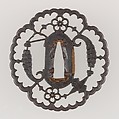
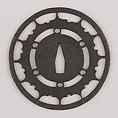
Sword Guard (Tsuba), Kyōsukashi School  Japanese, Iron, copper, Japanese
Kyōsukashi School
late 16th century
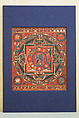
Hevajra Mandala, Sakya School, Ink and distemper on cloth, Tibet
Sakya School
16th century
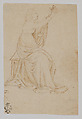
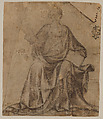
Seated Female Figure Holding a Book and a Scroll (?), Veronese School, Pen and dark brown ink, over black chalk, Italian, Verona
Veronese School
mid-15th century
Seated Female Figure with Upraised Arms, Facing Right, Veronese School, Pen and brown ink, over traces of black chalk, Italian, Verona
Veronese School
mid-15th century
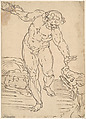
Hercules and the Erymanthian Boar, School of Cambiaso  Italian, Pen and brown ink, over black chalk underdrawing, Italian
School of Cambiaso
ca. 1550
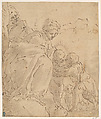
The Holy Family with the Young Saint John the Baptist, School of Cambiaso  Italian, Pen and brown ink, grayish brown wash., Italian
School of Cambiaso
late 16th century
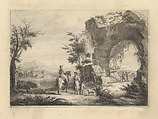
Landscape with Ruined Architecture, School of Zuccarelli, Charcoal or black chalk, Italian
School of Zuccarelli
mid-18th–mid-19th century
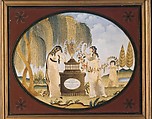
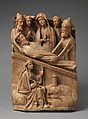
The Entombment, School of Nottingham  British, Alabaster, British
School of Nottingham
15th century
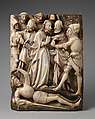
The Betrayal of Christ, School of Nottingham  British, Alabaster with paint and gilding, British
School of Nottingham
15th century
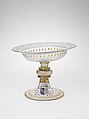
Armorial tazza, Italian (Venice) or façon de Venise (Venetian-style), Colorless (slightly gray) nonlead glass; blown, pattern-molded, enameled, gilt, Venetian or façon de Venise, or French
Italian
French
1499–1514
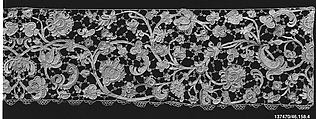
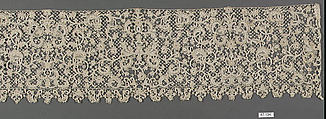
Edging, Burano Lace School, Cotton, needle lace, Italian, Burano
Burano Lace School
late 19th century
Piece, Burano Lace School, Silk and metal thread, Italian, Venice
Burano Lace School
ca. 1790
Strip, Burano Lace School, Needle lace, Italian, Burano
Burano Lace School
ca. 1906
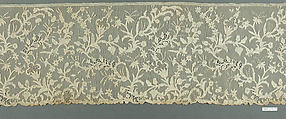
Border or flounce, Burano Lace School, Cotton, needle lace, Italian, Burano
Burano Lace School
late 19th century
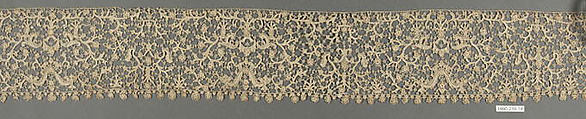
Border, Burano Lace School, Needle lace, Italian, Burano
Burano Lace School
19th–20th century
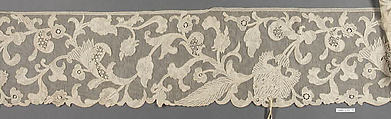
Border of edging, Burano Lace School, Cotton, needle lace, Italian (Veneto: Burano)
Burano Lace School
late 19th century
Sword Guard (<i>Tsuba</i>), Mino school  Japanese, Copper-gold alloy (probably <i>shakudō</i>), gold, Japanese
Mino school
late 17th–early 18th century
Sword Guard (Tsuba), Akasaka school  Japanese, Iron, copper, Japanese
Akasaka school
18th century
Sword Guard (Tsuba), Hagi school  Japanese, Iron, Japanese
Hagi school
16th century
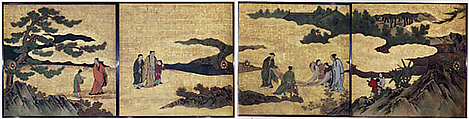
Appreciation of Painting, from a set of the Four Accomplishments, Kano School  Japanese, Four of eight panels mounted on sliding-door panels; ink, color, gold, and gold leaf on paper, Japan
Kano School
ca. 1606
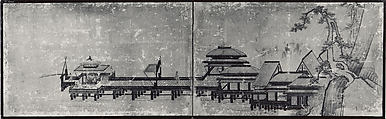
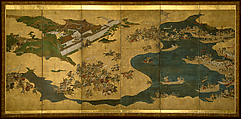
The Battle of Yashima, from The Tale of the Heike (Heike monogatari), Tosa School  Japanese, One of a pair of six-panel folding screens; ink, color, gold, and gold leaf on paper, Japan
Tosa School
17th century
Scenes from Tales of Ise (Ise monogatari), Tosa School  Japanese, Set of album leaf paintings; ink and color on paper (shikishi), Japan
Tosa School
late 18th century
Case (Inrō) with Design of Imperial Cart and Flying Herons (obverse); Court Carriage and Flying Herons (reverse), Kajikawa School, Gold and silver maki-e with mother-of-pearl inlay and black lacquer; Ojime: agate bead; Netsuke: metal king of hell, Japan
Kajikawa School
19th century
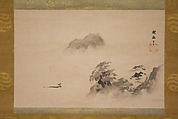
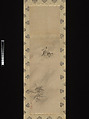
Misty Landscape, Kano School  Japanese, Hanging scroll; ink on paper, Japan
Kano School
early 19th century
Pine Tree (obverse); Landscape (reverse), Kano School  Japanese, Two-panel folding screen; ink, color, and gold on paper (obverse); ink and color on paper (reverse side), Japan
Kano School
17th century
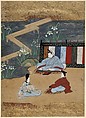
Scene from The Tale of Genji: Chapter 4, "Evening Face" (Yūgao), Tosa School  Japanese, Matted painting; ink and color on silk, Japan
Tosa School
17th century
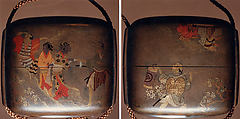
Case (Inrō) with Design of Six Immortal Poets, Kajikawa School, Gold and silver maki-e with black and red lacquer relief and mother-of-pearl inlay; Ojime: bronze Bodhidharma; Netsuke: carved lacquer Chinese children and auspicious symbols, Japan
Kajikawa School
19th century
Case (Inrō) with Design of Cherry-Blossom Viewing, Kajikawa School, Lacquer decorated with togidashi sprinkled and polished lacquer; Ojime: stone bead with silver bird inlay; Netsuke: metal button engraved with figure of Fukurokuju, Japan
Kajikawa School
late 18th–19th century
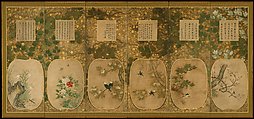
Birds and Flowers of the Twelve Months with Chinese Calligraphy, Kano School  Japanese, Pair of six-panel folding screens; ink and color and gold leaf on paper, Japan
Kano School
16th century; sheets of poetry, one dated 1553
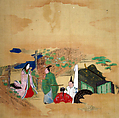
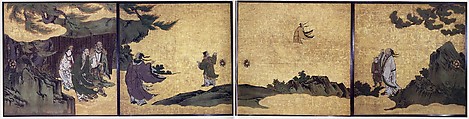
The Daoist Immortal Liezi 

, Kano School  Japanese, Set of four sliding-door panels; ink, color, gold, and gold leaf on paper, Japan
Kano School
ca. 1606