Search the collection

Filter By

Object Type / Material
Geographic Location
Department
Date
Show Only:
  • As part of the Met's Open Access policy, you can freely copy, modify and distribute this image, even for commercial purposes.
    APIPublic domain data for this object can also be accessed using the Met's Open Access API
  • Objects with changed or unknown ownership in continental Europe between 1933-1945. Learn more
Showing 15 results for Kajikawa Bunryūsai
Sort by:
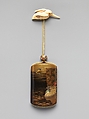
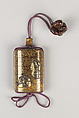
Inrō with Treasure Boat, Kajikawa Bunryūsai  Japanese, Gold and black lacquer and nashiji ground with gold and silver hiramaki-e, red lacquer, and mother-of-pearl inlay<br/>Netsuke: kingfisher; carved ivory <br/>Ojime: Chinese children; porcelain (Kutani ware, Japan
Kajikawa Bunryūsai
19th century
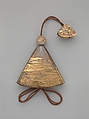
Inrō in the Shape of Mount Fuji with a Crossing Ferry and Procession

, Kajikawa  Japanese, Two cases; lacquered wood with gold and silver takamaki-e, hiramaki-e, togidashimaki-e, cut-out gold foil on nashiji lacquer ground<br/>Netsuke: ivory; Ryūgūjō (The Dragon King's undersea palace) in a clam<br/>Ojime: agate bead, Japan
Kajikawa
Hanabusa Itchō
late 18th–early 19th century
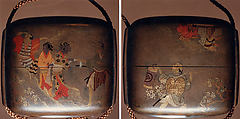
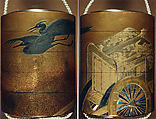
Case (Inrō) with Design of Imperial Cart and Flying Herons (obverse); Court Carriage and Flying Herons (reverse), Kajikawa School, Gold and silver maki-e with mother-of-pearl inlay and black lacquer; Ojime: agate bead; Netsuke: metal king of hell, Japan
Kajikawa School
19th century
Case (Inrō) with Design of Six Immortal Poets, Kajikawa School, Gold and silver maki-e with black and red lacquer relief and mother-of-pearl inlay; Ojime: bronze Bodhidharma; Netsuke: carved lacquer Chinese children and auspicious symbols, Japan
Kajikawa School
19th century
Case (Inrō) with Design of Seated Courtier Drinking Sake and a Young Woman with Maple Leaves, Kajikawa Katsuhira  Japanese, Nashiji (pear-skin) lacquer decorated with togidashi sprinkled and polished lacquer and metal inlay; Ojime: metal drum inlaid with gold; Netsuke: carved wood figure, Japan
Kajikawa Katsuhira
Hagiya Katsuhira
late 18th–19th century
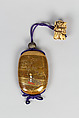
Case (Inrō) with Design of Cherry-Blossom Viewing, Kajikawa School, Lacquer decorated with togidashi sprinkled and polished lacquer; Ojime: stone bead with silver bird inlay; Netsuke: metal button engraved with figure of Fukurokuju, Japan
Kajikawa School
late 18th–19th century
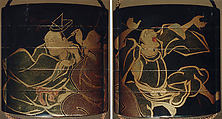
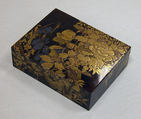
Box for Incense with Design of Peonies, Iris, Morning Glories, and Wisteria, Kajikawa School, Gold and silver maki-e on black lacquer, Japan
Kajikawa School
19th century
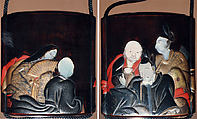
Case (Inrō) with Design of Courtier Cleaning Another's Ear (obverse); Courtier Laughing (reverse), Kajikawa Hidetaka  Japanese, Lacquer, roiro, gold, brown and red togidashi, nashiji; Netsuke: fukurokuju<br/>Interior: nashiji and fundame, Japan
Kajikawa Hidetaka
18th–19th century
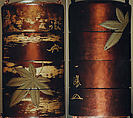
Case (Inrō) with Design of Maple Leaves beside Inscriptions, Kajikawa School, Lacquer, cherry bark, gold hiramakie; Interior: plain and roiro, Japan
Kajikawa School
19th century
Case (Inrō) with Design of Court Lady in Boat with Drum (obverse);  Geese Taking Flight (reverse), Shibayama Shokasai  Japanese, Lacquer, kinji, gold hiramakie, kirigane, nashiji, metal, ivory, raden inlay; Interior: nashiji and fudame, Japan
Shibayama Shokasai
Kajikawa School
19th century
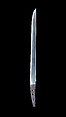
Blade and Mounting for a Dagger (Tantō), Kuniyoshi  Japanese, Steel, wood, copper-gold alloy (shakudō), copper-silver alloy (shibuichi), gold, lacquer, rayskin (samé), silk, abalone shell, silver, Japanese
Multiple artists/makers
blade, dated 1525; mounting, 19th century
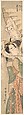
Girl and Lover in Snow, Koikawa Harumasa  Japanese, Woodblock print; ink and color on paper, Japan
Koikawa Harumasa
early 19th century
Kōrin's Painting Style (Kōrin gashiki), Aikawa Minwa  Japanese, Set of two Woodblock printed books; ink and color on paper, Japan
Aikawa Minwa
1818
Sketchbook of One Hundred Women (Manga hyakujo) 漫画百女, Aikawa Minwa 合川珉和  Japanese, Woodblock printed book; ink and color on paper, Japan
Aikawa Minwa 合川珉和
1814, ninth month (Bunka 11)
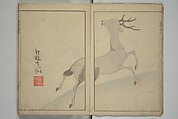
Kōrin's painting style (Kōrin gashiki) 光琳画式, Aikawa Minwa 合川珉和  Japanese, Woodblock printed book; ink and color on paper, Japan
Aikawa Minwa 合川珉和
1818, first month (Bunka 15)