Search the collection

Filter By

Object Type / Material
Geographic Location
Department
Date
Show Only:
  • As part of the Met's Open Access policy, you can freely copy, modify and distribute this image, even for commercial purposes.
    APIPublic domain data for this object can also be accessed using the Met's Open Access API
  • Objects with changed or unknown ownership in continental Europe between 1933-1945. Learn more
More than 10,000 results for Spanish, probably Barcelona (Façon de Venise)
Sort by:
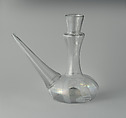
Drinking bottle (Porrón), Glass; blown, a retorti, Spanish, probably Barcelona (Façon de Venise)
Spanish, probably Barcelona (Façon de Venise)
18th century
Spouted jug, Transparent dark blue and opaque white nonlead glass. Blown, pattern molded, trailed., Façon de venise, probably Barcelona
Façon de venise, probably Barcelona
ca. 1500
Sprinkler bottle(?), Colorless (purplish gray) and opaque white nonlead glass. Blown, pattern molded, trailed., Façon de venise, possibly Spanish (Barcelona)
Façon de venise, possibly Spanish (Barcelona)
17th century
Goblet, Colorless (yellowish), transparent turquoise blue, and opaque brick red, yellow, and white nonlead glass.  Blown, trailed, pincered, "vetro a retorti"., Façon de Venise, probably south Lowlands or Germany
Façon de Venise, probably south Lowlands or Germany
17th century
Armorial tazza, Italian (Venice) or façon de Venise (Venetian-style), Colorless (slightly gray) nonlead glass; blown, pattern-molded, enameled, gilt, Venetian or façon de Venise, or French
Italian
French
1499–1514
Goblet, Gray nonlead glass. Blown, mold blown, enameled, gilt., Façon de Venise, probably Bohemian
Façon de Venise, probably Bohemian
late 16th century
Goblet, Gray-green nonlead glass. Blown, pattern molded, enameled, gilt., Façon de Venise, probably Bohemian
Façon de Venise, probably Bohemian
late 16th century
Wineglass, Colorless (strongly greenish gray) nonlead glass. Blown, mold blown., Façon de Venise, northern European
Façon de Venise, northern European
16th century
Drinking horn, Colorless (slightly gray) and opaque white nonlead glass. Blown, "vetro a retorti", trailed., Venetian or façon de Venise
Venetian or façon de Venise
late 16th century
Tazza, Colorless (slightly gray) and opaque white nonlead glass. Blown, "vetro a retorti", pincered., Venetian or façon de Venise
Venetian or façon de Venise
first half 16th century
Wineglass, Colorless (slightly tan) and transparent bright blue-green bubbly nonlead glass. Blown, trailed, pincered., Façon de Venise, northern European
Façon de Venise, northern European
probably 17th century, possibly late 19th century
Saint James the Greater, Gil de Siloe  Spanish, Alabaster with paint and gilding, Spanish
Gil de Siloe
1489–93
Miquelet Pistol, Llorens Torrens  Spanish, Steel, gold, wood (walnut), Spanish, Barcelona
Llorens Torrens
Jacinto Jaumeandreu
ca. 1790–1807
Stemmed cup (?), Colorless (slightly grayish tan) nonlead glass. Blown, pattern molded, trailed, gilt., Italian (Venice) or façon de Venise
Italian (Venice) or façon de Venise
probably 16th century
Pitcher, Colorless (gray) and transparent dark blue-green nonlead glass. Blown, ice-glass technique, trailed., Italian (Venice), or façon de Venise
Italian (Venice), or façon de Venise
early 17th century
Platter, T. V. A., Barcelona, Silver, Spanish, Barcelona
T. V. A., Barcelona
1659–1700
Bowl, Glass; blown, a ghiaccio, applied decoration, Spanish, probably Catalonia, façon de Venise
Spanish, probably Catalonia, façon de Venise
16th-17th century
The Holy Family with Saints Anne and Joachim, Diego de Pesquera  Spanish, Wood, painted and gilt, Spanish, Granada
Diego de Pesquera
1567–68
Dish, Colorless (gray) nonlead glass. Blown, reverse painted, gilt (unfired)., Venetian or façon de Venise, probably Tyrol (Innsbruck)
Venetian or façon de Venise, probably Tyrol (Innsbruck)
mid to late 16th century
Goblet, Colorless (slightly gray) nonlead glass; silvered metal fittings. Blown, pattern molded., probably façon de Venise, northern European or Venetian
probably façon de Venise, northern European or Venetian
late 16th–mid-17th century
Goblet, Colorless (slightly gray) transparent turquoise blue, and opaque brick red, white, and yellow nonlead glass. Blown, pattern molded, trailed, pincered, "vetro a retorti"., Façon de Venise, probably south Lowlands or Germany
Façon de Venise, probably south Lowlands or Germany
probably 17th century, possibly 19th century
Armorial goblet, Colorless (strong gray) nonlead glass. Blown, enameled, gilt., Façon de Venise, probably southern Germany or Tyrol
Façon de Venise, probably southern Germany or Tyrol
1592
Piece, Fabrica de Ramon Vicens y Coma, Cotton, Spanish, Barcelona
Fabrica de Ramon Vicens y Coma
18th–19th century
Armorial flask, Colorless (slightly gray) and opaque white nonlead glass.  Blown, "vetro a retorti", enameled, gilt., Venetian or façon de Venise, possibly Saxony
Venetian or façon de Venise, possibly Saxony
mid-16th century
Tazza, Colorless (slightly gray) nonlead glass. Blown, reverse painted, gilt (unfired)., Venetian or façon de Venise, probably Tyrolean; possibly Venice
Venetian or façon de Venise, probably Tyrolean; possibly Venice
ca. 1570
Beaker, Colorless (slightly tan) nonlead glass. Blown, ice-glass technique, trailed, gilt., Italian (Venice) or façon de Venise, probably south Lowlands
Italian (Venice) or façon de Venise, probably south Lowlands
late 16th–early 17th century
Wineglass, Colorless (slightly purplish gray), bubbly nonlead glass. Blown, diamond-point (scratch) engraved., Façon de Venise, probably northern European (Lowlands or France)
Façon de Venise, probably northern European (Lowlands or France)
early 17th century
Ecce Homo, Pedro de Mena  Spanish, Partial-gilt polychrome wood, Spanish, probably Málaga
Pedro de Mena
ca. 1674–85
Mater Dolorosa, Pedro de Mena  Spanish, Partial-gilt polychrome wood, Spanish, probably Málaga
Pedro de Mena
ca. 1674–85
Tazza, Colorless (slightly tan) and transparent turquoise blue nonlead glass. Blown, trailed, diamond-point (scratch) engraved., Italian (Venice) or façon de Venise, northern European
Italian (Venice) or façon de Venise, northern European
17th century
Corset, Facon, silk, elastic, metal, French
Facon
Saks Fifth Avenue
1930–35
Double cup (Doppelscheuer), Colorless (slightly gray) nonlead glass. Blown, enameled, gilt., Façon de venise, Germany or Silesia (possibly Petersdorf)
Façon de venise, Germany or Silesia (possibly Petersdorf)
late 19th century
Wineglass, Colorless (slightly gray) and transparent turquoise blue nonlead glass. Blown, pattern molded, trailed, pincered, milled., Façon de Venise, northern European (possibly the Lowlands)
Façon de Venise, northern European (possibly the Lowlands)
17th century
Guitar, Joseph de Frías  Spanish, Spruce, rosewood, cedar, ebony, mother-of-pearl, Spanish
Joseph de Frías
ca. 1780
Boot glass, Colorless (gray) and opaque white nonlead glass. Blown, "vetro a retorti", trailed, applied and impressed parts, gilt., Venetian or façon de Venise, probably south Lowlands or Germany
Venetian or façon de Venise, probably south Lowlands or Germany
late 16th or early 17th century
Boot glass, Colorless (slightly tan) and opaque white nonlead glass. Blown, "vetro a retorti", trailed, applied and impressed parts, gilt., Venetian or façon de Venise, probably south Lowlands or Germany
Venetian or façon de Venise, probably south Lowlands or Germany
late 16th or early 17th century
Salt, R. Eva, Silver, Spanish, Barcelona
R. Eva
18th century
Cover, Joseph Carasi and Co., Cotton, Spanish, Barcelona
Joseph Carasi and Co.
late 18th century
Piece, Miguel Forment and Co., Cotton, Spanish, Barcelona
Miguel Forment and Co.
late 18th century
Reliquary(?), Spanish, Gold, enamels, and rock crystal., probably Spanish
Spanish
late 19th century