Search the collection

Filter By

Object Type / Material
Geographic Location
Department
Date
Show Only:
  • As part of the Met's Open Access policy, you can freely copy, modify and distribute this image, even for commercial purposes.
    APIPublic domain data for this object can also be accessed using the Met's Open Access API
  • Objects with changed or unknown ownership in continental Europe between 1933-1945. Learn more
Showing 4,008 results for Toraja peoples
Sort by:
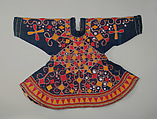
Woman's Tunic, Cotton, Toraja peoples
Toraja peoples
late 19th–early 20th century
Sanggori (head ornament), Toraja artist, Brass, Toraja people
Toraja artist
19th–early 20th century
Ear Ornaments, Toraja artist, Gilt silver, Toraja people (?)
Toraja artist
19th–early 20th century
Toraja artist
20th century
Head Wrapper or Loincloth (Pewo or Mbesa Tali To Batu), Cotton, Toraja people
Toraja people
mid to late 19th century
Ceremonial Textile (Sarita), Cotton, Toraja
Toraja
19th–early 20th century
Ceremonial Textile (Sarita), Cotton, Toraja
Toraja
19th–early 20th century
Ceremonial Textile (Sarita), Cotton, Toraja
Toraja
19th–early 20th century
Ceremonial Textile (Sarita), Cotton, Toraja
Toraja
19th–early 20th century
Ceremonial Textile (Sarita), Cotton, Toraja
Toraja
19th–early 20th century
Ceremonial Textile (Sarita), Cotton, Toraja
Toraja
19th–early 20th century
Ceremonial Textile (Sarita), Cotton, Toraja
Toraja
19th–early 20th century
Fragment of a Ceremonial Textile (Sarita), Cotton, Toraja
Toraja
19th–early 20th century
Ceremonial Textile (Mawa' or Maa'), Cotton, Toraja
Toraja
19th–early 20th century
Òpó (veranda post) with equestrian and female figure, Olowe of Ise  Nigerian, Iroko wood, paint, resin, Yoruba peoples
Olowe of Ise
before 1938
Mukudj (mask), Punu artist, Wood, pigment, kaolin, Punu peoples
Punu artist
mid-19th–mid-20th century
Gwantigi, Bamana numu (blacksmith), Wood, Bamana peoples
Bamana numu (blacksmith)
15th–17th century
Bata (ram) mask for a beete performance, Kwele artist, Wood, pigment, kaolin, Kwele peoples
Kwele artist
19th–first half of 20th century
Ùhúnmwèlaò (head of an ọ́bà), Ìgùn Ẹ́rọ̀nwwọ̀n (brass-casting guild) artists, Brass, Edo peoples
Ìgùn Ẹ́rọ̀nwwọ̀n (brass-casting guild) artists
Early 15th–mid-16th century
Female portrait lü me (figure in wood), Zlan of Belewale, Wood, fiber, pigment, cloth, metal, Dan peoples
Zlan of Belewale
Sonzlanwon
First half 20th century
Mangaaka Power Figure (Nkisi N’Kondi), Yombe-Kongo artist and nganga (ritual specialist), Wood, iron, resin, ceramic, plant fiber, textile, pigment, Kongo peoples
Yombe-Kongo artist and nganga (ritual specialist)
ca. 1880–1900
Pendant mask of Ìyọ́bà Idià, Ìgbèsànmwà (ivory- and wood- carving guild) artists, Ivory, iron, brass, coal, traces of iron oxides, Edo peoples
Ìgbèsànmwà (ivory- and wood- carving guild) artists
16th century
Hazomanga finial, Sakalava artist, Katrafay wood (Cedrelopsis grevei), pigment, Sakalava peoples
Sakalava artist
17th–late 18th century
Aduno Koro (Ark of the World) vessel with ancestral figures, Dogon blacksmith, Wood, Dogon peoples
Dogon blacksmith
16th–19th century
Karan-wemba (female figure mask), Mossi blacksmith, Ceiba(?) wood, metal, Mossi peoples
Mossi blacksmith
19th–first half 20th century
Nkisi (power figure), Kongo artist and nganga (ritual specialist), Wood, pigment, resin, iron, brass, tin, cloth, plant fiber cord, beads, cowrie shells, bone or ivory, arrows, leather, seeds, animal horn, Kongo peoples
Kongo artist and nganga (ritual specialist)
19th–first half of 20th century
Plaque with Warrior and Attendants, Ìgùn Ẹ́rọ̀nwwọ̀n (brass-casting guild) artists, Brass, Edo peoples
Ìgùn Ẹ́rọ̀nwwọ̀n (brass-casting guild) artists
ca. 1540–70
Kpeliye’e headdress, Senufo artist, Wood, horns, quills, raffia fiber, cotton cloth, feathers, metal, applied organic materials, Senufo peoples
Senufo artist
19th–mid-20th century
Court official from a commemorative altar, Ìgùn Ẹ́rọ̀nwwọ̀n (brass-casting guild) artists, Brass, Edo peoples
Ìgùn Ẹ́rọ̀nwwọ̀n (brass-casting guild) artists
16th–17th century
Gwandusu, Bamana numu (blacksmith), Wood (Cordyla africana or Lonchocarpus), applied organic materials, Bamana peoples
Bamana numu (blacksmith)
15th–17th century
Dance crest, Ejagham artist, Wood, animal hide, cane, iron, pigment, bone or ivory, Ejagham peoples
Ejagham artist
19th–mid-20th century
Seated couple, "Barnes Foundation Master", Wood, copper and iron alloy, applied organic materials, Dogon peoples
"Barnes Foundation Master"
18th–early 19th century
Nkishi (community power figure), Songye artist and nganga (ritual specialist), Wood, copper, brass, iron, fiber, snakeskin, leather, fur, feathers, mud, resin, Songye peoples
Songye artist and nganga (ritual specialist)
19th–first half of 20th century
Priest with raised arms, Dogon blacksmith, Wood, applied organic materials, Dogon peoples
Dogon blacksmith
14th–17th century
Mwanangana (lord of the land) playing a sanza, Chokwe artist, Wood (uapaca), cloth, plant fiber, beads, dye, resinous coating, Chokwe peoples
Chokwe artist
19th century (before 1869)
Nsodie (memorial head), Akan artist, Terracotta, Akan peoples
Akan artist
17th–mid-18th century
Loincloth or Wrapper, Cotton, Toraja people
Toraja people
late 19th–early 20th century
Jacket, Cotton, wool, shells, Toraja people
Toraja people
late 19th–mid-20th century
Shield, Wood, nassa shells, shell, hair, Toraja people
Toraja people
late 19th–early 20th century
Skirt, Cotton, Toraja people
Toraja people
late 19th–early 20th century