Search the collection

Filter By

Object Type / Material
Geographic Location
Department
Date
Show Only:
  • As part of the Met's Open Access policy, you can freely copy, modify and distribute this image, even for commercial purposes.
    APIPublic domain data for this object can also be accessed using the Met's Open Access API
  • Objects with changed or unknown ownership in continental Europe between 1933-1945. Learn more
More than 10,000 results for probably Bohemia or Lower Austria
Sort by:
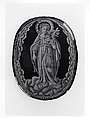
A Female Saint (possibly Rosalia), Colorless nonlead glass. Cut, polished, reverse gilt, painted., probably Bohemia or Lower Austria
probably Bohemia or Lower Austria
second half 18th century
Protective Pendant, Lower Niger Valley caster, Copper alloy, Lower Niger Bronze Industry
Lower Niger Valley caster
15th–19th century
Bell head, Lower Niger Valley caster, Copper alloy, Lower Niger Bronze Industry
Lower Niger Valley caster
15th–19th century
Equestrian figure, Lower Niger Valley caster, Coppy alloy, Lower Niger Bronze Industry
Lower Niger Valley caster
15th–19th century
Warrior Figure, Lower Niger Valley caster, Bronze, Lower Niger Bronze Industry
Lower Niger Valley caster
1455–1640
Staff finial with ram's head, Lower Niger Valley caster, Copper alloy, Lower Niger Bronze Industry
Lower Niger Valley caster
15th–19th century
Maternity figure with raised tray, Lower Benue River artist, Wood, pigment, Lower Benue Valley peoples
Lower Benue River artist
19th–early 20th century
Adoration of the Magi, Southern Germany or Austria  Southern Germany or Austria, Tempera and gold and silver leaf on parchment, Southern German or Austrian
Southern Germany or Austria
ca. 1235–50
Dish: The Destruction of the Hosts of Pharaoh, Master IC (probably Jean Court) or French, Limoges, Painted enamel on copper, partly gilt.
Master IC (probably Jean Court)
Jean Cour (or Court)
probably early 17th century
Jug, Transparent dark blue nonlead glass. Blown, pattern molded, trailed., Northern European (probably Bohemia or Germany)
Northern European (probably Bohemia or Germany)
possibly early 16th century; probably late 19th century
Altar Ring, Lower Niger Valley caster, Copper alloy, Yoruba peoples, Ife group
Lower Niger Valley caster
16th century
Vase, Karl Klaus  Austrian, Glazed ceramic
Karl Klaus
Serapis-Wahliss (Turn-Teplitz, Bohemia, Austria)
ca. 1911
Plaque of St. Bartholomew, Champlevé enamel, copper-gilt, Lower Rhenish or Saxon
Lower Rhenish or Saxon
mid-12th century
Beaker (Stangenglas), Colorless (slightly gray) and opaque white nonlead glass; pewter mount. Blown, "vetro a retorti"., probably south Lowlands; possibly Bohemia or Saxony
probably south Lowlands; possibly Bohemia or Saxony
late 16th century
Beaker, Glass, Austrian, probably Vienna, or Bohemia
Austrian, probably Vienna, or Bohemia
20th century
Snaffle Bit, Iron alloy, European, Bohemia
European, Bohemia
1st–4th century
Lidded saltcellar, Temne or Bullom artist(s), Ivory, Temne or Bullom
Temne or Bullom artist(s)
ca. 1490–1530
Roundel with the Adoration of the Magi, Hans Memling  Netherlandish, Colorless glass, vitreous paint and silver stain, South Netherlandish or Lower German
Hans Memling
ca. 1500
Aquamanile in the Form of a Knight on
Horseback, Bronze; Quaternary copper alloy with a high content of zinc (approx. 73% copper, approx. 15% zinc, approx. 7% lead, approx. 3% tin) with natural patina, hollow cast; remnants of the clay core<br/>and iron armature in the legs, German, Lower Saxony (?)
German, Lower Saxony (?)
ca. 1350
Hampatong (figure), Ngadju or Ot Danum artist, Wood, pigment, Ngadju or Ot Danum
Ngadju or Ot Danum artist
19th–early 20th century
Hercules and Achelous, Master of the Martyrdom of St. Sebastian  Austrian, Ivory, probably Austrian
Master of the Martyrdom of St. Sebastian
probably mid-17th century
Bit Boss with Adam and Eve, Copper alloy, German, Bohemia or Saxony
German, Bohemia or Saxony
late 16th–17th century
Dizi, Jade, probably Chinese
probably Chinese
late 18th–early 19th century
Austria
ca. 1900
Mask, Wood, paint, fiber, Lower Sepik
Lower Sepik
early to mid-20th century
Cranequin from the Armory of Emperor Maximilan I (reigned 1493/1508–19), Steel, wood (fruitwood, possibly pear), copper alloy, Western or Central European, the Netherlands or Austria
Western or Central European, the Netherlands or Austria
ca. 1505–19
Crystal shell cup on foot, Quartz cut on the wheel., Western Europe, probably Austria or Germany
Western Europe, probably Austria or Germany
second half 19th century
Armor, Steel, leather, German, possibly Lower Saxony
German, possibly Lower Saxony
ca. 1540–50 and later
Armor, Steel, leather, German, possibly Lower Saxony
German, possibly Lower Saxony
ca. 1540–50 and later
Parrying Shield, Aboriginal artist, Wood, Lower Murray River region
Aboriginal artist
19th century
Parrying Shield, Aboriginal artist, Wood, Lower Murray River region
Aboriginal artist
19th century
Crown bell head copy, Unknown caster, after Lower Niger Valley Bronze Industries, Copper alloy, Lower Niger Bronze Industry
Unknown
ca. 1900
Altar Ring, Bronze, Lower Niger Bronze Industry
Lower Niger Bronze Industry
15th–19th century
House Post, Wood, fiber, shell, paint, feathers, plastic, metal, Lower Ramu River region
Lower Ramu River region
early to mid-20th century
Joseph Being Stripped of His Cloak, Jan Rombouts  South Netherlandish (Duchy of Brabant), Stained glass, Flemish or Lower Rhineland
Jan Rombouts
ca. 1520–25
King David driven from Jerusalem, Jan Rombouts  South Netherlandish (Duchy of Brabant), Stained glass, Flemish or Lower Rhineland
Jan Rombouts
first half 16th century
Enthroned Virgin and Child, Limewood with original paint and gilding, Mosan or Lower-Rhenish
Mosan or Lower-Rhenish
ca. 1220
Plaque of St. Thomas, Champlevé enamel, copper-gilt, Lower Rhenish or Saxon
Lower Rhenish or Saxon
mid-12th century
Icon of the Virgin and Child, Hodegetria variant, Byzantine or Crusader  Byzantine or Crusader, Tempera on wood, Byzantine or Crusader
Byzantine or Crusader
13th century
Crossbow, Wood (European hornbeam), horn, animal sinew, animal glue, birch bark, staghorn, iron alloy, hemp, leather, Central European, possibly Austria
Central European, possibly Austria
ca. 1425–75