Audio Guide
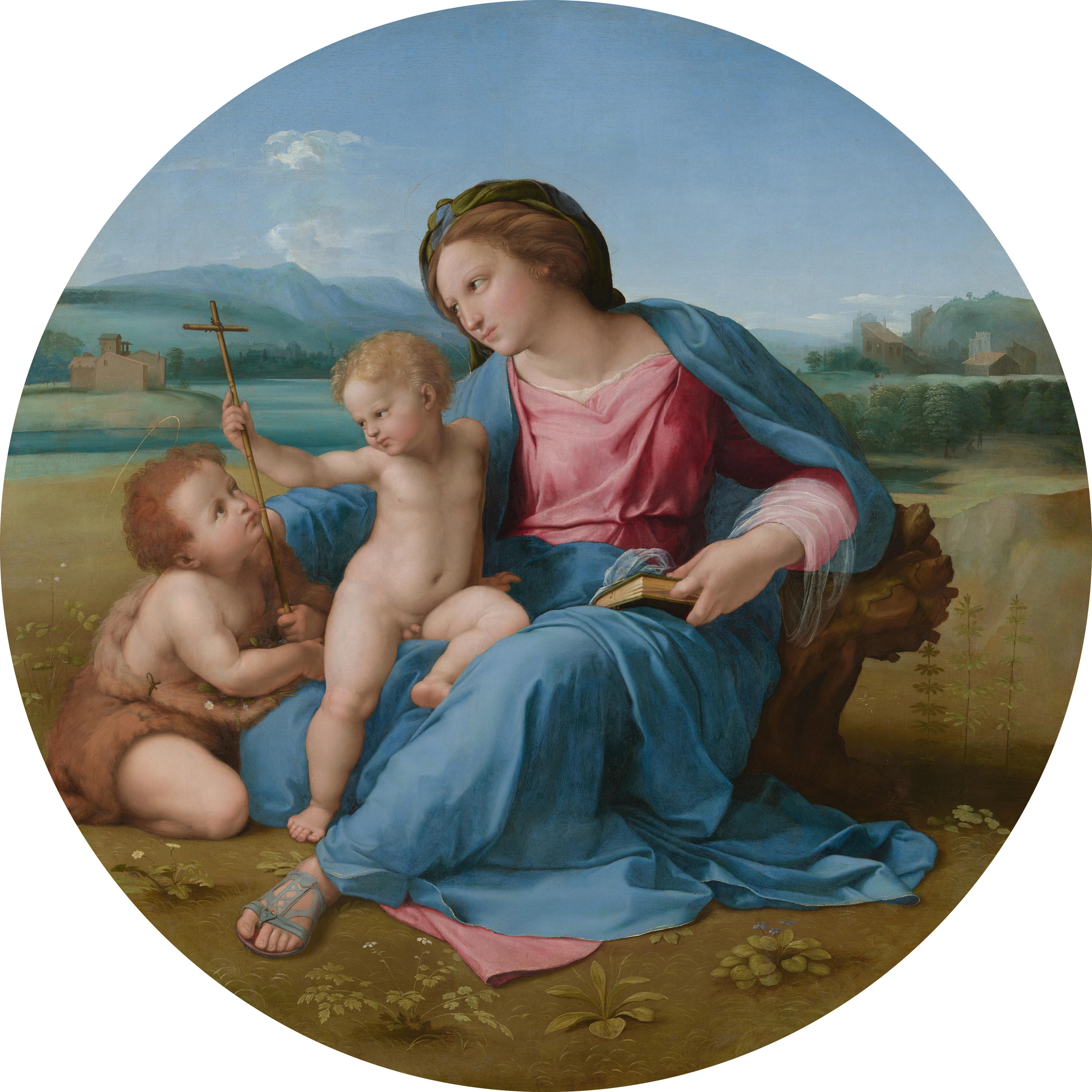
605. Reinventing the Madonna of Tenderness
What sets apart Raphael’s depictions of Mary?
ISABELLA ROSSELLINI (NARRATOR): This is one of Raphael’s most celebrated Madonna images. Right away, what stands out is the affection between mother and child.
Notice how Mary, her infant son Jesus, and his little cousin Saint John the Baptist are all connected to each other—through both gaze and tender touch. Mary’s right arm seems to envelop both children. And both Mary and Jesus gaze straight into the eyes of Saint John.
CARMEN BAMBACH: From the point of view of artistic devices, it’s really quite extraordinary how Raphael is able to compose the figural arrangement to fit in a very graceful way within the circular framework of this tondo composition.
ROSSELLINI: During the Renaissance, the circular tondo format was associated with perfection and divinity. But this affectionate holy family doesn’t seem to be up in heaven. Instead, Raphael sets Mary within a beautiful but earthly landscape. Here’s Research Associate Caroline Elenowitz-Hess:
CAROLINE ELENOWITZ-HESS: She is sitting there on the ground, up against a tree stump. She’s very much an image of humility. And she is not someone who is enthroned, she’s not above you. She’s someone who’s very much on the same level as the viewer.
ROSSELLINI: While this scene contains recognizable religious iconography, the emphasis is on the figures’ humanity.
ELENOWITZ-HESS: If you think about it through the eyes of the people at the time, this was really fresh and new and engaging.