Audio Guide
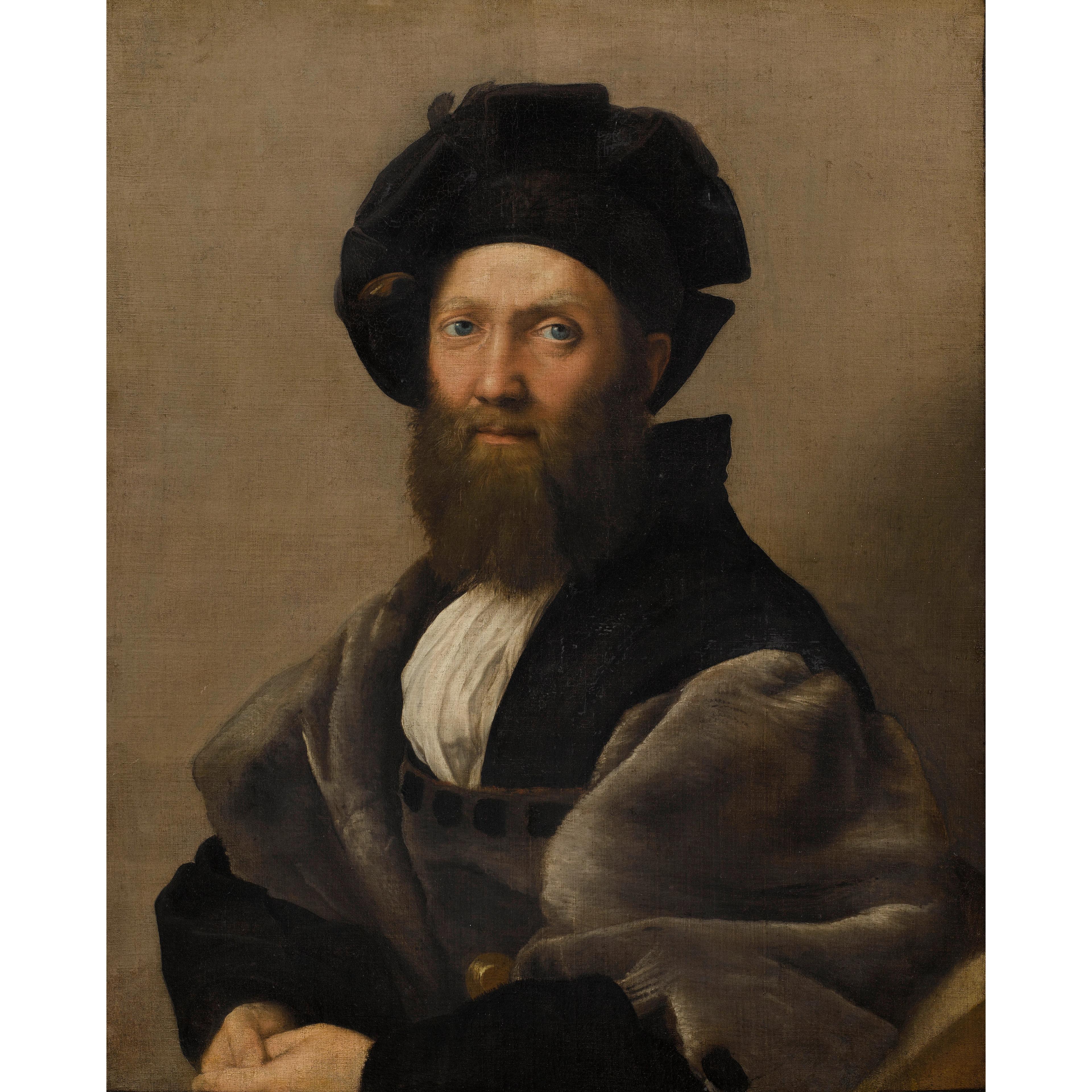
606. Portraiture: Baldassare Castiglione
How did Raphael achieve a sense of effortless cool in this portrait?
ISABELLA ROSSELLINI (NARRATOR): We’re standing in a room that brings together many of Raphael’s greatest portraits. This portrait shows us Raphael’s close friend, Baldassare Castiglione.
CARMEN BAMBACH: Castiglione being the famous author of The Book of the Courtier, probably the most famous of the literary works of the Italian Renaissance, which is a manual of how to be a cool person.
So, it’s a manual about style, about what comportment should be of the most ideal type of aristocratic figure, a courtier.
ROSSELLINI: And here, Castiglione embodies that ideal type. Raphael endows him with sprezzatura: a seemingly effortless grace.
BAMBACH: First, this is a flattering portrait. Let’s remember that Baldassare Castiglione was bald.
ROSSELLINI: But here, an elegant black velvet hat disguises that fact and adds drama to the portrait.
At first glance, the rest of his clothing appears understated, even sober. Actually, though, he’s sporting a Renaissance-era version of quiet luxury.
CAROLINE ELENOWITZ-HESS: The fabric itself was incredibly luxurious. And the fact that he’s wrapped in fur, and that Raphael is so good at portraying that fur in a way that makes you want to sink your hands into it—it’s so lush, and it’s definitely incredibly expensive.
ROSSELLINI: The white linen at his neck is immaculate. And his hands are clean and white, too.
BAMBACH: Having white hands meant that you were very sophisticated and aristocratic because you did not do any manual labor.
ROSSELLINI: By the time Raphael completed this work, he was also operating in an aristocratic milieu. He’d become rich and successful, and his portraits were highly prized.
Before you move on to the next gallery, be sure to look at some of Raphael’s extraordinary portraits of women. The striking blonde cradling a unicorn, for example. Or the sensual, bare-breasted La Fornarina. But Raphael’s portraits are never only about external beauty.
BAMBACH: Really extraordinary is the way in which he engages in a super empathetic way with the persona, the psychological persona of his female sitters in his portraits.