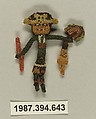
Figurine with Miniature Tunic, Mantle, and Bag
Dressed figurines were part of an Inca ritual called capac hucha (royal obligation), which marked royal or natural events. In its performance, select children were ritually married in Cusco and then sent on a procession to distant, sacred locations that the Incas sought to fold into their imperial landscape. There, the children were sacrificed and buried with offerings.
Las figurillas vestidas eran parte de un ritual inca llamado Capac hucha ("obligación real"), que marcaba acontecimientos tanto de la realeza como naturales. En ocasión de dicho ritual, unos niños seleccionados contraían matrimonios rituales en Cusco y luego eran enviados en una procesión a localidades alejadas y sagradas que los Incas deseaban añadir a su imperio. Allí, los niños eran sacrificados y enterrados con ofrendas.
Las figurillas vestidas eran parte de un ritual inca llamado Capac hucha ("obligación real"), que marcaba acontecimientos tanto de la realeza como naturales. En ocasión de dicho ritual, unos niños seleccionados contraían matrimonios rituales en Cusco y luego eran enviados en una procesión a localidades alejadas y sagradas que los Incas deseaban añadir a su imperio. Allí, los niños eran sacrificados y enterrados con ofrendas.
Artwork Details
- Title: Figurine with Miniature Tunic, Mantle, and Bag
- Date: 1400–1532 CE
- Geography: Ecuador, Peru, Chile or Argentina
- Culture: Inca
- Medium: Gold, camelid fiber
- Dimensions: Tunic: H. 2 5/8 × W. 2 1/4 in. (6.6 × 5.7 cm)
Bag: H. 1 1/4 × W. 1 1/2 in. (3.2 × 3.8 cm) - Classification: Textiles-Woven
- Credit Line: American Museum of Natural History, New York (41.2/902–.2/905)
- Curatorial Department: The Michael C. Rockefeller Wing
More Artwork
A slider containing 5 items.
Press the down key to skip to the last item.
Press the down key to skip to the last item.
Inca and Spanish
1600–1700
Chimú
14th–15th century
Chancay
12th–14th century
Chimú
14th–15th century
Nasca
2nd century BCE
Research Resources
The Met provides unparalleled resources for research and welcomes an international community of students and scholars. The Met's Open Access API is where creators and researchers can connect to the The Met collection. Open Access data and public domain images are available for unrestricted commercial and noncommercial use without permission or fee.
To request images under copyright and other restrictions, please use this Image Request form.
Feedback
We continue to research and examine historical and cultural context for objects in The Met collection. If you have comments or questions about this object record, please contact us using the form below. The Museum looks forward to receiving your comments.