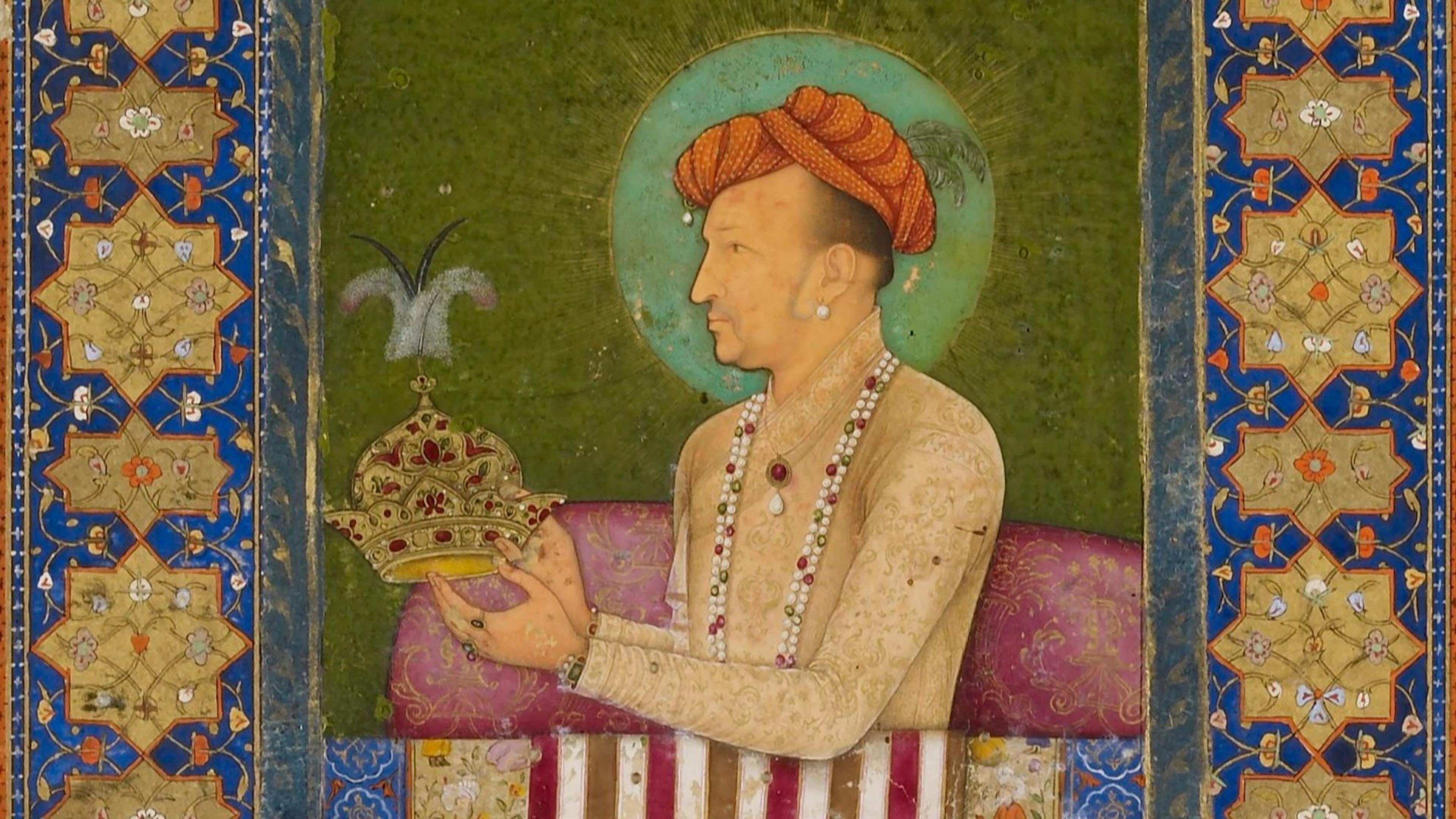
(New York, November 12, 2026)—On April 25, 2027, The Metropolitan Museum of Art will present Radiant World: Jahangir and Mughal India, a major exhibition exploring the artistic endeavors of the Mughal court under Emperor Nuruddin Jahangir in the early seventeenth century. It will be on view through August 15, 2027. Approximately 230 works, including paintings, drawings, jeweled arts and diamonds, textiles, sculpture, and decorative arts from The Met and major international lenders, shed light on the remarkable breadth of artistic production and patronage that flourished during Jahangir’s reign. Inspired by the Jahangirnama, the emperor’s celebrated memoir, Radiant World traces Jahangir’s life and wide-ranging interests as a patron and collector, while foregrounding the achievements of the artists and craftspeople who shaped the visual culture of his court.
The exhibition is made possible by De Beers and Reliance Industries Limited.
Major support is provided by the Placido Arango Fund, the Sherman Fairchild Foundation, the Diane W. and James E. Burke Fund, and the Gail and Parker Gilbert Fund.
Additional funding is provided by Lilly Endowment Inc., Prakash and Anjali Melwani, Anita Saggurti, Parag and Usha Saxena, and the Vanguard Council.
“The court of Jahangir was a place of creativity and curiosity, where artists and craftspeople looked closely at the world around them and transformed what they encountered into works of remarkable beauty and invention,” said Max Hollein, The Met’s Marina Kellen French Director and Chief Executive Officer. “Radiant World: Jahangir and Mughal India brings this time of exceptional artistic production to life, revealing a culture shaped by creative ambition, intellectual curiosity, and an openness to ideas and influences from across the world.”
“Jahangir was a discerning connoisseur whose patronage helped define one of the most remarkable periods of Indian art,” said Navina Najat Haidar, Nasser Sabah al-Ahmad al-Sabah Curator in Charge of the Department of Islamic Art at The Met. “Radiant World: Jahangir and Mughal India offers an opportunity to consider the full breadth of artistic production during his reign, to reveal the richness and sophistication of Mughal court culture and the distinctive vision that shaped it.”
Radiant World traces the reign of the Mughal emperor Jahangir through the lens of his own writings, artistic patronage, and imperial vision. Drawing on the Gulshan Album which he began to compile as a prince, the illustrated Jahangirnama that followed, and extraordinary paintings and drawings that he continued to commission, the exhibition traces the formation of his aesthetic sensibility from his rebellion-era court at Allahabad through his transformation of that early passion into a sweeping program of collecting after ascending the throne. Paintings, jewels, textiles, ceremonial weapons, and coins evoke the material splendor of his court, while portraits of courtiers, rivals, and foreign visitors bring its personalities into focus.
The exhibition will feature the painted works of court artists Abu’l Hasan (entitled “Nadir al-Zaman” or “Rarity of the Age”), Bichitr and Balchand, who specialized in sharply observed imperial portraits and allegorical subjects. The paintings of Ustad Mansur (entitled “Nadir al-‘Asr” or “Wonder of the Age”) known for his important natural history studies, such as that of an African zebra, will also be on view. Also included is Govardhan, admired for his psychological insights and sensitivity to all living creatures, and Bishandas, whose influential portrait studies of the Persian Shah will be shown. Manohar’s lavish court scenes of the Jahangirnama, Daulat’s acute recordings of courtly subjects, and Farrukh Beg’s response to European prints will be among the diverse forms of expression included.
Radiant World also explores the role of Jahangir’s Persian wife, the empress Nur Jahan, whose influence over fashion, architecture, and design—including the introduction of Florentine-related pietra dura inlay—reflects the political and social latitude women could command at the Mughal court. Jahangir's spiritual curiosity across Islamic and Hindu traditions, and his court's far-reaching exchange with Iran, Central Asia, Africa, China, and Europe—exemplified by a later Rembrandt drawing inspired by Mughal imagery—round out a portrait of a ruler and court in sustained dialogue with the wider world.
Credits and Related Content
Radiant World: Jahangir and Mughal India is curated by Navina Najat Haidar, Nasser Sabah al-Ahmad al-Sabah Curator in Charge of the Department of Islamic Art at The Met, with Courtney Stewart, Research Associate, Department of Islamic Art at The Met, and with the support of Peter Yacoub, Research Assistant, Department of Islamic Art at The Met.
A fully illustrated catalogue, with contributions by the exhibition’s curators and other leading scholars, will accompany the exhibition.
The catalogue is made possible by the Samuel I. Newhouse Foundation, Inc. and the Doris Duke Fund for Publications.
The Met will host a variety of exhibition-related educational and public programs, to be announced at a later date.
###
November 12, 2026
Detail: Portrait of Jahangir Holding a Crown (detail), ca. 1620. Ink, colors and gold on paper, British Museum, 1974,0617,0.21.3