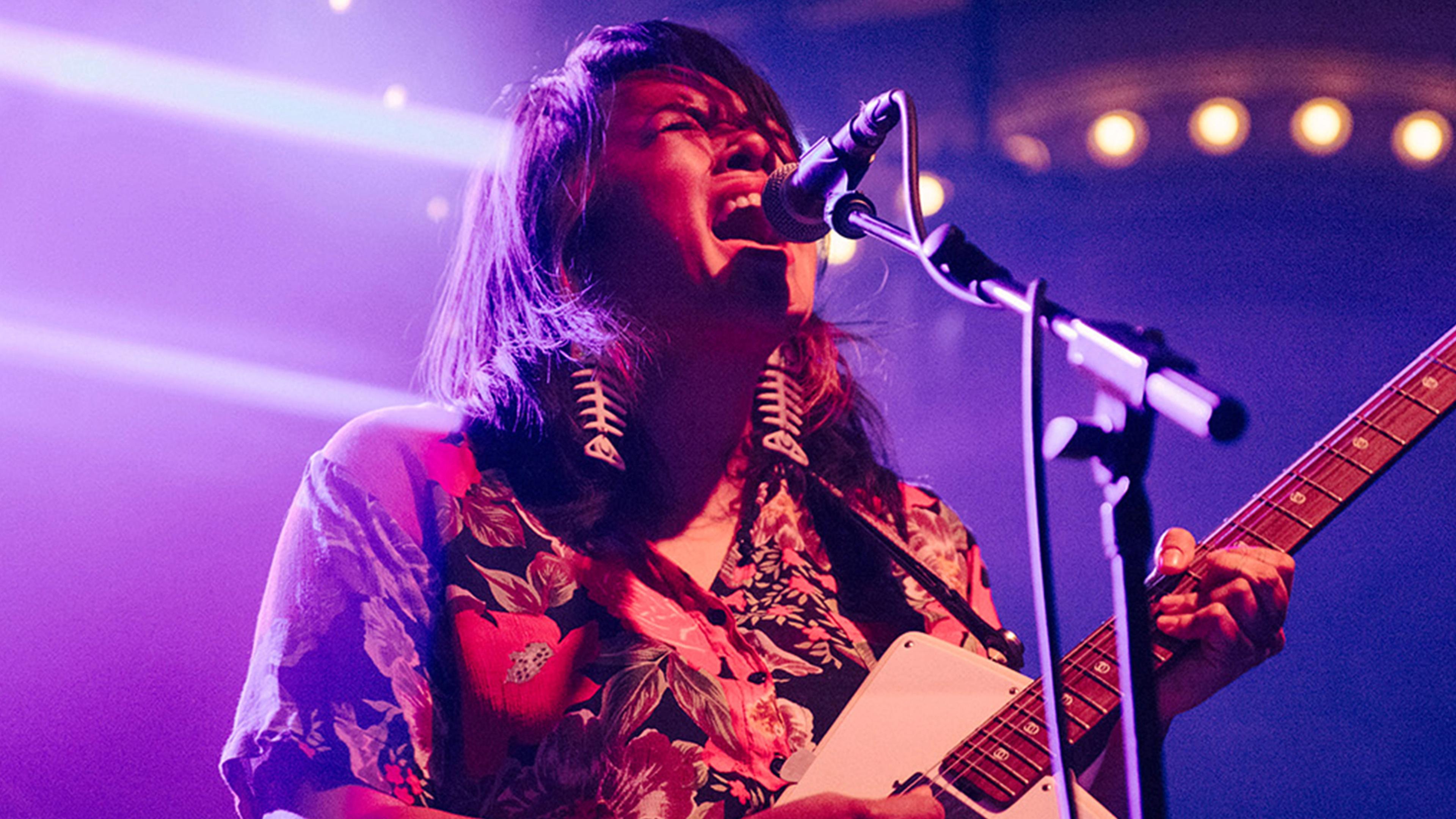
For over a decade, Black Belt Eagle Scout has synthesized Native American and Indigenous Heritage with a distinct alternative-rock sound. The project, created by Katherine Paul, draws inspiration from her ancestral Pacific Northwest homeland, the territory of the Swinomish/Coast Salish people. On November 17, 2026, as part of the Met Live Arts Fall/Winter 2026–27 season, Paul, accompanied by her band, will bring a new body of work that continues her exploration of traditional Native music and rock in a concert at The Met. In preparation for the upcoming performance, with an opening by the Pow Wow singer Joe Rainey, Paul shared insights into what it means to perform at The Met, her influences, and how Indigeneity remains central to her art.

Black Belt Eagle Scout, photo by Evan Benally Atwood
Sarah Jones:
Can you tell us more about the roles that nature and Indigeneity play in your music, specifically your connection to your home in the Pacific Northwest?
Katherine Paul:
To me, nature, Indigeneity, and music are all connected. They aren't separate things, but rather parts of something whole. I come from a lineage of Swinomish people who have always carried music in our lives and in our hearts. We sing canoe songs and dance together to create peace and harmony within ourselves and our community. Growing up in the Pacific Northwest, I always felt a connection to the land and water around me. It's part of who I am, and naturally, it's part of the music I make.
Sarah Jones:
Your musical influences range from jingle dress dancing at Pow Wows to Nirvana’s iconic grunge sound. In many ways, The Met is also a confluence of ideas, like ancient Greek and Roman art displayed right next to our galleries of the Arts of Oceania. How does pulling from multiple sources inspire your sound?
Katherine Paul:
Having a wide range of influences helps me grow as an artist. I've always been drawn to different genres and ways of storytelling, and I love bringing those influences together to create something that feels uniquely my own. I explore storytelling in a deeper way, and having so many different sources of inspiration really helps that creative process. I don't necessarily think about genres when I'm making music. I'm more interested in following what feels right and seeing where it takes me.
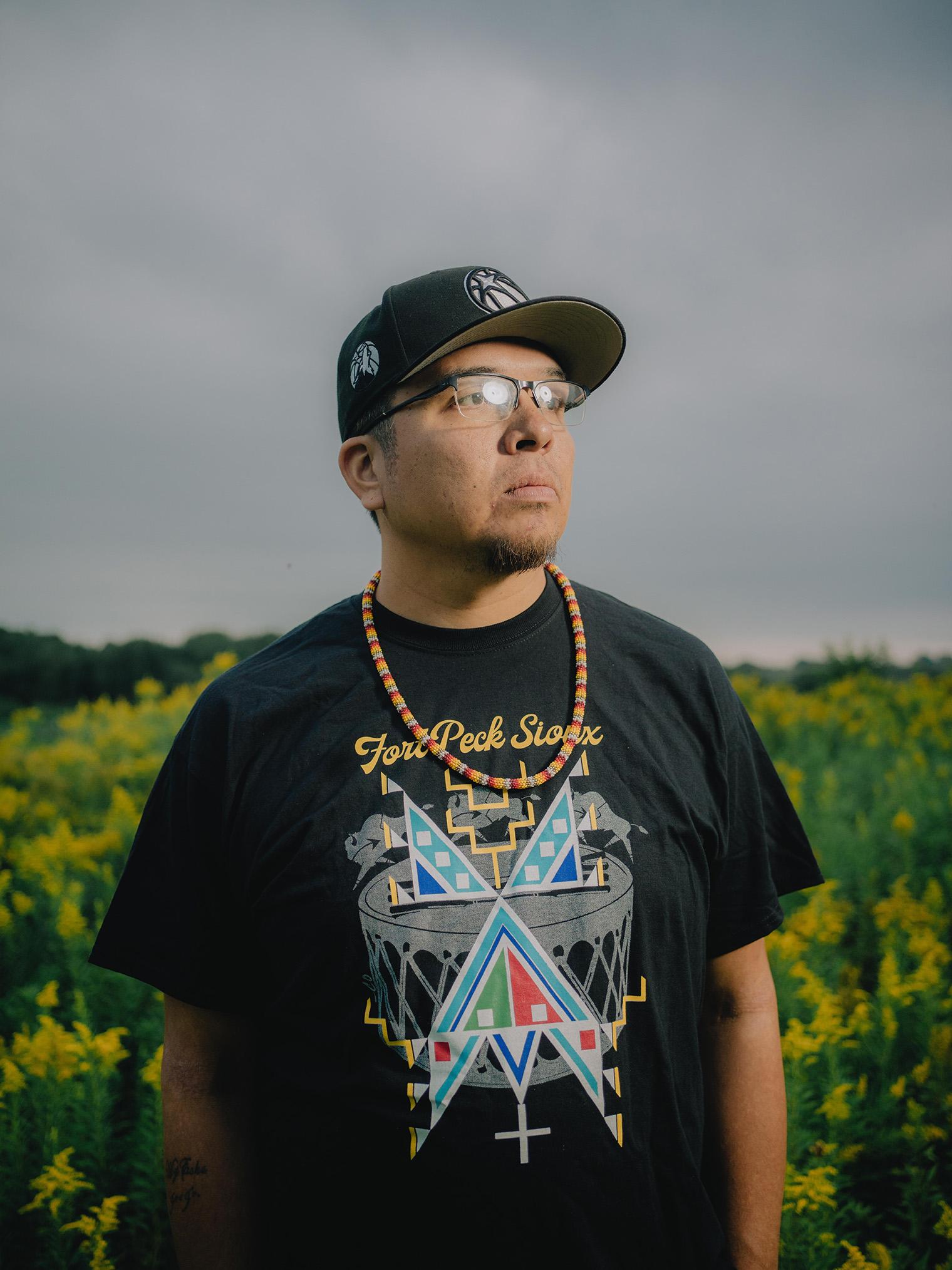
Joe Rainey, photo by Graham Tolbert
Sarah Jones:
The Pow Wow singer Joe Rainey is opening for your set. How does his music complement your music and vice versa?
Katherine Paul:
I'm really excited to share the evening with him and experience his music live. It’s special to have different Native artists sharing the same stage, each bringing our own musical perspectives and experiences. There's something beautiful about creating space for those different expressions of music to exist together.
Sarah Jones:
You’ve played internationally in many venues, but could you tell us what’s different about performing at The Met?
Katherine Paul:
This performance is especially meaningful because it's one of the first times I'll be playing with my full band since having my baby. We're excited to be together again and bring that energy to The Met! I've played at a number of different venues in New York over the years, but this is a unique experience. The Met Live Arts team has been so wonderful, welcoming, and supportive of our band and the music we create. It means a lot to be invited into a space like this and to feel genuinely respected and celebrated as artists.
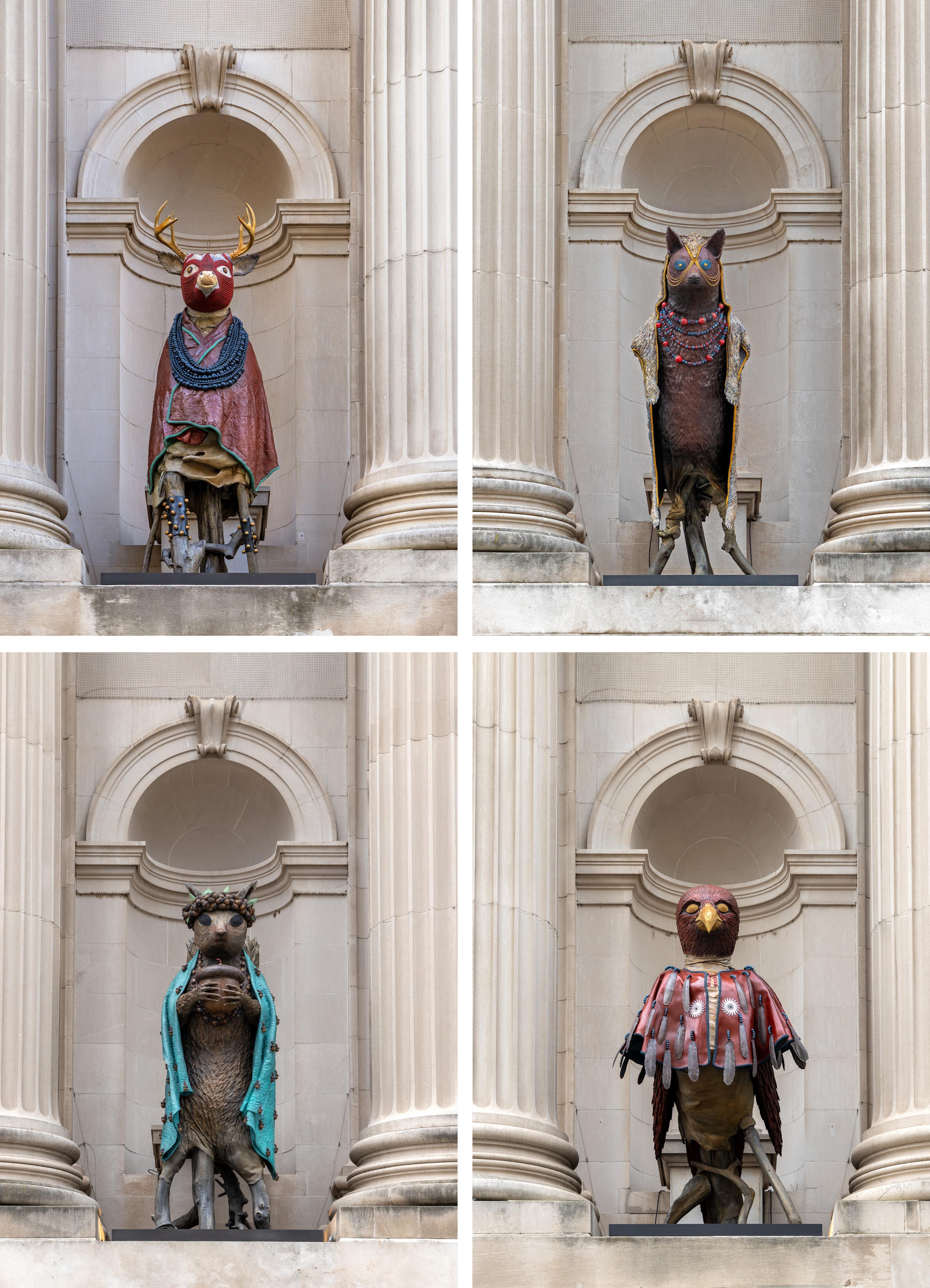
Installation views of The Genesis Facade Commission: Jeffrey Gibson, The Animal Therefore I Am (2025) at The Metropolitan Museum of Art. Photographs by Eugenia Burnett Tinsley
Sarah Jones:
Are there any specific areas or objects that you’re drawn to at the Museum? Any that resonate with your music?
Katherine Paul:
One of the first people who comes to mind when I think about The Met is my friend and artist Jeffrey Gibson. He recently had a beautiful installation on the museum's facade called The Animal That Therefore I Am (2025). I've been fortunate to collaborate with Jeffrey in the past and have experienced his exhibitions at MASS MoCA and Art Omi. We're also working together on some new creative projects, which I'm really excited about Jeffrey connected me to these larger art spaces, and it's special to see our creative worlds continue to grow and intersect. I'm happy to be part of that expansion through this performance at The Met.
Sarah Jones:
In a previous interview, you said: “I hope that listening to my records people get inspired to check out other Indigenous artists.” What do you hope the audience takes away after your performance at The Met?
Katherine Paul:
I want people to leave feeling connected to the music and inspired to explore the work of other Native artists. So many incredible Native musicians and artists are creating work right now, and I think it's important for people to experience the diversity of our stories and creative expressions. I also hope people can just be present with the music and take something meaningful away from that experience, whatever that might be for them.
This interview was published in conjunction with the Met Live Arts Fall/Winter 2026–27 season.


