I’m a fashion designer and curator based in London. I didn’t study fashion; I’m self-taught. During my childhood and all my adult life, I always sought to engage with different creative forms, particularly art. An appreciation of and connection with contemporary and historical art is intrinsic to my practice.
Clothing and textiles are perhaps the most revealing signifier of one’s point of view. Clothes show people how you want to be placed in the world. Therefore, apart from constraints relating to religion, gender, and sexuality, clothes are really a signifier of your sense of self and your sense of belonging to a particular people or point of view.
I think that is very much the case historically, and it speaks to a shared cultural appreciation of styles of dress and adornment. For the Africans, Greeks, Romans, and later, the Europeans, there has always been a strong element of appreciation, often resulting in appropriation.
I am a strong believer in juxtaposition of pattern, texture, or silhouette, and I think that’s very evident in the clothing that I design. I always love to see them not as singular things but rather in tandem with other things because that’s the greatest conversation of a creative assemblage. The world is one big repository of objects and ideas. What we all try to do as makers, designers, and artists is bring all these elements of the world into one work or a series of works that captivate the eye and the heart.
In my curatorial practice, I intuitively felt that I could have a Brice Marden painting next to a Yoruba aṣọ òkè textile from the late nineteenth century, next to a Claude Cahun photograph, a Malick Sidibé photograph alongside a painting by artist Lynette Yiadom-Boakye. It didn’t seem strange to me. That kind of freedom is real and inspiring. Whether they’re considered art, divine objects, or objects to be used in daily life, it’s liberating to think about these incredible objects and works of art sitting next to each other and being equal.
Material as a map of life
This ncák piece from the Democratic Republic of the Congo is a great example of juxtaposition, intuition, and experimentation. Raffia palm fabrics in geometric shapes are paneled then inlaid with motifs that were cut out and placed again on the paneled fabric. A deftly artistic and highly original form of applique, it is a gesture of concentration on shape rather than finesse, which is probably why the finesse element is so outstanding. The colors are also so beautiful. Even the brown, terracotta, and off-white/camel hues, now darkened with age, probably have twenty different tones in them.
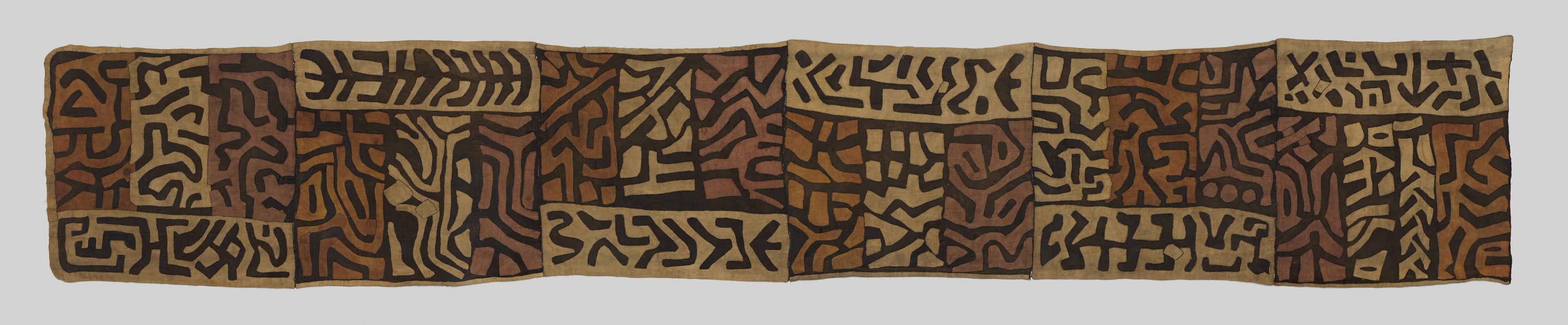
Kuba artists. Ncák (women’s ceremonial skirt), early–mid-20th century. Kasai River region, Democratic Republic of the Congo. Raffia palm fiber, dye, 13 ft. 11 in. x 26 in. (424.2 x 66 cm). The Metropolitan Museum of Art, New York, Rogers Fund, 2004 (2004.254)
There’s also a visual power in the sense that every motif on the cutout appliquéd piece is something that you’ve seen repeated in the work of every major European artist, particularly from the 1930s to the 1970s. Including Matisse with his cutouts and Paul Klee.
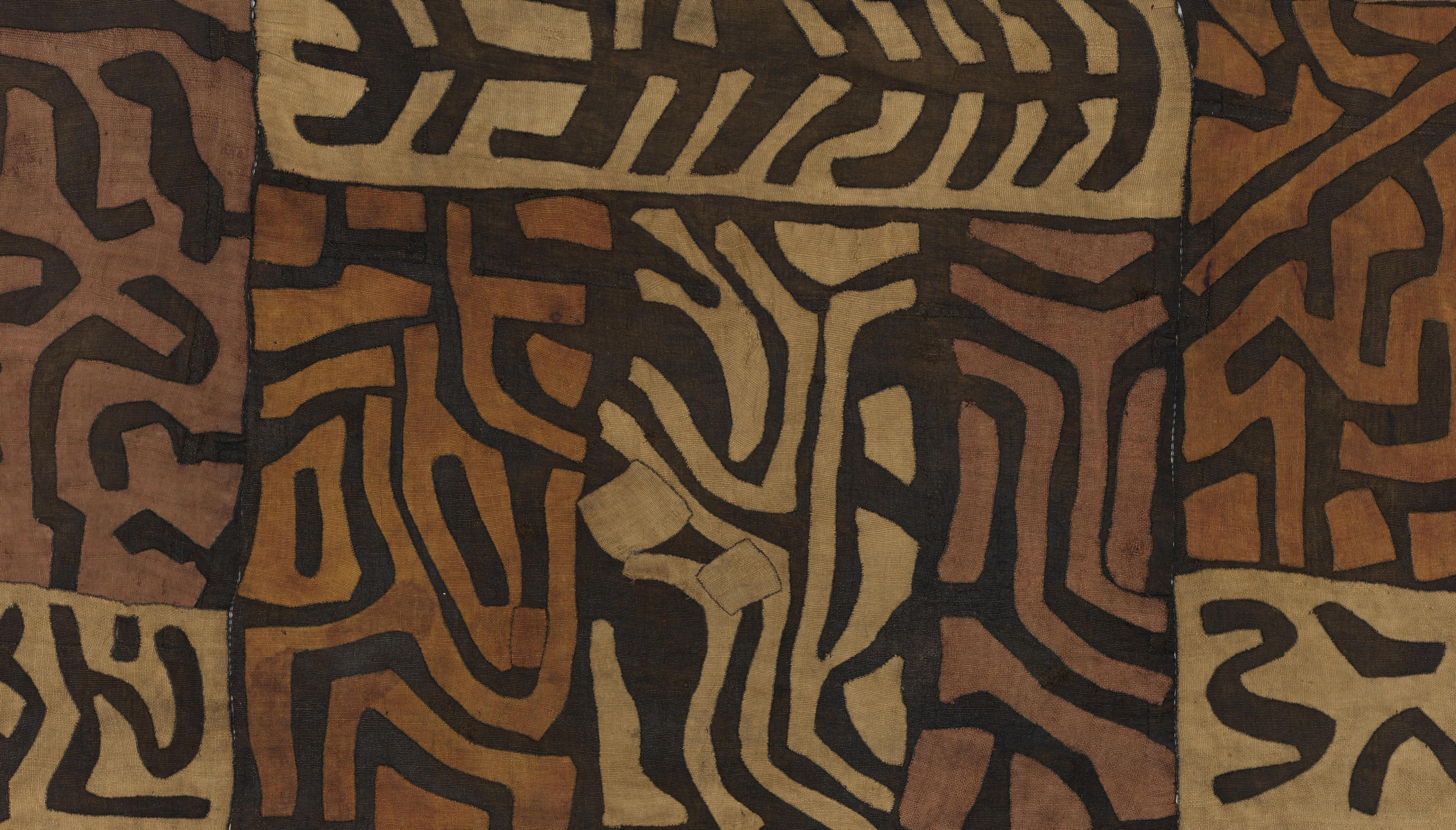
Detail from the Kasai River region ncák.
Perhaps they were not all made by the same person, because it’s an extremely long piece. Or perhaps they were made by artists who worked in tandem for so long that they almost intuitively understood how to do what they did best and how it would all come together. People made these pieces with intuition and an ability to use what they had and what they saw around them, which is why these skirts are so special. They were touched by the hands of makers with divine imaginations.
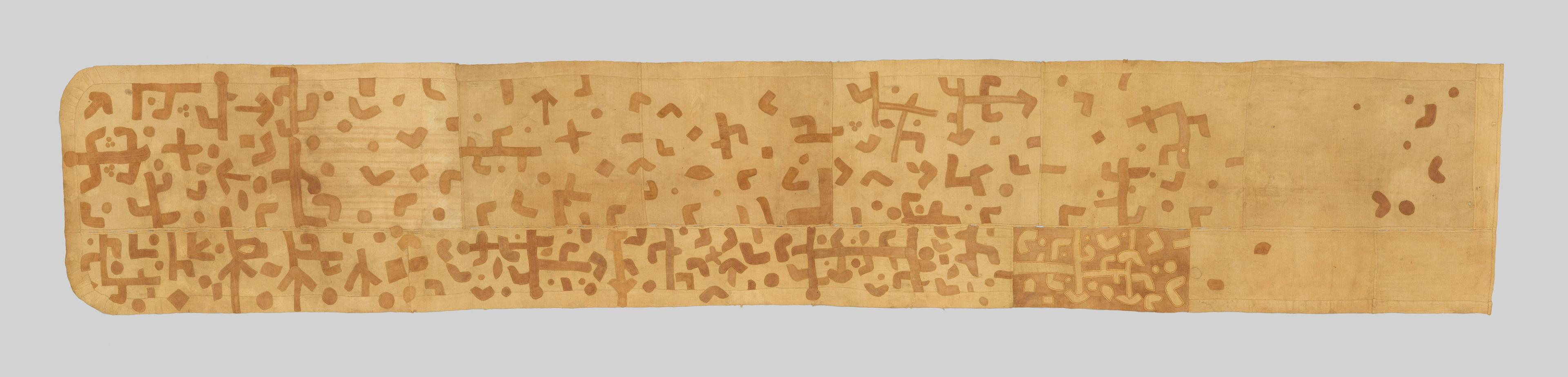
Kuba artists. Ncák (women’s ceremonial skirt), early–mid-20th century. Sankuru River region, Democratic Republic of the Congo. Raffia palm fiber, dye, 16 ft. 1 in. x 33 1/2 in. (490.2 x 85.1 cm). The Metropolitan Museum of Art, New York, Bequest of John B. Elliott, 1998 (1999.47.78)
Looking down on this other ncák, I see geometric shapes that reflect some kind of structure or representation. The placement of these is freer. Abstract representation of human limbs, vegetation, and dwellings. Even though it’s rendered in hues that are very similar, these representations come through because the curves and the twists in the lines of each motif are so in tandem with movement. It’s a very electrifying piece. One that exudes life.
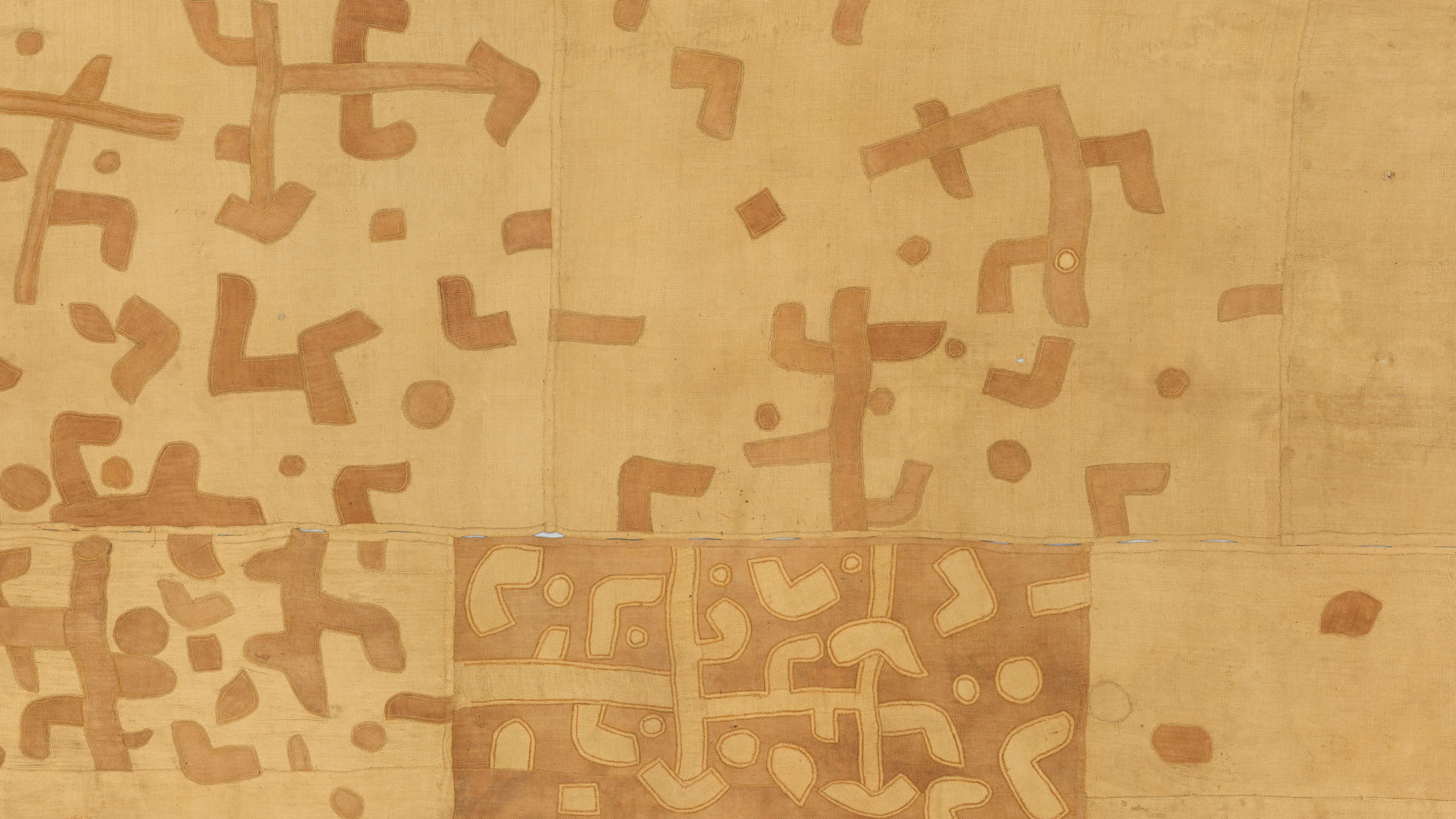
Detail from the Sankuru River region ncák.
There is this collage of form and shape that moves with the body. If you look at these, you feel that they’ve been purposefully joined at certain points to make them seem like one continuous piece. Looking closely, some of the motifs are actually sewn into something else or abruptly cut into another motif. You almost feel that they also represent people engaging in different activities (bending over to wash something, fighting, or just speaking with each other). There is an awareness of the beauty of imperfection and of the actual making process.
Toward the end of the cloth, you notice that the spatial element there is much more spread out. There are very few motifs. This is probably the end or the most inner part of the wrapper, as we call it, which would be closest to the body. Just the scatter of some motifs on the end is an artwork on its own. To me, this is really mind blowing.
These pieces are shown in full length, so it gives the viewer the right to have an imagination, to know what it must have been like to wear this. What this unfurling means is that even though the artists knew that it would be wrapped and cut off and a lot of it would not be visible, it didn’t take away from the intricacy of work and aesthetic composition that they were willing to put into it. Little touches of color, positioning the same motif but upside down and further apart make these clothes feel like the haute couture garments that they are. I think that laying it out in a way that allows us to view it in its entirety also allows the visitor to visit it over and over again and see something different every time.
Familial legacies of dress
Growing up in Lagos with a Nigerian father and Jamaican mother, I was exposed to different styles of dress, which seemed normal to me. There’s never been confusion about one minute wearing buba and sokoto, which is the Yoruba top and drawstring trousers, and also wearing bell-bottom jeans and cheesecloth shirts. I’ve always been interested in the culture’s style, which encapsulates everything and also opens up possibilities for the future.
My grandfather was a Lapoki of Ode-Aye, which is like the king of the town of Ode-Aye in Ondo State. He was elected there for over fifty years. His family was originally from the Benin area of Nigeria. For a long time, there was a closeness between the Benin people and the Yoruba people, geographically and culturally. I always admired the way he dressed because even if he was just relaxing, he would still be dressed so beautifully and always perched in a certain way that allowed the clothes to appear even more beautiful. When you’re a child, you really observe elements of the clothing that nobody else is looking at. If it was a cut velvet agbádá with embroidery, you would be obsessed with cut velvet. If it was the beading on his slippers, you would be obsessed with that.
I didn’t spend tons of time with him over the almost forty years that he was in my life. When American Vogue first did a big story on my work in 2005, my father, who was his first born, showed him a copy of the magazine and said in Ikale, which is the Yoruba dialect in Ode-Aye, “Look at Duro.” To which my grandfather apparently replied, “Duro has taken our name all over the world.” I was very touched by that statement.
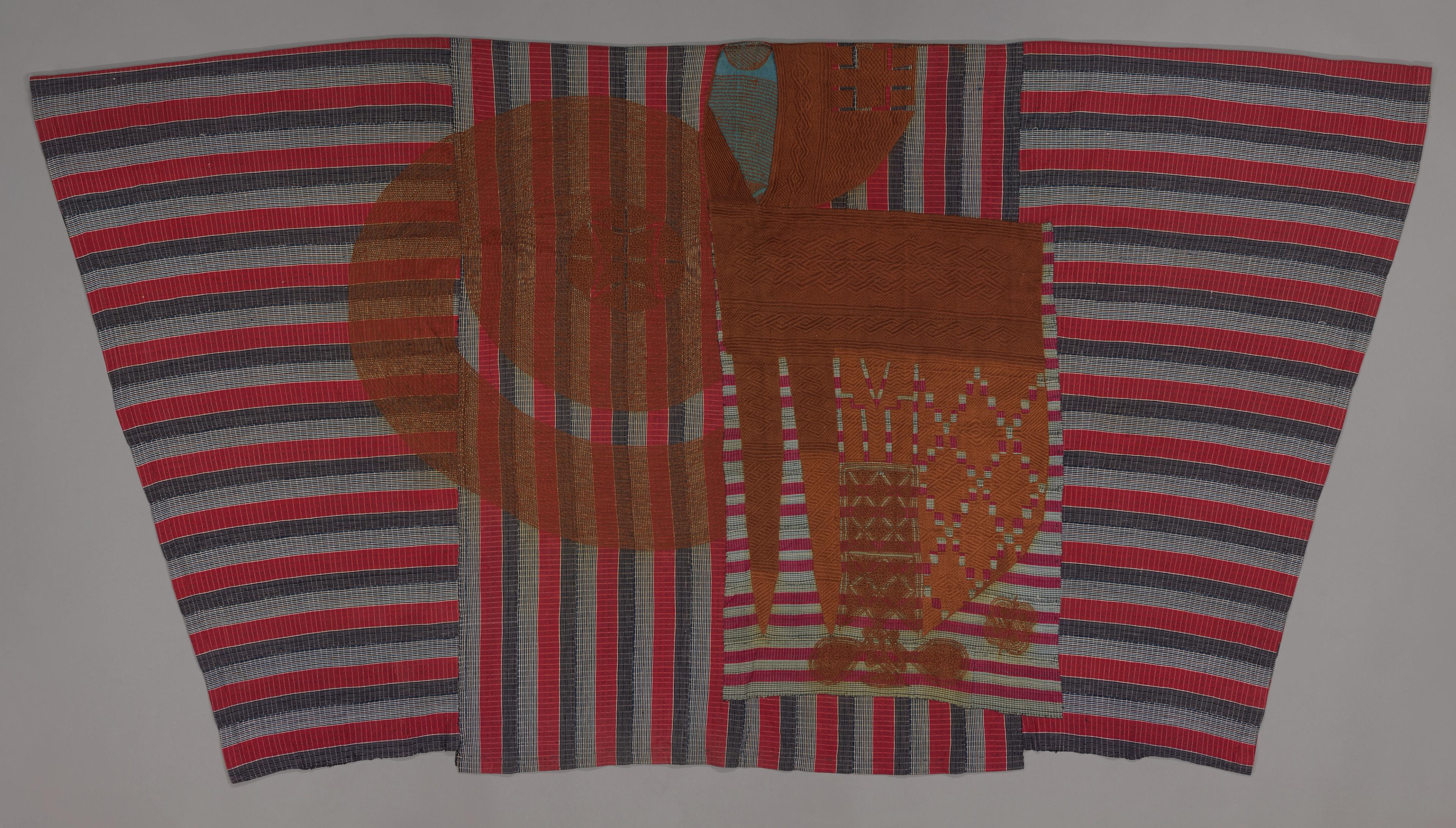
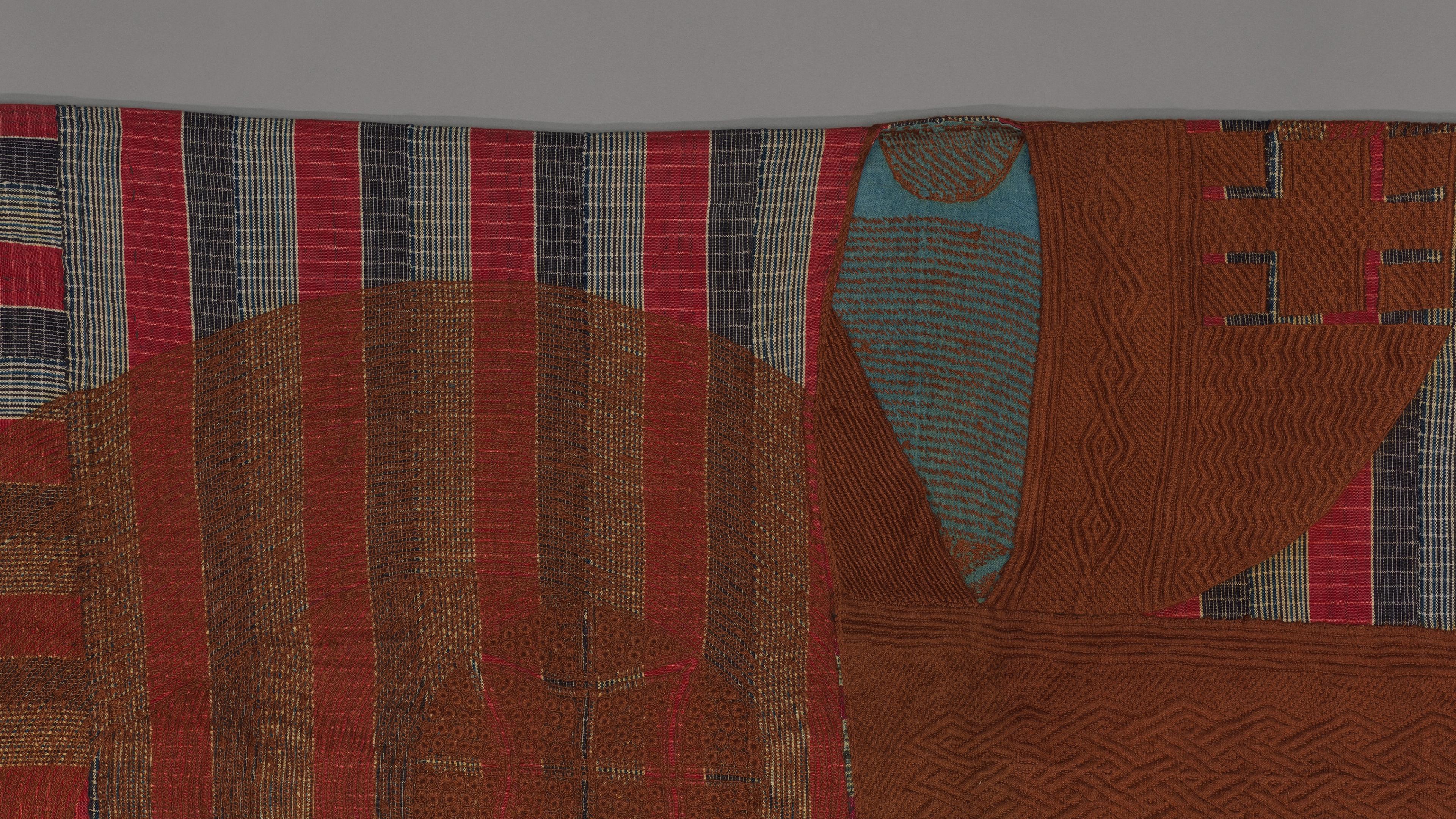
Hausa, Nupe, and/or Yoruba artists. Agbádá (man’s ceremonial robe), mid-20th century. Cotton, silk, dye, 48 x 93 in. (121.9 × 236.2 cm). The Metropolitan Museum of Art, New York, Gift of Duro Olowu, 2014 (2014.751.1)
About fifteen years ago, my father, who knew I have a big collection of all kinds of textiles, particularly Yoruba from the mid-nineteenth century to probably the mid-1970s, gave me this particular agbádá of my grandfather’s, which is woven in silk in the most beautiful burgundy and dark blue stripes. Alongside that, he gave me a pair of my grandfather’s handmade royal slippers which are velvet with the crown motifs in gold thread. It was a big gesture from my father. Both my parents, to whom I was very close, were very happy that it brought me so much joy to have been given these beautiful heirlooms. And now it’s in a space surrounded by the things we’re talking about in the Arts of Africa galleries, living within the same space of the building where it’s found its counterparts both in execution and integrity.
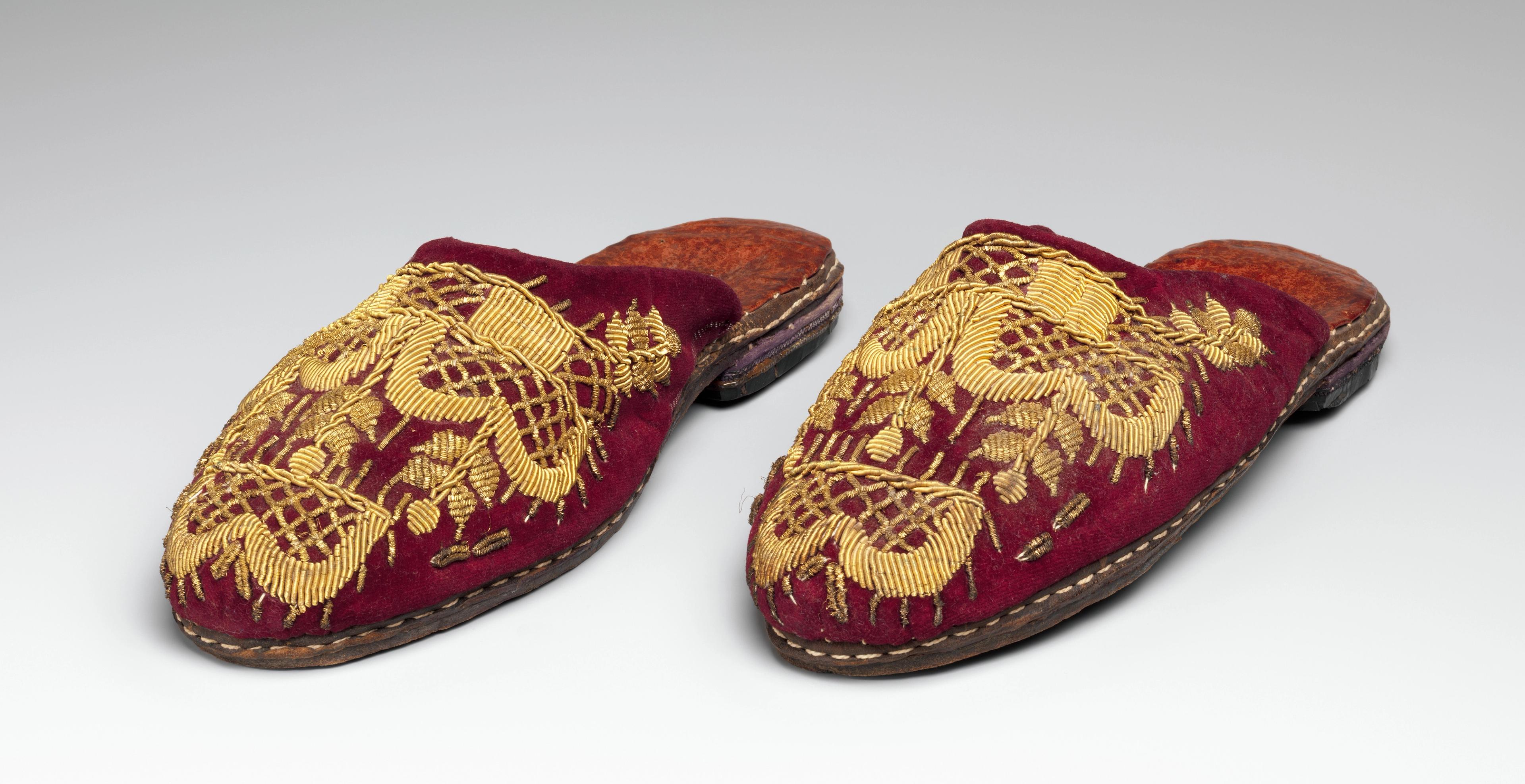
Yoruba artist. Ceremonial slippers, mid-20th century. Leather, silk, metal, dye, each shoe: 3 x 11 in. (7.6 x 27.9 cm). The Metropolitan Museum of Art, New York, Gift of Duro Olowu, 2014 (2014.751.2a, b)
Clothing as armor
I show two collections a year at London Fashion Week yet always try to design clothes that are seasonless and somehow transcend borders, in ways that allow the wearer to feel that they are dressed in elegant armor, no matter how casual the circumstances.
From the moment we are born, our first contact is with cloth. You’re wrapped in a fabric or textile, a sensation that never leaves you. I think the feel of cotton or wool is still very much a comforting thing. The older you get, the more confident you get, the more you need things that still retain this naivety of warmth but are also very much about being taken seriously and being respected in a way that is evident in how you present yourself.
Anyone that has traveled widely, and in my case, particularly on the continent, knows that for many people, the most amount of respect they get in certain ways is very dependent on how they dress. This is not a label-based idea. It’s based on how creative their clothing is, how creatively it was made by a local tailor, and how it is worn or mixed. The juxtaposition of something traditionally African with something European is an extension of one’s personal style. It’s really about the individuality and poise that emboldens the wearer and allows them to experience various aspects of their lives with their heads held high.
Hear from Duro Olowu in the Arts of Africa Audio Guide.

1548. Women's ceremonial skirts, Kuba artists
Duro Olowu
DURO OLOWU: The material is king here. With these textiles, the artists handed themselves over to a sort of dizzying ecstasy that one gets when materials inform your eye and your hands and then you make something out of that. The colors are so beautiful. Even the singular dark brown or off-white camel, which has now gone darker with age, has probably twenty different hues in it.
ANGELIQUE KIDJO (NARRATOR): Duro Olowu is a Nigerian-born, London-based fashion designer and curator. Here, he reflects on the elite fashions produced from natural fibers in this gallery.
DURO OLOWU: No one wanted to look exactly the same as the other person, which is why the makers are very conscious of difference in the motifs that occur in a way that are not so obvious, but when you really look, they’re there. Little touches of color, positioning of the same motif but upside down and further apart. Little elements that make these clothes feel like the haute couture garments that they are.
ANGELIQUE KIDJO: Here we see examples of monumental skirts composed by groups of aristocratic female designers to be worn wrapped multiple times around the lower body for ceremonial court events.
DURO OLOWU: These are pieces that have presence in their execution, they are so confident and so free. I think it’s also a reflection of the amount of work that went into something that was going to be wrapped in layers. In this case, we are lucky to see them unfurled as it were, because what this unfurling means is that even though the artists knew that it would be wrapped and a lot of it would not be visible, it didn’t take away from the kind of intricacy of work and aesthetic composition that they were willing to put into it. And I think that laying it out in a way that allows us to view it in its entirety also allows the visitor to visit it over and over again and see something different.
###
Audio: Courtesy of Kumakonda African Expeditions.
This essay is adapted from an interview with Duro Olowu that took place in 2024 as part of collaborative research for the new Arts of Africa galleries in The Michael C. Rockefeller Wing.


