Scientific Research Fellows
Current
Emma Paolin
Emma Paolin is an Andrew W. Mellon Conservation Fellow in the Scientific Research department. She is a PhD researcher at the Faculty of Chemistry and Chemical Technology, University of Ljubljana, where her doctoral research focuses on developing a systematic approach to sample, characterize, reconstruct, and archive the smells of heritage objects. She received her master’s degree in science for the conservation-restoration of cultural heritage from the University of Bologna, where her thesis focused on Raman spectroscopy of synthetic pigments. Her research encompasses volatile compounds present in heritage environments, including those emitted from artworks. She specializes in noninvasive VOC sampling and characterization using advanced chromatographic techniques, combining chemical data with olfactory evaluations conducted by trained panelists.
Miranda Walter
Miranda Walter is an Andrew W. Mellon Conservation Fellow in the Scientific Research department. She holds a PhD in chemistry from Harvard University, where her doctoral research in the Mason lab focused on developing porous nanoparticles for aqueous-based porous liquids. She received her BS in chemistry with a minor in art history from Florida State University. During her fellowship, Miranda will study materials chemistry within an art historical context and learn more about noninvasive experimental techniques. She is especially interested in the chemistry of historical pigments and how they have changed over time.
Past
Shelby Shankel
Shelby Shankel was a Fellow in the Scientific Research department from 2024-2026. Their project was titled "Back in Yellow: The Application of Organic Chemical Analysis to Understudied Natural Pigments in The Met Collection". Shelby received her PhD in the Fors Group at Cornell University, in the Department of Chemistry. Her dissertation focused on the synthesis and mechanical testing of sustainable plastics. At The Met, Shelby worked on unravelling the complex chemical compositions of natural organic pigments.
Ellen Purdy
Ellen Purdy was a Fellow in the Scientific Research department from 2024-2026. She worked on projects in Greek and Roman Art and Medieval Art, and her 2025-2026 project was titled "Polychromy, Palimpsest, and the Hunt for the 'Original': Scientific Analysis of Late Medieval French Sculpture at The Met". Prior to joining The Met, Ellen completed a PhD in chemistry, with a focus on heritage science, collaborating on projects that investigated synthetic inorganic pigment production and use in Tudor England, as well as conducting technical and scientific studies of modern surrealist paintings.
Rachel Lackner
Rachel Lackner was an Andrew W. Mellon Foundation Conservation Fellow in the Scientific Research department from 2023-2024. Her project was titled "Development of Direct Insertion Probe Mass Spectrometry (DIP-MS) for the Analysis of Organic Colorants.” As part of this work, Rachel optimized and implemented a method for minimally invasive identification of organic dyes and pigments, enabling the analysis of historically important colorants such as shellfish purple in objects from the Met's collection.
Rachel Lackner, Silvia Centeno, Nobuko Shibayama, Hitomi Fujii, Mahon, D. (2025). “Identification of yellow lake pigments in paintings by Rembrandt and Vermeer: the state of the art revisited.” Heritage Science 13, 57.
Rachel Lackner, Ferron, S., Boustie, J., Le Devehat, F., Lumbsch, H.T., Nobuko Shibayama (2024). “Unraveling a historical mystery: Identification of a lichen dye source in a fifteenth Century medieval tapestry.” Heritage, 7, 5, pp. 2370-2384.
Rachel Lackner, Fozi, S., Suh, K. (2024). “Julius Caesar from the Heroes Tapestries at The Met Cloisters: Dye Analysis and Molecular Insights.” Metropolitan Museum Journal, 59, pp. 130-143.
Jana Butman
Jana Butman was a Fellow in the Scientific Research department from 2023-2024. Their project was titled "Preventive conservation through analysis of airborne pollutants". Butman joined The Met’s Department of Scientific Research in 2023 as an Andrew W. Mellon Conservation Fellow, where she focused on preventive conservation through analysis of airborne pollutants. She holds a Ph.D. in chemistry from Northwestern University. There, her research focused on surface-specific analysis of human-derived indoor air pollutants. Previously, she worked at the Library of Congress in the Preservation Research and Testing Division, where she developed cleaning solutions for early audio carriers and wax cylinders.
Atefeh Shekofteh
Atefeh Shekofteh was a Fellow in the Scientific Research department from 2022–2023. Their project was titled "An Investigation on the stucco decorations from the Sassanid to the Islamic collections of Iran in the Metropolitan Museum of Art.". The project aims at investigating the gypsum artworks from Iran in the collection of The Metropolitan Museum of Art, ranging from Parthian stucco decorations to Islamic period stuccoes of Nishabur. Through a multi-analytical approach (SEM-EDS, XRD, and Raman), the project will provide new knowledge about the ancient techniques and materials of stucco decorations of Iran. The results of this interdisciplinary study will provide useful information towards the reconstruction of manufacturing techniques and will aid conservators and curators in addressing issues of conservation, provenance and authenticity.
Omid Oudbashi
Omid Oudbashi was a Fellow in the Scientific Research department from 2022–2023. Their project was titled "Chemical-microstructural investigation to identify metalworking technology during the Early Islamic Period of Iran (7th to 14th centuries AD)". This scientific study of selected objects using non- and micro-invasive methods generated information about alloy composition and technology of production. The data was used to fill the existing gaps in our understanding of Iranian Islamic metalwork technology.
Rachel Lackner
Rachel Lackner was an Andrew W. Mellon Foundation Conservation Fellow in the Scientific Research department from 2022-2023. Her project was titled "Color Commentary: Chemical Analysis of Organic Colorants in the Met’s Collection." As part of this work, Rachel used liquid chromatography-mass spectrometry (LC-MS) to identify organic dyes and pigments in works of art spanning the Met's encyclopedic collection, including medieval tapestries, Persian carpets, and contemporary fashion.
Rachel Lackner, Silvia Centeno, Nobuko Shibayama, Hitomi Fujii, Mahon, D. (2025). “Identification of yellow lake pigments in paintings by Rembrandt and Vermeer: the state of the art revisited.” Heritage Science 13, 57.
Rachel Lackner, Ferron, S., Boustie, J., Le Devehat, F., Lumbsch, H.T., Nobuko Shibayama (2024). “Unraveling a historical mystery: Identification of a lichen dye source in a fifteenth Century medieval tapestry.” Heritage, 7, 5, pp. 2370-2384.
Rachel Lackner, Fozi, S., Suh, K. (2024). “Julius Caesar from the Heroes Tapestries at The Met Cloisters: Dye Analysis and Molecular Insights.” Metropolitan Museum Journal, 59, pp. 130-143.
Avalon Hope Dismukes
Avalon Hope Dismukes was a Fellow in the Scientific Research department from 2022–2023. Their project was titled "Application of non-destructive methods, including micro- and macro-XRF; FTIR; Raman; XRD; and SEM, to the study of objects in the Museum's collection and of new acquisitions".
Aleksandra Popowich
Aleksandra Popowich was a Fellow in the Scientific Research department from 2021-2022.
Roxanne Radpour
Roxanne Radpour was a Fellow in the Scientific Research department from 2020–2021. Their project was titled "Investigation of Artworks via Macroscale Chemical Mapping Using Hyperspectral Imaging". Roxanne Radpour has been exploring applications of hyperspectral imaging (HSI) to advance such protocols to better serve our understanding of an object’s condition, history, and material nature. HSI is a form of remote sensing that collects hundreds of images of a target in contiguous, narrow spectral bands. Stacking these images produces rich 3D data cubes, in which each pixel in the recorded target scene contains a material signature. In applying this technique to artworks such as paintings and utilizing different regions of the electromagnetic spectrum through targeted illumination, and by employing both reflectance and luminescence capture, we can simultaneously identify constituent painting media and explore how they are applied throughout the artwork (i.e., relatively purely in mixtures or in layers).
Francesca Volpi
Francesca Volpi was a Fellow in the Scientific Research department from 2019–2020. Their project was titled "Testing materials for use near organic-based collections: The Paper Test—A novel analytical approach". This paper test project focused on optimizing a possible alternative method based on a cellulose, or paper-based, sensor, rather than metals. The goals were to reduce the aging time and allow for quantitative, non-subjective, evaluation of the sensor degradation. High-pressure anion exchange chromatography with pulsed amperometric detection (HPAEC-PAD) and UV-Vis diffuse reflectance spectroscopy were used to analyze hydrolysis and oxidation, respectively, of the cellulose sensor after aging with storage materials. The effective assessment of cellulose degradation allowed to evaluate the suitability of storage and display materials for use near artworks.

Alicia McGeachy
Alicia McGeachy was a Fellow in the Scientific Research department from 2019–2020. Their project was titled "Investigation of ceramic and metal objects from the encyclopedic collection of The Metropolitan Museum of Art". This fellowship focused on the in-depth study of objects in the Museum’s collection that have never been analyzed before. Among the studied objects are small copper alloy casts from Mali and Benin, silver and gold belt fittings, drinking bowls, and goblets found in a single hoard found during an excavation near Vrap, Albania, and ceramic wares produced in the Edgefield district in South Carolina.
Vermeulen, M. et al. XRFast a new software package for processing of MA-XRF datasets using machine learning. J. Anal. At. Spectrom. 37, 2130–2143 (2022)
Vermeulen, M., Tamburini, D., McGeachy, A. C., Meyers, R. D. & Walton, M. S. Multiscale characterization of shellfish purple and other organic colorants in 20th-century traditional enredos from Oaxaca, Mexico. Dye. Pigment. 206, 110663 (2022).
Emilie Bérard
Emilie Bérard was a Fellow in the Scientific Research department from 2019–2020. Their project was titled "The Chalcis Hoard: A Material Study of the Origin, Nature, and Transformation of Metal for Armor Fabrication". This project is devoted to shedding light on the above-mentioned factors, by examining the metal of a set of armor defenses belonging to a famous collection known as the Chalcis hoard (from its place of discovery). Most of them are dated from the 15th century and identified as Italian. This work implements a multi-technical approach on selected artifacts, including metallographic analyses, hardness measurements and trace element quantification on slag inclusions entrapped in the metallic matrix (SEM-EDX, LA-ICP-MS), to assess the metal quality used and study its provenance. Coupled with historical evidence, the results will provide new information regarding the history of armor making in Europe.
Yao Yao
Yao Yao was a Fellow in the Scientific Research department from 2018–2019. Their project was titled "Looking beneath the Surface: Scientific Insights into Two Japanese Lacquering Techniques". Lacquered objects, with their undeniable beauty, are among the most sophisticated handicrafts of Asian art. Different lacquering techniques can be used to produce artifacts with various kinds of decorations and visual effects. Here at The Met, a combination of analytical techniques was carried out on microscopic samples removed from Japanese lacquered objects that are undergoing conservation to evaluate the composition of individual materials used in the multilayered decoration. The results obtained not only help us gain insight into the lacquering techniques of the objects but also provide conservators with information for better treatment and preservation.
Francesca Volpi
Francesca Volpi was a Fellow in the Scientific Research department from 2018–2019. Their project was titled "Evaluation of Commercial Products Used for Exhibiting and Storing Artworks. Set Up of a New Methodology for Testing Materials". The off-gassing of reactive and corrosive molecules from cases building materials is a current topic in preventive conservation. This project is devoted to the evaluation of the “safeness” of several classes of commercial products used for housing or storing museum objects and collections. A new methodology for testing material has been proposed: artificially aging the material with a paper tester into a closed jar together with the analytical evaluation and quantification of the aging effect on paper through suitable and sensitive techniques such as ion chromatography, UV-Vis spectrometry and FTIR spectroscopy.
Marc Vermeulen
Marc Vermeulen was a Fellow in the Scientific Research department from 2018–2019. Their project was titled "Systematic Scientific Investigation of the Materials and Techniques used in Japanese Artifacts from the Collection of The Metropolitan Museum of Art". This study focuses on the characterization of the blue and yellow colorants used in Japanese woodblock prints as a way to better understand the production timeframe and establish chronologies of this commercial art form in nineteenth-century japan, where reissuing a popular print well past the date of first issue (or recreating it altogether) is not unusual. By investigating the use of pigments of interest such as orpiment, ultramarine blue, indigo or Prussian blue, we have an independent verification of printing date based on the introduction of new pigments and on changes in pigments manufacturing processes that occurred in the late Edo period and early Meiji. This fellowship builds on previous research on arsenic sulfide and make use of statistical analysis to help create clusters of prints that may help understand when they were made and differentiate between various editions.
Alicia McGeachy
Alicia McGeachy was a Fellow in the Scientific Research department from 2018–2019. Their project was titled "Multi-technical Studies of Eighteenth-Century Overglaze Enamels from Chelsea Porcelain Manufactory". The Chelsea Porcelain Manufactory is often regarded as the preeminent porcelain manufacturer. Established in the 1740s, the factory produced such highly prized works as the Goat and Bee Jugs and developed the iconic claret color. Despite their recognition as an important center of innovation in eighteenth-century Europe, the Chelsea Porcelain Manufactory has been the focus of only a few technical studies and many questions remain about their approach. Here, we employ a multi-technical approach that integrates x-ray fluorescence spectroscopy with scanning electron microscopy with energy dispersive x-ray spectroscopy and Raman spectroscopy, which allows us to not only identify the chemical constituents present but also to address questions about phase and spatial distribution. Such insights will further our understanding of the development of the porcelain industry in England and place that knowledge in context with the advances of enameling techniques across Europe.
Vermeulen, M. et al. XRFast a new software package for processing of MA-XRF datasets using machine learning. J. Anal. At. Spectrom. 37, 2130–2143 (2022)
Vermeulen, M., Tamburini, D., McGeachy, A. C., Meyers, R. D. & Walton, M. S. Multiscale characterization of shellfish purple and other organic colorants in 20th-century traditional enredos from Oaxaca, Mexico. Dye. Pigment. 206, 110663 (2022).
Stephanie Zaleski
Stephanie Zaleski was a Fellow in the Scientific Research department from 2016–2017. Their project was titled "Multi-technique Microanalysis for Investigating Binary Red Dye Mixtures in Nineteenth-century Navajo Textiles, and the Characterization of Arsenic Sulfide Pigments in Meiji-period Japanese Prints".
Louisa Smieska
Louisa Smieska was a Andrew W. Mellon Postdoctoral Fellow in the Scientific Research department from 2016–2017. Their project was titled "Applications of X-ray Fluorescence Imaging in the Collection of The Metropolitan Museum of Art".
Andrea E. Schlather
Andrea Schlather was a Fellow in the Scientific Research department from 2016–2017. Their project was titled "Elucidating Daguerreotype Degradation through Surface Species Formation Using Localized Surface Plasmon Resonance Spectroscopy".
Clara Granzotto
Clara Granzotto was a Fellow in the Scientific Research department from 2016–2017. Their project was titled "How Was It Painted? A Scientific Investigation of Traditional Binding Media: From Proteins to Gums, from Oils to Waxes".
Brunella Santarelli
Brunella Santarelli was a Fellow in the Scientific Research department from 2015–2016. Their project was titled "Evaluation and Optimization of Electron Backscattered Diffraction for the Study of Cultural Materials".
Clara Granzotto
Clara Granzotto was a Fellow in the Scientific Research department from 2015–2016. Their project was titled "Wax and What Else? A Scientific Investigation of the Binding Media Used in Funerary Portraits and Linen Paintings from Roman and Byzantine Egypt".
Caterina Cappuccini
Caterina Cappuccini was a Fellow in the Scientific Research department from 2015–2016. Their project was titled "Multianalytical Identification of Organic Colorants Used for Staining Wood".
Chika Mori
Chika Mori was a Fellow in the Scientific Research department from 2014–2015. Their project was titled "Identification of Plant Materials on Power Figures from Kongo".
Anna Cesaratto
Anna Cesaratto was a Fellow in the Scientific Research department from 2014–2015. Their project was titled "Going Far East: A Scientific Study of the Diffusion of Synthetic Colorants in Japan During the Meiji Period (1868–1912)".

Elena Basso
Elena Basso was a Fellow in the Scientific Research department from 2014–2015. Their project was titled "The Sgraffito Wares from Nishapur (Iran): Reconstructing the Materials and Technology through a Multimethodological Study".
Basso, Elena, McGeachy, Alicia, Mieites Alonso, Maria Goretti, Pozzi, Federica, Radpour, Roxanne, Katz, Monica. “Seventeenth-Century Barniz de Pasto Objects from the Collection of the Hispanic Society Museum & Library: Materiality and Technology.” Heritage, 7 (2024): 2620–2650.
Pozzi, Federica, Basso, Elena. “15th-century block books at The Morgan Library & Museum: the role of microscopy in unraveling complex ink formulations.” In Solving Problems with Microscopy, Eds. B. Kammrath, J. Reffner, John Wiley & Sons (2023): 100-105.
Basso, Elena, Carò, Federico, Abramitis, De. “Polychromy in AncientGreekSculpture: New ScientificResearchonanAtticFuneraryStele at the Metropolitan Museum of Art.” AppliedSciences, 13 (2023): 3102.
Maria Lorena Roldan
Maria Lorena Roldan was a Fellow in the Scientific Research department from 2013–2014. Their project was titled "Identification of Black Brown Pigments in Works of Art: A Multi-technique Study".
Joanne Dyer
Joanne Dyer was a Fellow in the Scientific Research department from 2013–2014. Their project was titled "Immunological Methods for the Investigation of Organic Binding Media in Ancient Egyptian Polychrome Works of Art".
Lisa Gulian
Lisa Gulian was a Fellow in the Scientific Research department from 2012–2013. Their project was titled "Layer by Layer: Understanding the Decoration of Painted Musical Instruments".
Anna Vila-Espuña
Anna Vila-Espuña was a Fellow in the Scientific Research department from 2011–2012. Their project was titled "Pigment-Based Photographic Processes: A Technical Study of Pictorial Works in The Metropolitan Museum of Art".
Robyn E. Hodgkins
Robyn Hodgkins was a Fellow in the Scientific Research department from 2011–2012. Their project was titled "The Effect of Environmental Pollutants on the Deterioration of the Daguerreotype Image".
Anna Vila-Espuña
Anna Vila-Espuña was a Fellow in the Scientific Research department from 2008–2009. Their project was titled "Understanding Pictorialist Photographs in The Metropolitan Museum of Art’s Collection: A Technical Study".
Yae Takahashi
Yae Takahashi was a Fellow in the Scientific Research department from 2008–2009. Their project was titled "Non-traditional Synthetic Colorants in East Asian Paintings and Wood-block Prints".
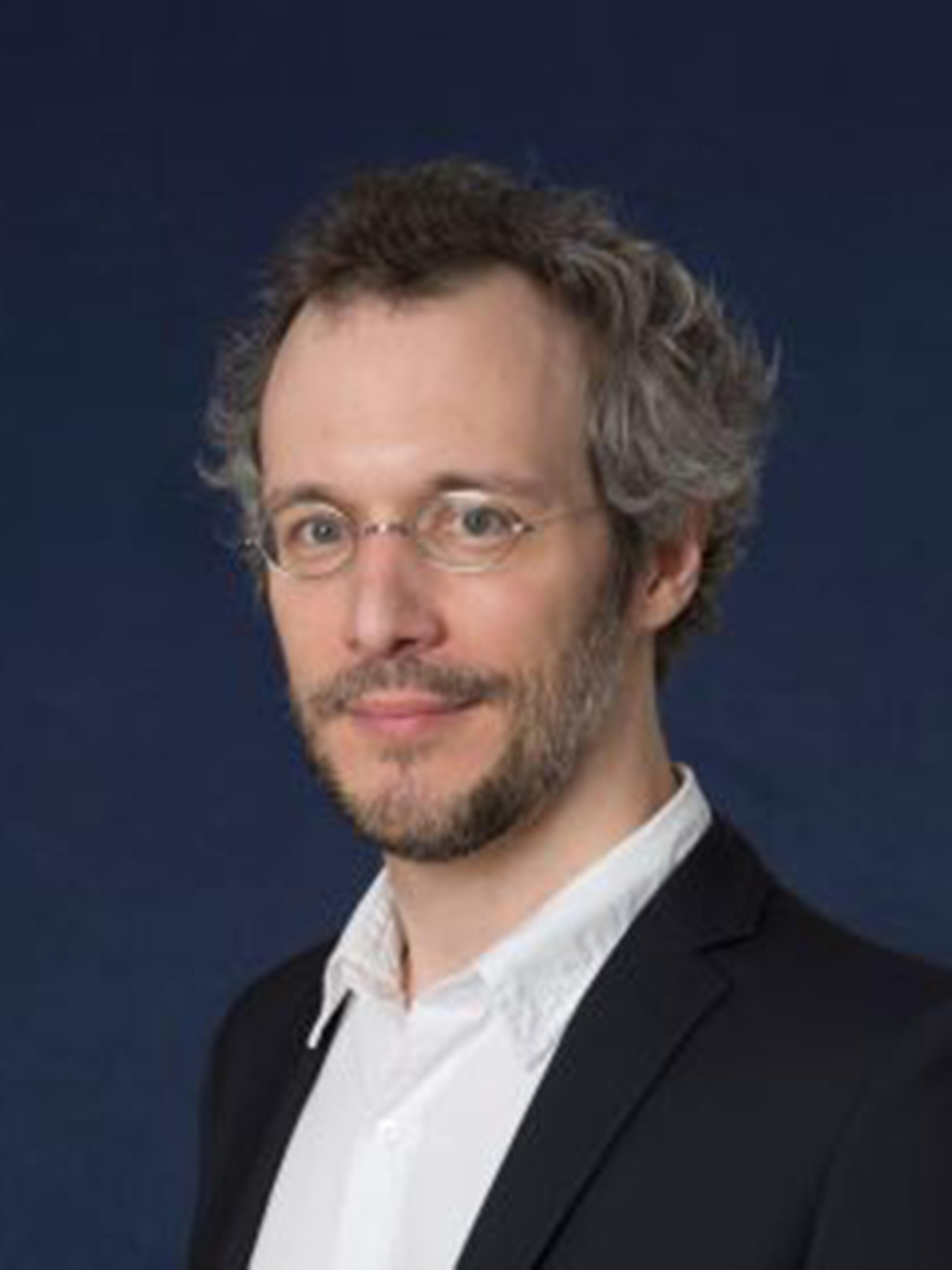
Federico Carò
Federico Carò was a Fellow in the Scientific Research department from 2009–2010. Their project was titled "Petrographic and Geochemical Study of Khmer Quarries: Considerations on Production, Use, and Trade of Stone Material in Cambodia from the Sixth to the Fourteenth Century".
Carò, Federico, “Non-invasive XRF analysis of ancient Egyptian and near Eastern turquoise: A pilot study.” Journal of Archaeological Science: Reports, 36 (2021): 102893.
Carò, Federico, Centeno, Silvia, and D. Mahon. “Painting with Recycled Materials: On the morphology of calcite pseudomorphs as evidence of the use of wood ash residues in Baroque paintings.” Heritage Science, 6 (2018):3.
Carò, Federico, and Janet Douglas. “Nature and Provenance of the Sandstone Used for Bayon Style Sculptures Produced During the Reign of Jayavarman VII.” Journal of Archaeological Science, 40 (2013): 723–734.
ResearchGate: Publications by Federico Carò
Julia Schultz
Julia Schultz was a Fellow in the Scientific Research department from 2008–2009. Their project was titled "The Application of Enzyme-Linked Immunosorbent Assay (ELISA) and Immunofluorescence Microscopy (IFM) for the Identification of Proteins and Polysaccharides in Works of Art"
Federico Carò
Federico Carò was a Fellow in the Scientific Research department from 2008–2009. Their project was titled "Cambodian Khmer Sculptures from the Collection of The Metropolitan Museum of Art: Towards a Stone Material Reference Database".
Carò, Federico, “Non-invasive XRF analysis of ancient Egyptian and near Eastern turquoise: A pilot study.” Journal of Archaeological Science: Reports, 36 (2021): 102893.
Carò, Federico, Centeno, Silvia, and D. Mahon. “Painting with Recycled Materials: On the morphology of calcite pseudomorphs as evidence of the use of wood ash residues in Baroque paintings.” Heritage Science, 6 (2018):3.
Carò, Federico, and Janet Douglas. “Nature and Provenance of the Sandstone Used for Bayon Style Sculptures Produced During the Reign of Jayavarman VII.” Journal of Archaeological Science, 40 (2013): 723–734.
ResearchGate: Publications by Federico Carò
Julia Schultz
Julia Schultz was a Fellow in the Scientific Research department from 2007–2008. Their project was titled "The Antibody-Based Identification of Proteinaceous Binding Media in Art Objects"
Margaret MacDonald
Margaret MacDonald was a Fellow in the Scientific Research department from 2007–2008. Their project was titled "Aging of Oil Paintings: Pigment and Binder Interactions and Formation of Metal Soaps".
Federico Carò
Federico Carò was a Fellow in the Scientific Research department from 2007–2008. His project was titled "Determining the Authenticity of Artworks: The Study of the Cambodian Khmer Sculptures in the Southeast Asian Collection of The Metropolitan Museum of Art".
Carò, Federico, “Non-invasive XRF analysis of ancient Egyptian and near Eastern turquoise: A pilot study.” Journal of Archaeological Science: Reports, 36 (2021): 102893.
Carò, Federico, Centeno, Silvia, and D. Mahon. “Painting with Recycled Materials: On the morphology of calcite pseudomorphs as evidence of the use of wood ash residues in Baroque paintings.” Heritage Science, 6 (2018):3.
Carò, Federico, and Janet Douglas. “Nature and Provenance of the Sandstone Used for Bayon Style Sculptures Produced During the Reign of Jayavarman VII.” Journal of Archaeological Science, 40 (2013): 723–734.
ResearchGate: Publications by Federico Carò
Eleonora del Federico
Eleonora del Federico was a Fellow in the Scientific Research department from 2006–2007. Their project was titled "Study of the Interactions of Pigments and Binders by In-Situ Mobile NMR Spectroscopy".
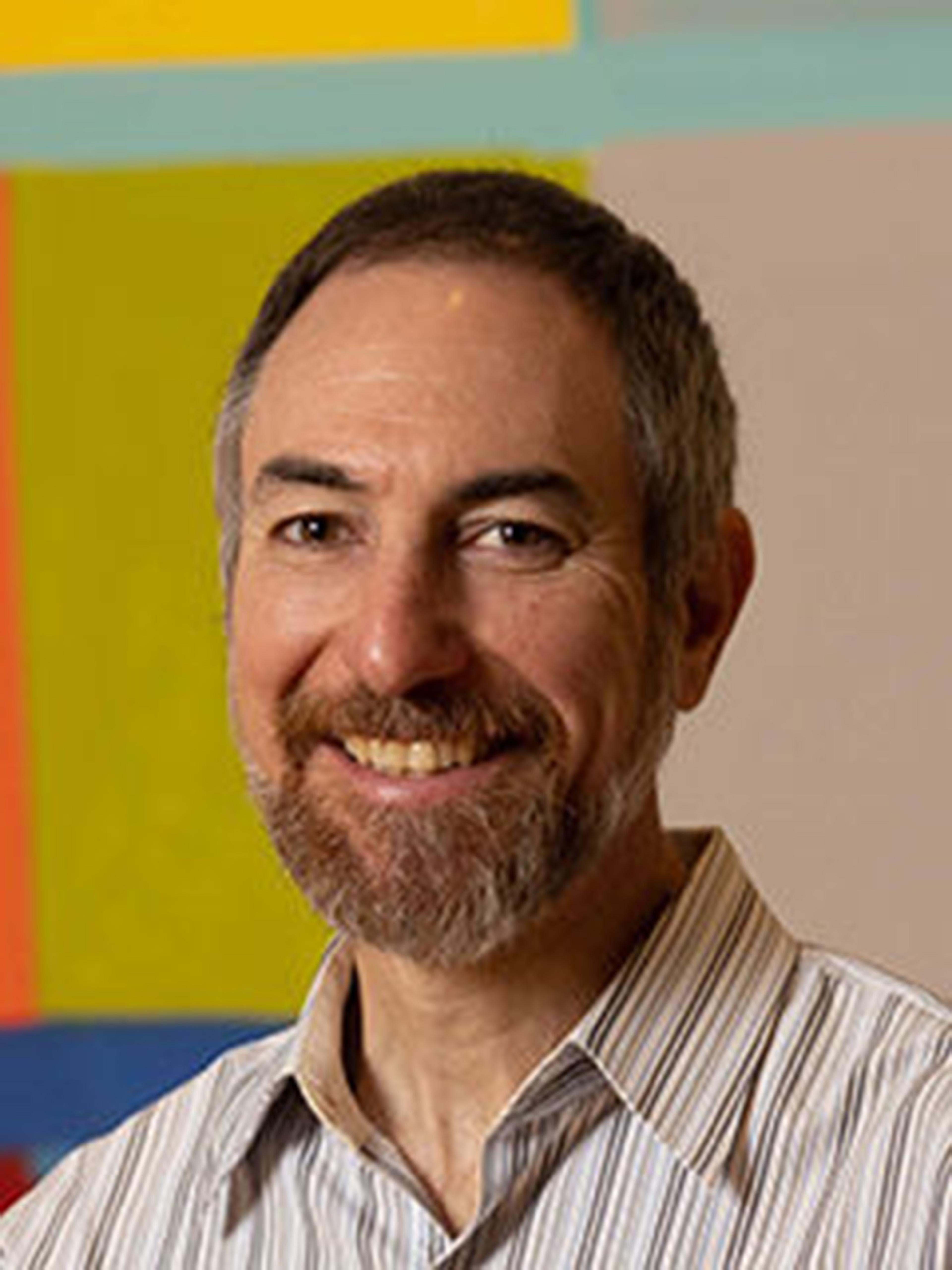
Eric Breitung
Eric Breitung was a Fellow in the Scientific Research department from 2006–2007. Their project was titled "Materials and Methods for Improved Surface Abrasion Resistance in Face-Mounted Photographs".
E.R. Long, A. Bone, E.M. Breitung, D. Thickett, J. Grau-Bove, “Automated corrosion detection in Oddy test coupons using convolutional neural networks”, Heritage Science, 2022, 10(1), 1-16.
D. Tamburnini, E.M. Breitung, C. Mori, T. Kotajima, M.L. Clarke, B. McCarthy, “Exploring the transition from natural to synthetic dyes in the production of 19th-century Asian ikat textiles”, Heritage Science, 2020, 8(1):114, 1-27.
C.H. Stephens & E.M. Breitung, “Impact of volatile organic compounds (VOCs) from acrylic double-sided pressure-sensitive adhesives (PSAs) on metals found in cultural heritage”, Polymer Degradation and Stability, 2021, 193, 1-8.
Wolfgang Schöefberger
Wolfgang Schöefberger was a Fellow in the Scientific Research department from 2005–2006. Their project was titled "Non-destructive Investigation of Binding Media and Inks in Works of Art, With a Focus on Paper and Parchment Substrates, using Nuclear Magnetic Resonance (NMR) Techniques".
Jacob Shamir
Jacob Shamir was a Fellow in the Scientific Research department from 2005–2006. Their project was titled "Raman Analysis of Tarry and Lignin-like Pigments Used by Artists".
Črtomir Tavzes
Črtomir Tavzes was a Fellow in the Scientific Research department from 2004–2005. Their project was titled "Recent Progress in Melanin Stains Degradation".
Stéphanie Rabourdin
Stéphanie Rabourdin was a Fellow in the Scientific Research department from 2004–2005. Their project was titled "Authenticity in Furniture: From Theory to Technical Approach".
María de la Vega Cañamares Arribas
María de la Vega Cañamares Arribas was a Fellow in the Scientific Research department from 2005–2006. Their project was titled "SERS Application to Identification of Dyes in Samples of Pigments and from Textiles".
Virginia Llado-Buisan
Virginia Llado-Buisan was a Fellow in the Scientific Research department from 2003–2004. Their project was titled "Conservation of Color Lithography Posters: Consideration of Analytical Methods Towards a Safer Treatment".