Since its compilation in the first half of the 15th century, al-Jazuli's (d. 1465) Dala'il al-Khayrat—a prayer book devoted to the Prophet Muhammad—has become one of the most widely circulated texts throughout the Islamic Sunni world. It was read and copied across Africa, the Ottoman lands, the Indian subcontinent and Southeast Asia. By the 19th century, the text also circulated among Chinese and Central Asian Muslims. The research project springs from a seemingly simple question: how did the Dala'il become one of the most popular texts in the Islamic Sunni tradition? The aim is to narrate the multilayered and multidimensional history of the Dala'il, and to produce a wide-ranging study of the history of al-Jazuli's work from Senegal to China over five centuries.
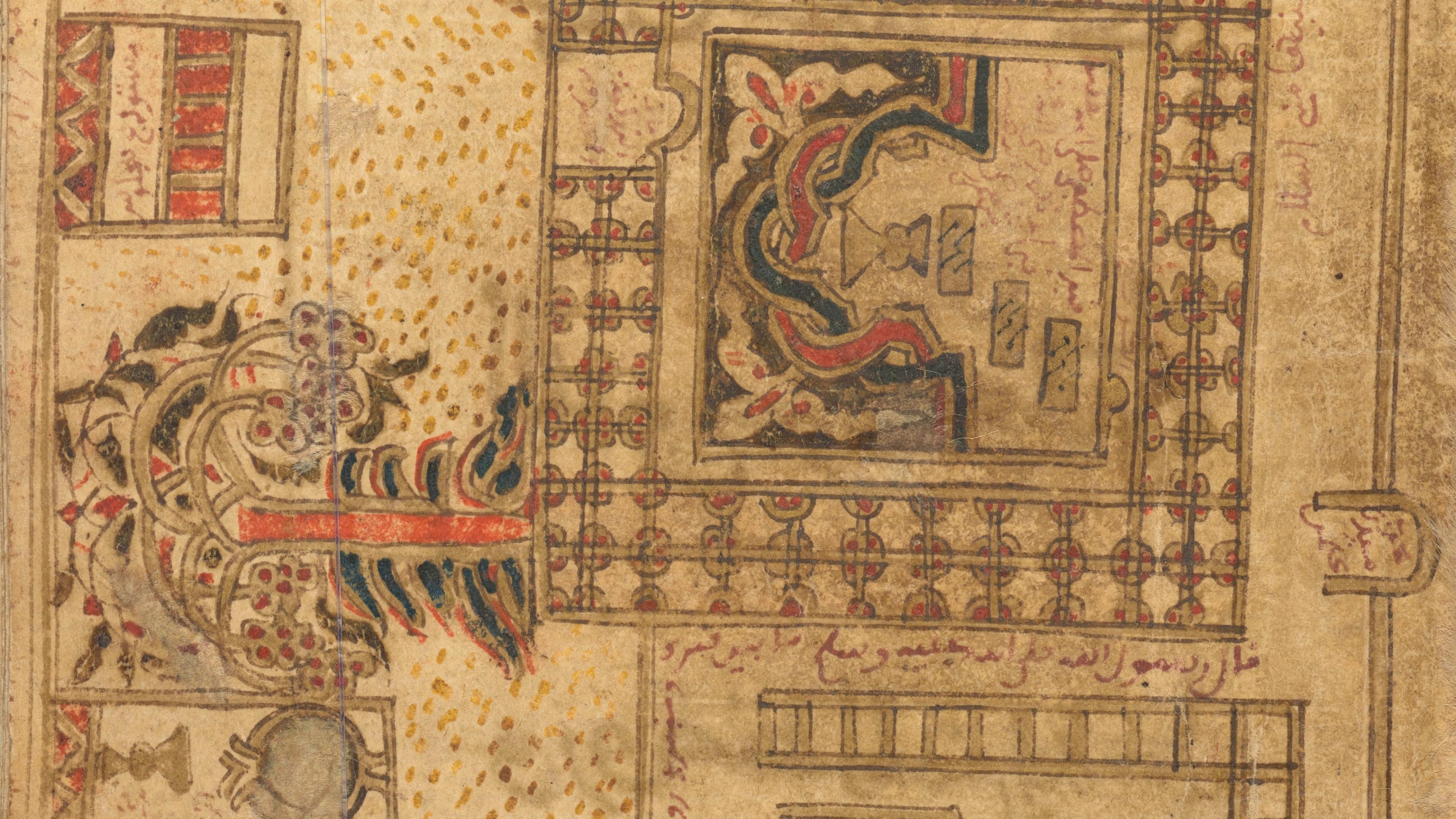
Copies of the Dala'il commonly include illustrations of the tomb of the Prophet in Medina, as well as the Ka'ba in Mecca. The manuscripts sometimes also include depictions of the footprint or other attributes of the Prophet. The Dala'il corpus offers an excellent opportunity to examine the relationships and connections that constitute the "Islamic world." In particular, it affords an opportunity to integrate the regions that converted to Islam after 1400 into a coherent narrative that undermines the "center"/"periphery" dichotomy. The Dala'il work, in addition, enables us to explore the broad and diverse Islamic lands, including regions and collections that are less known, such as Turkestan, Sub-Saharan Africa, or the Malay world.
On May 17th and 18th, 2019 a first exploratory workshop was held at The Met, co-organized by the Museum's Department of Islamic Art and New York University Libraries. Scholars, curators, and other specialists came together to discuss the Dala'il al-Khayrat, the second most popular devotional text in Sunni Islam after the Qur'an. This workshop was made possible by The Barakat Trust, New York University Center for the Humanities, New York University Libraries, and The Met's Department of Islamic Art. Take a look at the workshop program. The papers were co-edited by Deniz Beyazit, Guy Burak and Sabiha Göloğlu, and published in the Journal of Islamic Manuscripts, 2021, vol. 12, 3-4.
A second workshop was held in New York on March 1st and 2nd, 2024, co-hosted by The Metropolitan Museum of Art’s Department of Islamic Art and The New York Public Library. This second workshop aimed to deepen the study of the Dalaʾil, covering certain aspects that had not been explored during the first round, including geographically less studied areas of India and China, as well as parts of the African context. Attention was given to how the texts and images circulated, as well as to the devotional aspects of the Dala’il, and the important context of Sufism and pilgrimage to Mecca and Medina. This workshop was made possible by Catherine and David Cuthell. Additional support was also provided by Gingko, NYU Hagop Kevorkian Center for Near Eastern Studies, The Barakat Trust, The New York Public Library, New York University Libraries, and The Met’s Department of Islamic Art. Take a look at the program of workshop two. The results are being prepared for publication.
The Dala'il research project is co-directed by Dr. Deniz Beyazit, Curator in the Department of Islamic Art at The Met, Dr. Hiba Abid, Curator for Middle Eastern and Islamic Studies, The New York Public Library, Dr. Guy Burak, Librarian for Middle Eastern, Islamic and Jewish Studies (and Interim Librarian for African Studies), Elmer Holmes Bobst Library, New York University, and Dr. Sabiha Göloğlu, Marie Skłodowska-Curie Individual (Global) Fellow, Universität Hamburg and the University of Michigan.
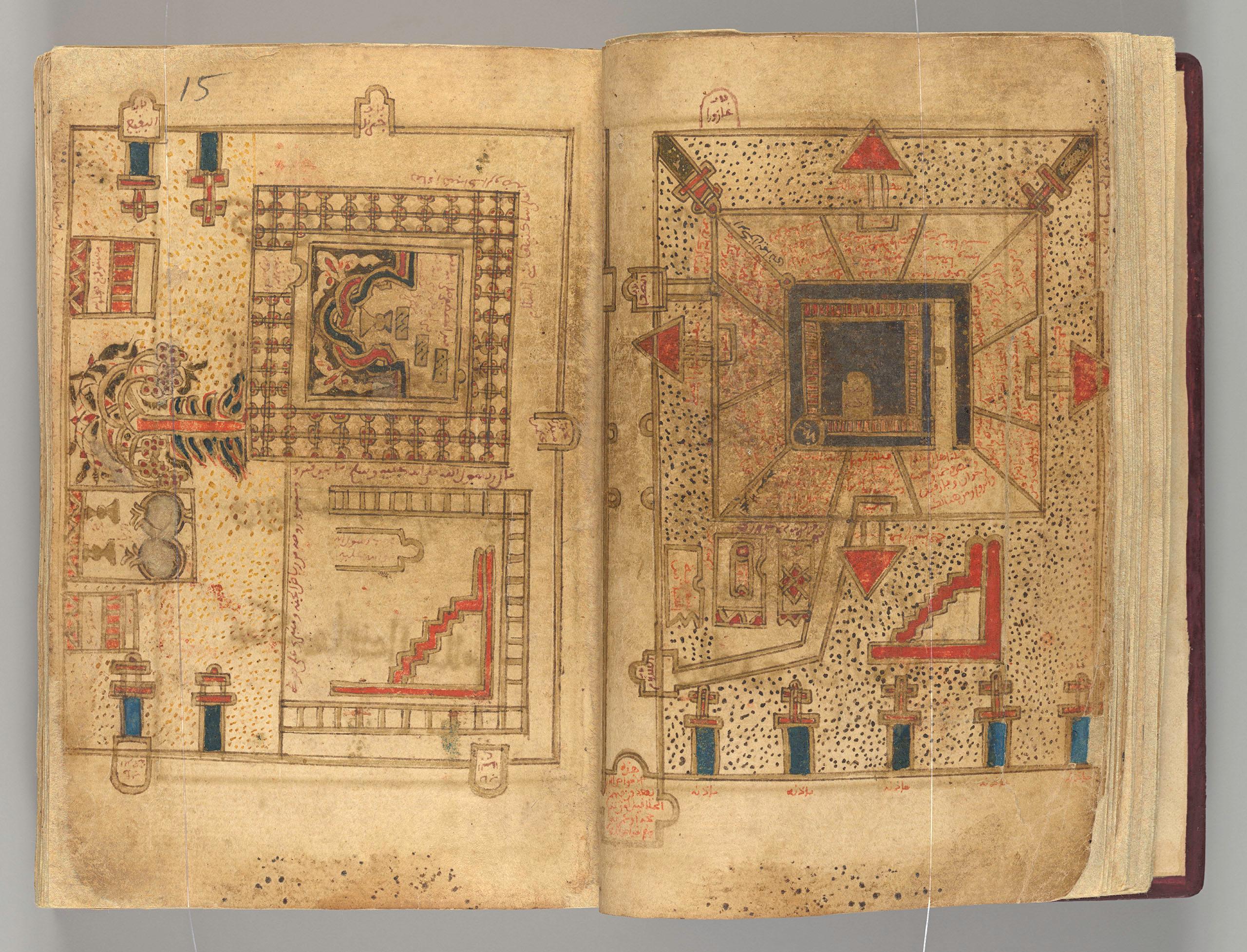
Double page depicting the Holy Sanctuaries in Mecca and Medina, from a Dala'il al-Khayrat Prayer Book, 1625-26. Probably Tunisia. The Metropolitan Museum of Art, New York, Purchase, Friends of Islamic Art Gifts, 2017 (2017.301)